
First Winter in an Old House: What to Do Now, What to Watch, and What Can Wait

The house felt perfect in July. Now the first cold snap of your first winter in an old house has arrived, the back bedroom won't climb past 60 degrees, there's a draft you can feel from the couch, and the oil gauge is dropping faster than anyone warned you. Every problem feels urgent, and every contractor you call seems to have a reason it should be fixed this week.
Most of it doesn't need fixing this week. Connecticut didn't adopt its first building codes until 1971, so plenty of older homes here were built with little or no insulation, and a Climate Zone 5A winter will find every gap. The smart move is to sort what you're seeing into three piles: what needs attention before the first hard freeze, what to watch and write down this winter, and what can wait until you know the house better.
Your First Winter Is for Finding Problems, Not Fixing All of Them
Your first winter in an old house is the best diagnostic tool you'll ever get, and it's free. Summer hides almost everything an old house does wrong. Air leaks don't announce themselves at 75 degrees, and nobody notices an empty exterior wall in August.
The calls we get from new owners in their first winter come down to the same three things:
- Ice dams along the eaves, sometimes with water showing up on a ceiling below
- One room that's far colder than the rest of the house, no matter where the thermostat is set
- Exterior walls with no insulation in them at all
All three are real problems, and none of them is a reason to spend money in a panic. Each one tells you where heat is leaving the house, and a full winter of those clues beats any guess made in October. Spending big before you've lived through a winter is like ordering surgery before anyone runs a test.

Why does one room stay so much colder than the rest of the house?
Do These Right Away (Before the First Hard Freeze)
A short list of jobs can't wait for spring, because they protect the house from damage. Most cost nothing, and you can do every one yourself.
Find Your Shutoffs and Learn Your Heating System
Locate the main water shutoff now, because a burst pipe at 2 a.m. is the wrong time to go looking. Then find out what heats the house and when it was last serviced. If you heat with oil, set up delivery and track how long a full tank lasts. A boiler or furnace with no service record from the past year should get booked now.
Protect Pipes in Exterior Walls, Crawl Spaces, and Additions
Old houses freeze pipes in predictable places: plumbing on exterior walls, supply lines in vented crawl spaces, and anything in an unheated addition. Open sink cabinets on exterior walls during cold snaps, and if the sellers mentioned a pipe that "sometimes freezes," believe them.
Clean the Gutters Before the Snow
Clean the gutters before the snow comes. Clogged gutters hold water right at the eaves, which gives an ice dam a head start.
Test Smoke and Carbon Monoxide Detectors
Test every smoke and carbon monoxide detector and replace any that are expired. A closed-up house in January is when an old oil or gas appliance's problems matter most.
Look in the Attic, but Don't Touch What You Find
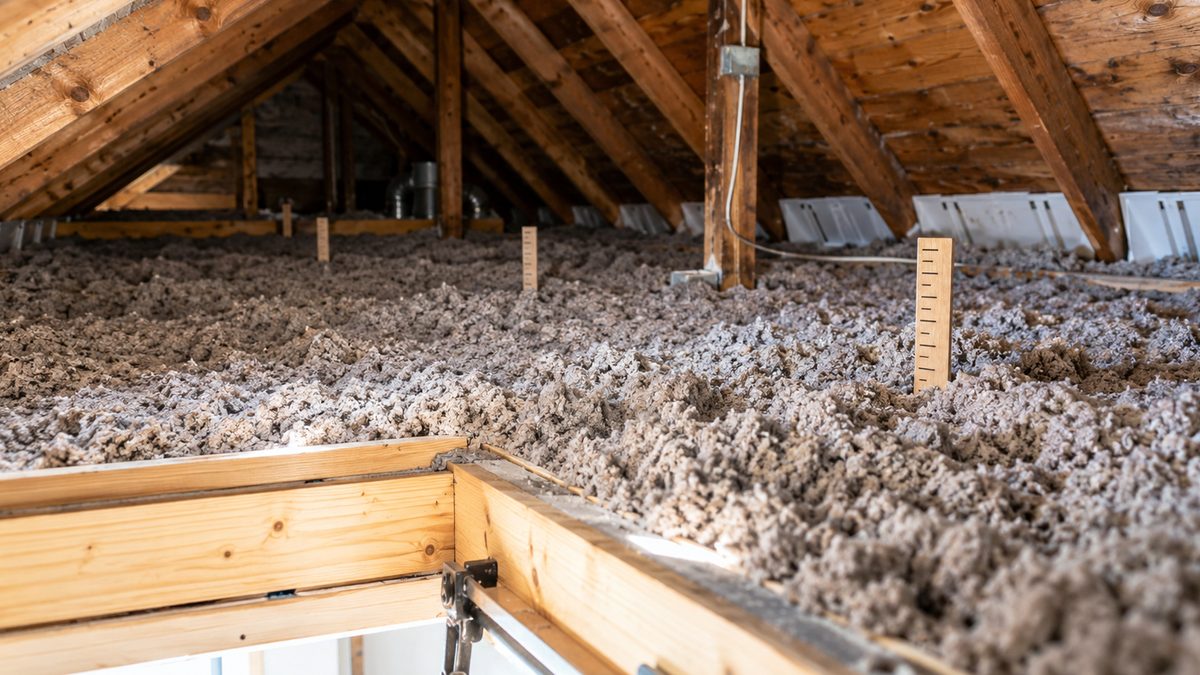
Take a flashlight and a tape measure into the attic and measure the insulation depth between the joists. Less than about 6 inches puts you around R-19, far short of the R-49 to R-60 that Connecticut attics should have, which works out to roughly 14 to 18 inches of blown-in cellulose. Photograph what you see. If the insulation looks like gray-brown pebbles, stop and leave it alone: that's likely vermiculite, and you'll want to understand what to do about Zonolite attic insulation before anyone works up there.
Here's the line between you and a contractor. Shutoffs, pipes, gutters, detectors, door weatherstripping, and measuring the attic are all yours. Vermiculite, old wiring, combustion safety, and anything that means opening walls or ceilings belong to a pro.
The complete checklist for winterizing a Connecticut home
What to Watch and Write Down This Winter
From December through February, your job is to take notes. Dated phone photos are plenty. Look for:
- Icicles and ice ridges along the eaves after a snowfall
- Spots on the roof where snow melts first while the rest stays white
- Frost on the attic side of the roof deck or on nail tips on a cold morning
- Rooms where a cheap thermometer reads well below the thermostat
- Drafts at outlets, baseboards, and window trim (hold a lit incense stick near the spot on a windy day; if the smoke pulls sideways, you've found a leak)
- Ice or heavy condensation on the inside of windows
- How much oil, gas, or electricity each month takes
Ice dams, the most common first-winter call we get, are an attic problem that shows up on the roof. Heat leaking into the attic melts the snow on top, and the water refreezes at the cold eaves. Once you understand why ice dams form on your roof, it's clear why roof rakes and heat cables treat the symptom, not the cause.
Here's how to read what you find:
How much insulation does a Connecticut home actually need?
What Can Wait Until Spring (or Longer)
Most big-ticket projects on an old house are better decisions after one winter of notes than before it. Waiting a few months costs you some comfort. Guessing wrong costs you thousands.
Window Replacement
Replacing original windows is rarely the first fix that pays off. In my experience, the attic, the rim joist, and the gaps around the frames leak more air than the glass does. Weatherstrip and add storm windows this winter, and decide on replacement after the audit.
Exterior Wall Insulation
Uninsulated exterior walls are one of our three most common first-winter calls, and one of the easiest jobs to plan rather than rush. Most old walls can be insulated without tearing out plaster: cellulose is blown into each cavity through small holes, and the siding is patched afterward. Blown-in cellulose with the siding left in place typically runs $3.75 to $4.75 per square foot installed, before Energize CT rebates of up to $2.00 per square foot. Before anything goes into the walls, have an electrician confirm there's no live knob-and-tube wiring in the cavities. Our guide to insulating exterior walls in an existing home covers the methods, and your winter notes will tell you which walls to start with.
Replacing the Heating System
A heating system that runs nonstop in an uninsulated house usually isn't too small. It's fighting the house. Air seal and insulate first, then size new equipment to the house you'll actually have, unless the old unit is failing or unsafe.
Historic Rehab and Renovation Work
If your home is on the State or National Register of Historic Places, don't start rehab work before applying for Connecticut's Historic Homes Rehabilitation Tax Credit. The State Historic Preservation Office won't credit work that's already finished or underway when you apply. For any renovation, plan around insulation: a wall that's getting opened anyway is the cheapest place you'll ever insulate.
When "Later" Becomes "Now"
Some first-winter discoveries jump the line:
- Water coming through a ceiling or wall from an ice dam
- A pipe that has already frozen once
- Visible mold in the attic, basement, or crawl space
- Mice nesting in the insulation
Why should you insulate before replacing your heating system?
Your First-Year Order of Operations
A first year in an old house goes best in a set order, cheapest and most protective steps first. Our page on insulation for new homeowners explains how we approach a house that's new to you.
- Before the first hard freeze: the safety and freeze-protection list above.
- December through February: watch, photograph, and write it down.
- Mid-winter: book an Energize CT Home Energy Solutions audit and hand the auditor your notes.
- Late winter into spring: air sealing and attic insulation, which address ice dams and most whole-house drafts.
- Spring through fall: walls, crawl space or basement work, and windows.
- After that: heating system replacement, sized to the improved house.
Resources for Old and Historic Connecticut Homes
Owners of older Connecticut homes have more free help available than most realize.
Energy Audits, Rebates, and Assistance
- Energize CT Home Energy Solutions audit: the $40 HES visit is the required first step for Energize CT insulation rebates, which cover up to $2.00 per square foot or 75% of project cost, capped at $10,000 per home. Our guide to getting a Connecticut home energy audit through Energize CT covers how to book it.
- Rebate estimate: the Energize CT insulation rebate estimator gives you a ballpark before the audit.
- Assistance programs: income-eligible households get a no-cost audit, and our directory of energy assistance programs in Connecticut lists more heating and weatherization help.
Historic Preservation Help
- Preservation organizations: Connecticut organizations that help preserve and improve historic homes, for technical help and funding.
- Historic district rules: look up your town in our Connecticut historic district exterior rules directory before changing windows, siding, or roofing.
- Tax credits: the Connecticut historic home tax credit returns 30% of qualified rehab costs, up to $30,000, on listed homes with at least $15,000 in work.
- Federal guidance: the National Park Service's Preservation Brief 3 on improving energy efficiency in historic buildings is the standard reference for upgrades that protect historic materials.
Permits and Old-House Safety
- Permits: find your local office in our Connecticut building department directory for all 169 towns.
- Lead paint: homes built before 1978 fall under the EPA's lead-safe renovation, repair, and painting rules.
- Vermiculite: the EPA's guidance on asbestos-contaminated vermiculite insulation.
Getting Through Your First Winter in an Old House
Your first winter in an old house will show you exactly where it's losing heat, as long as you're paying attention. Handle the freeze and safety items now, keep notes through the cold months, get the audit, and save the big decisions for when you have real evidence.
The old houses that end up comfortable aren't the ones whose owners fixed everything in October. They're the ones whose owners fixed the right things in the right order.
👉 See what Connecticut insulation rebates cover — once your first winter shows you where the old house leaks, find out how much of the fix Energize CT will pay for.
Frequent Questions About Your First Winter in an Old House
Is a home inspection the same as an energy audit?
A home inspection is not the same as an energy audit, because a home inspection checks a house's condition and safety while an energy audit measures where the house loses heat. An energy audit uses a blower door to depressurize the house and measure air leakage, which a standard home inspection does not do. The Energize CT Home Energy Solutions audit costs a $40 copay and is the required first step for Energize CT insulation rebates. Book an energy audit during your first winter to find the biggest air leaks, prioritize upgrades, and unlock rebates.
How much does it cost to insulate an attic in an old Connecticut house?
Insulating an attic floor in an old Connecticut house typically costs $3.00 to $3.50 per square foot for blown-in cellulose to R-49. A 1,000 square foot attic runs roughly $3,000 to $3,500 before rebates. Energize CT rebates cover up to $2.00 per square foot or 75% of project cost, capped at $10,000, which offsets a large share of attic work. Access, air sealing needs, and old insulation removal move the final price, so get a free on-site estimate to replace the ballpark with a real number.
How can I tell if my exterior walls have insulation?
Check exterior walls for insulation by turning off power to an outlet on an exterior wall, removing the cover plate, and shining a flashlight into the gap beside the electrical box. Fiberglass, cellulose, or foam in the gap confirms insulation in that wall cavity, while an empty gap points to an uninsulated cavity. One outlet shows only one cavity, because builders and past owners often insulated some walls and skipped others. Nealon Insulation offers a $150 wall test, credited to the job if work is booked, to confirm wall conditions without opening plaster.
Will insulating an old house cause moisture problems?
Insulating an old house causes moisture problems only when air sealing, ventilation, and existing moisture sources are ignored. Warm, moist indoor air that leaks into a cold attic or wall cavity condenses on cold surfaces, and insulation without air sealing leaves those leak paths open. A proper job seals attic air leaks first, keeps soffit-to-ridge ventilation open with baffles, and fixes active leaks before any insulation goes in. Air seal before insulating to keep attics dry, protect framing, and prevent mold.
Does old insulation need to come out before new insulation goes in?
Old insulation needs to come out before new insulation goes in only when the old insulation is wet, moldy, contaminated by rodents, or made of vermiculite. Dry, clean fiberglass or cellulose still adds R-value, so new blown-in cellulose can go right on top to reach the R-49 to R-60 Connecticut attic target. Removal adds cost and time, which is why a good contractor removes old insulation only when the old material is a problem. Have the attic assessed first to avoid paying for removal you don't need and to catch contamination you can't see.
Related Articles
Let's Work Together
Ready to transform your home into an energy-efficient haven? Schedule your free energy assessment today and experience the Nealon difference for yourself.