
After Insulation Installation: What's Normal, What Isn't, and How to Read Your First Bill
The insulation crew packed up yesterday, and now you're standing under the attic hatch wondering what happens next. There's fine dust on the hallway floor, the upstairs feels warmer (maybe), and your first heating bill is still a month away.
In Connecticut, most insulation work lands in the fall, right before the heating season puts it to the test. That means your first real feedback comes from the first cold snap and the first oil delivery, and both can mislead you. Here's what's normal after insulation installation, what isn't, and how to read your first bill honestly.
The First 24 Hours After Insulation Installation
Most of what you notice in the first 24 hours after insulation installation is normal and temporary.
A Little Dust Near the Attic Hatch Is Normal
A thin layer of fine dust near the attic hatch is normal after a blown-in insulation job. Fine particles drift every time the hatch opens, so wipe them up with a damp cloth. What isn't normal is dust drifting out of ceiling lights, bath fan grilles, or registers days later. That points to open gaps in the ceiling that air sealing should have closed.
Smells and Re-Entry Depend on the Material
Blown-in cellulose and fiberglass shouldn't leave more than a faint, dusty smell that fades within a day or two. Spray foam has its own cure time, so follow your installer's re-entry window to the letter. Here's how long you have to stay out of the house after spray foam insulation and why.
The House Should Feel Quieter and More Even
Most homeowners feel the difference in comfort before they see it on a bill. Upstairs rooms stop swinging between warm and chilly, and street noise drops a notch. If nothing feels different after a full week of real heating weather, make a note of it.
Not sure what the attic should have looked like before the crew left? Here's what a finished job looks like on insulation installation day.
The First Week: A Five-Minute Attic Check From the Hatch
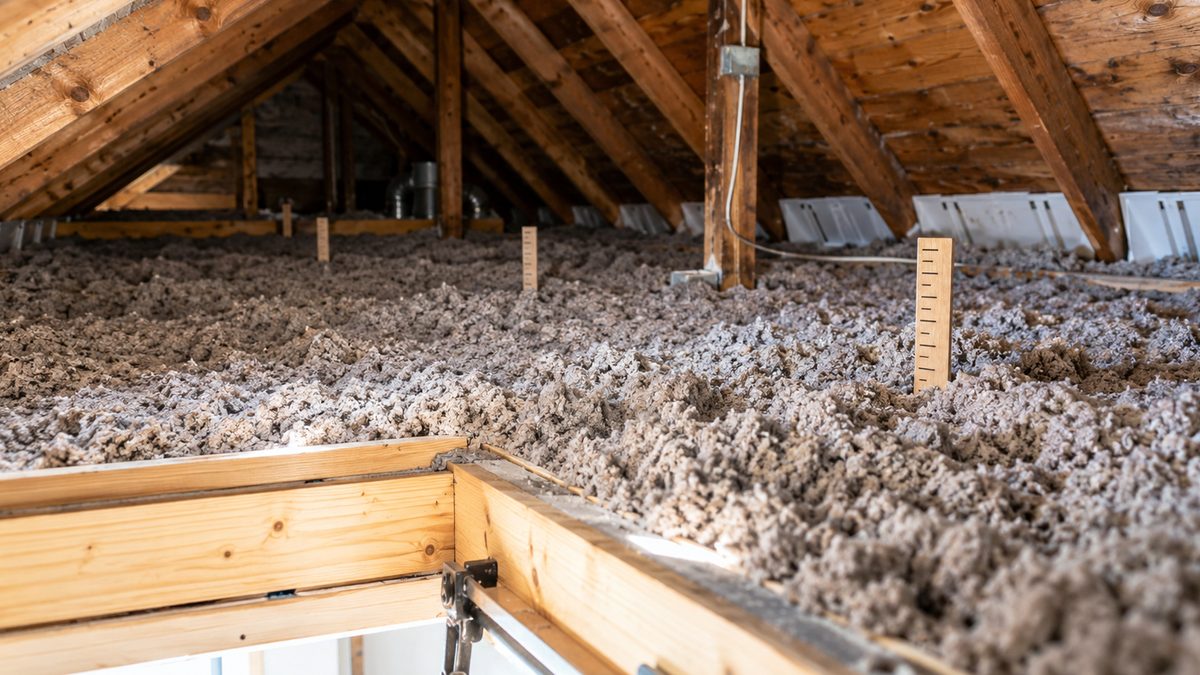
You can confirm most of what you paid for without ever stepping into the attic. Grab a flashlight and your phone, climb the ladder until your head and shoulders clear the hatch, and look for these:
- Depth markers (the cardboard rulers stapled to the framing) visible and reading at or above your target depth
- An even surface with no bare joist tops or low valleys, especially near the hatch where crews finish last
- Clear eaves: with the flashlight aimed toward the roof edge, baffles should hold insulation back from the soffit vents
- Clearance around chimneys and metal flues, with a barrier holding insulation away rather than insulation packed against them
For reference, R-49 works out to roughly 14 to 18 inches of blown-in cellulose, and R-49 to R-60 is the Connecticut attic target. Here's how much insulation you need in Connecticut, area by area. Take date-stamped photos of the depth markers while you're up there. That's your baseline.
Why Blown-In Insulation Settles a Little
Blown-in insulation settles slightly in the first weeks after installation, and a good installer plans for it. Loose-fill bags list a minimum settled thickness, and the crew blows past it so the insulation lands at your target after it settles. A small drop from day one is expected. Bare spots or markers reading below target are not.
One rule for the whole week: look, don't walk. Blown-in insulation hides the joists, and one wrong step puts your foot through the ceiling drywall.
The First Cold Snap: A Tighter House Behaves Differently
A house that's been air sealed and insulated holds onto more of its own moisture, and the first cold snap is when you'll see it. Moisture from showers and cooking used to leak out through gaps into the attic. Now more of it stays inside and shows up as fog on the windows on the coldest mornings. That's usually an adjustment, not a defect. The EPA recommends keeping indoor relative humidity below 60 percent, ideally between 30 and 50 percent, and an inexpensive hygrometer will tell you where your house sits. Here's more on why your house feels humid and what's usually behind it.
Your First Heating Bill After Insulation: How to Read It Honestly
Comparing your first bill after insulation to the bill right before it is the fastest way to talk yourself into disappointment. November in Connecticut is colder than October, so of course you used more fuel. The fair comparison accounts for weather, and the tool for that is the heating degree day. The U.S. Energy Information Administration defines degree days by comparing each day's average outdoor temperature to a 65°F baseline. Colder days rack up more heating degree days. Here's how to use them:
- Compare usage, not dollars. Look at gallons, therms, or kilowatt-hours, since fuel prices move on their own.
- Pull the same period from last year. Your utility's online account usually keeps a year of history.
- Find the heating degree days for both periods. Some utilities print them on the bill; the National Weather Service Climate Prediction Center publishes the rest. For oil, use the degree days between deliveries.
- Divide usage by degree days for each period and compare the two results.
Here's an example with round numbers. Last November, a house burned 110 gallons of oil over 700 heating degree days. This November, after insulation, it burned 105 gallons over a colder 850 heating degree days. Five gallons of savings looks like nothing. Per degree day, though, usage dropped from about 0.157 gallons to about 0.124, roughly 21 percent less. Same house, very different story.
One bill is a snapshot. The full heating season is the verdict, so run this comparison again in February.
Curious what savings look like once a full winter is on the books? Here's the average energy savings Connecticut homes see after insulation.
What to Keep on File After Insulation Day
Insulation paperwork is like the paperwork on a new roof: boring right up until the day you need it. Keep these in one folder:
- The final invoice, listing the areas insulated, square footage, material, and target R-value
- Your Energize CT rebate paperwork, starting with the application issued at your Home Energy Solutions visit
- Your first-week photos of the depth markers and eaves
- The warranty terms, including who to call and what's covered
Still sorting out the rebate? Here's our step-by-step guide to applying for Energize CT rebates.
Not sure what your coverage includes? Here's what an insulation warranty in Connecticut actually covers, and what it doesn't.
What Not to Do in Your Attic Now
The fastest way to undo a good insulation job is to treat the attic like nothing changed. Avoid these:
- Stacking storage boxes on the insulation. Compressed insulation is thinner insulation, and thinner means a lower R-value.
- Letting other trades trample it. Ask electricians and cable installers to rake back anything they disturb.
- Pulling the depth markers. They're your proof of depth for the life of the job.
When to Call Your Installer
Call your installer if any of these show up after installation:
- A room is still cold after 2 full weeks of heating weather
- Icicles or ice dams form along the eaves
- Frost or dark staining appears on the underside of the roof boards
- Window condensation keeps coming back even with bath fans and the range hood running
- Your hatch check turned up bare spots or low depth markers
Rooms still chilly even though the attic looks right? Here's why your house might still be cold after insulation.
The Bottom Line on Life After Insulation
The weeks after insulation installation come with a few normal surprises: a little dust, a little settling, and some fogged windows on the coldest mornings. The real checks are simple and free. Look from the hatch, photograph the depth markers, watch your humidity, and compare your bills by heating degree days instead of dollars.
If you only do one thing this week, climb the ladder and take those photos. Five minutes at the hatch tells you more about the job than any bill will until February.
👉 Contact Nealon Insulation — whether we did the work or someone else did, if your attic, your windows, or your first bill doesn't add up, we'll help you figure out why.
Frequent Questions About Life After Insulation Installation
Should I change my thermostat settings after insulation installation?
Keep your thermostat settings the same after insulation installation for the first 1 to 2 billing periods. Identical setpoints keep your before-and-after bill comparison fair, because a thermostat change shifts fuel use on its own and hides what the insulation did. An insulated home loses heat more slowly, so nighttime setbacks recover faster once you resume them. Hold your settings steady through the first 1 to 2 bills to get a clean read on your savings.
Will my heating system run less after insulation installation?
Your heating system runs shorter and less frequent cycles after insulation installation. Insulation and air sealing slow the rate of heat loss through the attic and walls, so the house stays at the thermostat setting longer between cycles. Homeowners notice the change within the first week of steady heating weather. Listen for the burner or blower between cycles to confirm the house is holding heat longer.
Should I replace my furnace or boiler with a smaller one after insulating?
Keep your existing furnace or boiler after insulating until the equipment reaches the end of its life. Insulation lowers the home's heat loss, which means the right size for the next heating system is often smaller than the unit you have now. An oversized system short-cycles, wears faster, and heats less evenly. Ask your HVAC contractor for a Manual J load calculation on the insulated house when replacement time comes to size the new system correctly and avoid paying for capacity you no longer need.
Will new attic insulation help my air conditioning next summer?
New attic insulation helps your air conditioning next summer by slowing the heat that moves down from a hot attic into the rooms below. An attic insulated to R-49 to R-60 blocks that heat on summer afternoons, when attic temperatures run far above the air inside the house. Upstairs bedrooms stay cooler and the air conditioner runs shorter cycles. Keep the attic vents clear and the insulation undisturbed to hold that summer benefit year after year.
Can I floor my attic for storage after blown-in insulation is installed?
You can floor your attic for storage after blown-in insulation is installed only if the flooring sits above the full insulation depth. Plywood nailed directly to the joists crushes blown-in insulation, and an attic at R-49 needs 14 to 18 inches of cellulose, which is far deeper than standard joists. Raised storage decking lifts the platform above the insulation so the full R-value stays intact. Ask for raised storage decking on your free estimate to gain storage space without giving up insulation performance.
Related Articles

Let's Work Together
Ready to transform your home into an energy-efficient haven? Schedule your free energy assessment today and experience the Nealon difference for yourself.