
Connecticut Organizations That Help You Preserve (and Improve) Your Historic Home

You bought an old house. Maybe it was the wide plank floors. Maybe it was the original millwork around the windows, or the way the roofline looks against a grey November sky. Whatever it was, you didn't buy it for the insulation — because there wasn't any worth mentioning.
Now it's January, your heating oil bill arrived, and you can feel cold air moving through the walls like the house is just breathing it in. You've got a 1910 Colonial that looks beautiful from the street and costs a small fortune to keep warm. If you're wondering what the actual payoff looks like once you address it, the data on average energy savings in Connecticut homes after insulation is worth a read. And somewhere in the back of your mind is a nagging question: is there help out there for people like me, or am I just supposed to figure this out alone?
The answer, if you're in Connecticut, is that you're not alone — and there's more support available than most homeowners realize.
Connecticut is one of the most historically rich states in the country. The shoreline alone — from Greenwich to Stonington — is lined with homes that predate the Civil War, the Revolution, in some cases the founding of the country itself. Keeping those buildings standing, livable, and energy-efficient is genuinely complicated work. It involves building science, historic preservation standards, local district rules, state tax credit programs, and a network of organizations that most people have never heard of.
This post is your roadmap to that network. We'll walk through who's doing this work in Connecticut, what they actually offer homeowners, and where insulation fits into the picture — including what you can and can't do if your home qualifies for historic tax credits.
We're a donor to Preservation Connecticut because we believe in this work. We insulate historic homes along the shoreline every week, and we've seen firsthand what a difference it makes when owners have the right information and the right partners. Here's where to start.
Why Historic Homes Matter More in Connecticut Than Almost Anywhere Else
Connecticut has more buildings on the National Register of Historic Places per square mile than most states in the country. That's not trivia — it's context. When you drive through Old Saybrook, Madison, Guilford, or Deep River, the homes lining those streets aren't just old. They're the physical record of how this part of New England was built, lived in, and handed down.
A lot of those homes are in the hands of regular people — not museums, not land trusts. Just homeowners who bought a Colonial or a Victorian or a saltbox because they loved the character and the bones. And now they're trying to figure out how to keep the heat in without tearing the walls apart, or fix the rotting trim without violating their local historic district rules, or replace the windows without losing the ones their neighbors will complain about.
It's not simple. And for a long time, there wasn't a clear roadmap.
The good news is that Connecticut actually has a surprisingly strong network of organizations built specifically to help owners of historic homes. Some offer money. Some offer technical guidance. Some just fight to make sure these buildings don't get bulldozed. And a few of them are doing work that directly affects what you can — and can't — do to your own home.
Here's who's actually out there, what they do, and how to get them working for you.
Preservation Connecticut — The State's Flagship Preservation Nonprofit
If there's one organization every Connecticut historic homeowner should know about, it's Preservation Connecticut. They've been around since 1975 — chartered by the state legislature — and they operate as the primary nonprofit advocate for historic buildings across the state. Their headquarters, fittingly, is inside the Eli Whitney Boarding House in Hamden. They practice what they preach.
Here's what's actually useful to homeowners:
Circuit Riders Program
This is one of their most practical offerings. Circuit Riders are preservation specialists who travel to communities across Connecticut to provide technical guidance. If you own an older home and you're trying to figure out what you can and can't do — with windows, siding, insulation, additions — these are the people who can give you real answers, not just code citations. Think of them as a knowledgeable friend who happens to know historic building standards inside and out.
Funding Opportunities
Preservation Connecticut runs and tracks grant programs that can help offset the cost of preservation work. Funding availability changes year to year, but their website maintains an updated list of opportunities for both private homeowners and municipalities. If you're facing a major repair or rehabilitation project on a historic property, it's worth checking what's currently available before you assume you're paying for everything out of pocket.
Historic Properties Exchange
This is a listing service for historic properties in need of new owners or stewards. Not as directly useful if you already own your home, but helpful context — it shows you the broader ecosystem of people trying to keep these buildings alive rather than demolish them.
Advocacy and Demolition Delay
Preservation Connecticut actively lobbies for stronger local preservation laws and helps communities establish demolition delay ordinances. If your town doesn't have one and a neighbor's 1850s farmhouse is suddenly on the chopping block, these are the people to call.
We believe enough in what they do that Nealon Insulation is a listed donor — you can find us on their contractor directory. We insulate a lot of historic homes along the Connecticut shoreline, and we think preserving them is worth putting our name behind.
Wondering what it actually costs to insulate a historic home in Connecticut? Read more here.
The Connecticut State Historic Preservation Office — and the Tax Credit You Might Be Leaving on the Table
The Connecticut State Historic Preservation Office, known as SHPO (pronounced "SHO-poh"), is the government agency that sits at the center of everything related to historic homes in the state. They maintain the registers, review rehabilitation projects, and administer what might be the most underutilized financial tool available to Connecticut homeowners: the Historic Homes Rehabilitation Tax Credit.
Here's how it works.
The program offers a 30% tax credit on qualified rehabilitation expenses for owner-occupied historic homes with one to four units. The credit maxes out at $30,000, with a minimum expenditure of $15,000 to qualify. That's real money — and most homeowners doing serious restoration work have no idea it exists.
Between January and December 2025 alone, SHPO issued 126 vouchers totaling over $2.7 million — and received nearly 500 applications. The program is active and being used. If you're not applying, someone else is.
What qualifies your home
The property must be listed on the National or State Register of Historic Places, either individually or as part of a recognized historic district. You can check your address in SHPO's ConnCRIS database to confirm eligibility before you do anything else.
What qualifies as work
This is where it gets specific. The program is built around preserving distinctive features, finishes, and construction techniques — it's meant to incentivize restoration and repair over replacement. SHPO evaluates all projects against the National Park Service's Secretary of the Interior Standards for Historic Rehabilitation. That's the national benchmark for what counts as appropriate preservation work.
One example that comes up constantly with homeowners: windows. Unless your original wooden windows are truly beyond repair, the program does not allow for replacement. In most cases, historic windows can be stripped, repaired, reglazed, and fitted with new sash cords — and with weather-stripping and a properly installed storm window, they perform better than most people expect.
What you need to know before starting
All work must be reviewed and approved by the SHPO office before a project begins. You can't do the work first and apply for the credit after. The sequence matters: apply, get approval, then start. And if moisture is already a problem in your home, it's worth understanding how to ensure existing moisture issues won't get sealed in behind the insulation before any work begins. Contractors working on these homes need to understand those standards too — which is part of why Nealon is listed in Preservation Connecticut's contractor directory. We've done enough of these projects to know how to work within the guidelines, not around them.
Curious how Connecticut insulation rebates and tax credits can stack together? Read more here.
Connecticut Landmarks — Learning from the Professionals Who Live With These Buildings
Most people think of Connecticut Landmarks as the organization that runs the old house museums — and that's true. Founded in 1936, Connecticut Landmarks owns and operates a statewide network of historic house museums that together cover roughly four centuries of New England history. They own thirteen historic properties across Connecticut, reaching around 100,000 people each year through tours, programs, school visits, and community events.
But here's what's useful to a private homeowner: Connecticut Landmarks isn't just a museum operator. They're one of the most active organizations in the state when it comes to actually doing the hard work of maintaining, repairing, and rehabilitating old buildings under preservation standards. Watching how they approach a restoration project gives private homeowners a real-world model.
Take the recent work on the Joshua Hempsted House in New London — one of the oldest surviving wood-frame houses in New England, built in 1678. When Connecticut Landmarks undertook structural work on the building, they brought in restoration specialists to correct structural deficiencies, adding new beams and support columns in the cellar, reinforcing summer beams, and shoring up second-floor framing. Every aspect of the project was carried out in compliance with SHPO requirements and the Secretary of the Interior's Standards for Rehabilitation.
That's the same standard that governs the Historic Homes Rehabilitation Tax Credit. Watching what Connecticut Landmarks does with their buildings — and who they partner with — tells you a lot about what "doing it right" actually looks like in practice.
They also partner openly with Preservation Connecticut and SHPO on major projects, so the three organizations function less like separate entities and more like a coordinated ecosystem. If you're trying to understand the standards, the processes, and the approved approaches for your own historic home, learning how Connecticut Landmarks manages their properties is genuinely useful context.
Connecticut Preservation Action and Local Organizations Worth Knowing
Connecticut Preservation Action — The Advocacy Engine
Connecticut Preservation Action (CPA) is a nonprofit advocacy organization that lobbies to protect and promote legislation supporting historic preservation regulation, funding, programming, and grants in Connecticut. They've been the unified voice at the state capitol since the late 1970s, when they were established specifically to fight back against legislation that would have gutted the state's National Register program. They've been defending preservation funding ever since.
You may never interact with them directly as a homeowner. But they matter to you. Through lobbying, testimony, and public education, CPA watches for — and pushes back against — any legislation that would undermine the programs historic homeowners rely on. The Historic Homes Rehabilitation Tax Credit that SHPO administers? CPA has helped defend its funding year after year at the capitol.
Right now, that work is more urgent than usual. CPA and Preservation Connecticut are currently pushing back against a proposal that would redirect a significant portion of Community Investment Act funds — money that has historically supported historic preservation grants — away from on-the-ground work and toward administrative purposes. The funding that supports Circuit Rider visits, planning grants, and capital preservation projects flows through that account. If you've ever benefited from any of those programs, this fight affects you.
Local and Shoreline Organizations
The statewide groups are important, but some of the most useful resources are closer to home. Connecticut has a strong network of local preservation organizations, and several are directly relevant to shoreline homeowners.
- New Haven Preservation Trust — A membership organization that champions the historic architecture of New Haven, from advising property owners to running tours of historic neighborhoods. They offer workshops specifically on the Historic Homes Rehabilitation Tax Credit and how to access it.
- New London Landmarks — Focused on preserving and promoting New London's historic character through education, advocacy, and hands-on rehabilitation work. A key local resource for homeowners with older housing stock in the New London area.
- Old Saybrook Historical Society — Dedicated to preserving and promoting the history of Old Saybrook. Right in the heart of shoreline territory, and a useful resource if you're trying to document or understand the history of an older property in the area.
- Norwalk Preservation Trust — Works to protect Norwalk's historic buildings, neighborhoods, and streetscapes through awareness and direct action when demolition or inappropriate alteration threatens historic resources.
If you're not sure which organization covers your town, Preservation Connecticut maintains a full directory of local groups at their preservation toolkit page. It's organized by municipality, so you can find exactly who's working in your backyard.
Where Insulation Fits In — Improving the Home Without Compromising It
Here's where it gets practical for most homeowners.
You own a pre-1940 home — maybe a Colonial, a Craftsman bungalow, a Victorian triple-decker. You want to lower your heating bills, deal with the drafts, maybe stop the ice dams that form every February over your back porch. But you've heard horror stories about contractors who crammed the wrong material into the wrong cavity, trapped moisture behind original plaster, or caused rot in 100-year-old framing that had survived just fine until someone "improved" it.
Those stories are real. And they're exactly why the approach matters as much as the material.
What the SHPO program does and doesn't restrict
If your home qualifies for the Historic Homes Rehabilitation Tax Credit, insulation work can absolutely be part of a qualifying project — but only if it doesn't damage or obscure character-defining features. The Secretary of the Interior's Standards are primarily concerned with what's visible: facades, windows, doors, original trim, historic finishes. Insulation inside wall cavities, in attic spaces, and under floors generally doesn't conflict with those standards, as long as the installation method doesn't require removing or damaging historic materials to get there.
The methods that work well in historic homes — and that we use routinely — include insulating old walls without tearing them apart. In practice that means:
- Dense-pack cellulose blown into wall cavities through small holes drilled from the exterior or interior, then patched. No drywall removed. No plaster destroyed.
- Blown-in fiberglass for attic floors where open-blow application is straightforward and reversible.
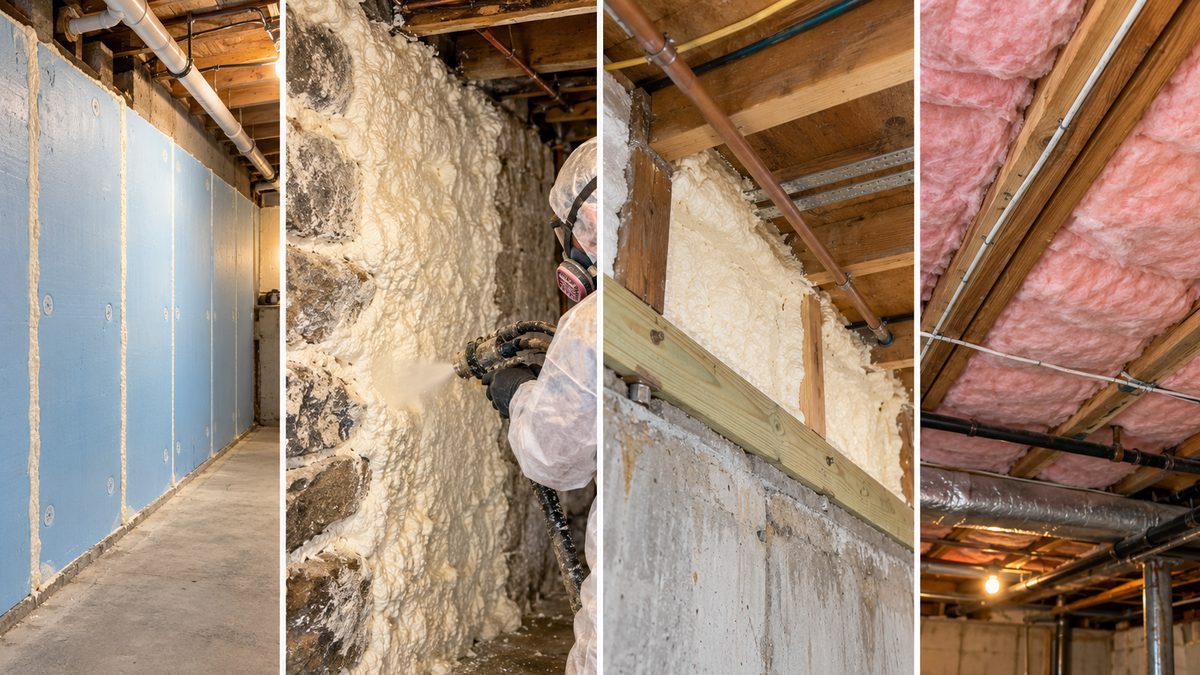
- Closed-cell spray foam applied carefully at rim joists and in specific areas where air sealing is the priority — not as a blanket solution.
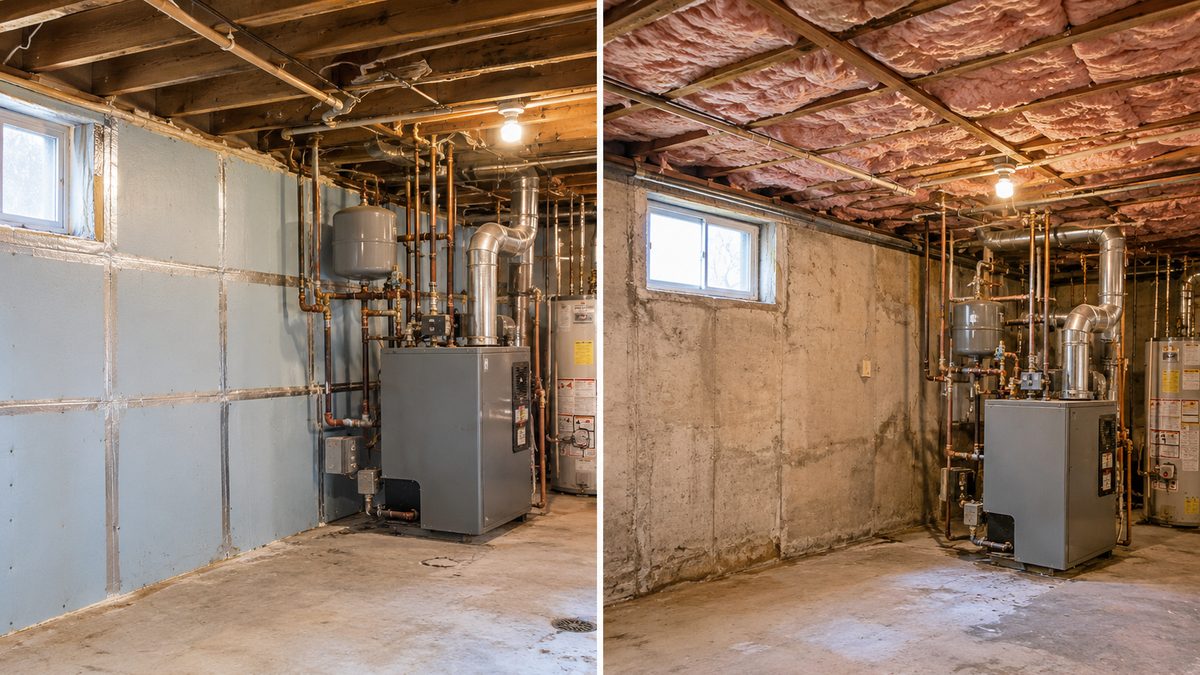
- Rigid foam board on basement walls and in crawl spaces, where moisture management is the bigger concern than aesthetics.
What doesn't work well is stuffing modern materials into cavities without understanding how the original building breathed. Older homes were built without vapor barriers. They were designed — intentionally or not — to allow moisture to move through the building envelope and dissipate. Seal everything too tight without accounting for that, and you've traded drafts for rot.
The bigger picture
A well-insulated historic home isn't a contradiction. It's a better version of what the builder was trying to achieve in the first place — a comfortable, durable structure that performs well for the people living in it. The goal isn't to freeze the house in amber. It's to make it livable for the next hundred years without erasing what made it worth keeping.
That's why we support organizations like Preservation Connecticut. Not because it's good marketing, but because we work in these homes every week. We've seen what happens when they're maintained well, and we've seen what happens when they're not. The organizations listed in this post are doing work that makes our job easier — and makes Connecticut a better place to own an old house.
Not sure which insulation type is right for your older Connecticut home? Read more here.
The Bottom Line on Historic Home Ownership in Connecticut
Owning a historic home in Connecticut means you're responsible for something that matters beyond your own property line. That's not a burden — it's actually one of the reasons these homes hold their value the way they do. People want to live in places with history, character, and craftsmanship you can't replicate with new construction.
But good intentions don't keep the heat in. And loving your home doesn't automatically come with a manual for maintaining it correctly.
That's what these organizations exist for. Preservation Connecticut gives you technical guidance and access to funding. SHPO administers a tax credit that can put up to $30,000 back in your pocket if you do the work right. Connecticut Landmarks shows you what professional preservation stewardship actually looks like in practice. Connecticut Preservation Action fights to keep the funding intact at the state level. And your local historical society knows things about your specific town and housing stock that no national database will ever capture.
The common thread across all of them is this: preserving a historic home is not about freezing it in time. It's about making smart decisions that honor what the building is while keeping it functional for the people living in it today. Better insulation, proper air sealing, moisture management — these aren't compromises. Done right, they're exactly what a well-maintained historic home needs to survive the next hundred Connecticut winters.
We've been insulating homes along the shoreline since 1977. A lot of those homes are old. Some are very old. We know how to work in them carefully, and we know when to flag a moisture issue or a structural concern before the insulation goes in. If you're ready to make your historic home more comfortable and efficient — without compromising what makes it worth keeping.
👉 Contact Nealon Insulation to talk through your historic home project.
Frequent Questions About Connecticut Historic Home Preservation Organizations
Does my home have to be on the National Register to get help from these organizations?
Not necessarily — it depends on which resource you're after. The Historic Homes Rehabilitation Tax Credit administered by SHPO does require your property to be listed on the National or State Register of Historic Places, either individually or as a contributing structure within a recognized historic district. But Preservation Connecticut's Circuit Riders program, local historical societies, and organizations like Connecticut Landmarks and Connecticut Preservation Action don't require any registration status to engage with. If you're not sure whether your home is listed, you can search SHPO's ConnCRIS database for free — just enter your address. And if it isn't listed but might qualify, Preservation Connecticut can help you understand the nomination process.
How do I actually apply for the Historic Homes Rehabilitation Tax Credit in Connecticut?
The process runs through SHPO and has three parts. First, you submit a Part 1 application confirming that your property is a certified historic structure. Second, you submit a Part 2 application describing the proposed rehabilitation work before you start — this is the critical step, because work must be approved before it begins. Third, after the work is complete, you submit a Part 3 application for final certification. SHPO reviews all submissions against the Secretary of the Interior's Standards for Rehabilitation. The credit is 30% of qualified expenditures, up to a $30,000 maximum, with a minimum project spend of $15,000. If you're planning a significant rehabilitation project, it's worth contacting SHPO early — they're generally helpful at the pre-application stage and can tell you upfront whether your scope of work is likely to qualify.
Can I insulate my historic home without violating preservation standards or losing my tax credit eligibility?
Yes — but the method matters. The Secretary of the Interior's Standards are primarily concerned with character-defining features: facades, original windows, historic trim and finishes, distinctive architectural details. Work that happens inside wall cavities, attic spaces, and below-grade areas generally doesn't conflict with those standards, as long as the installation doesn't require removing or damaging historic fabric. Dense-pack cellulose blown through small drilled holes is the most common approach for historic wall cavities — it leaves the original plaster or exterior cladding intact. What you want to avoid is any method that requires opening up walls, removing original materials, or applying rigid insulation over historic exterior surfaces in a way that changes the appearance or profile of the building. If your project is going through SHPO review, tell your insulation contractor upfront — they should be able to document their approach in a way that supports your application, not complicates it.
What's the difference between a local historic district and the National Register — and why does it matter for my renovation?
These are two separate designations that work differently. The National Register of Historic Places is a federal recognition program administered through SHPO. Being listed on the National Register is largely honorary — it doesn't restrict what you can do to your own property, but it does make you eligible for tax credit programs. A local historic district, on the other hand, is established by your municipality and carries actual regulatory authority. If your home is in a local historic district, you typically need approval from a local Historic District Commission before making changes to the exterior — things like window replacement, siding, additions, and sometimes even paint color. The rules vary significantly by town. Some Connecticut towns have active, detailed local historic district commissions; others have very light oversight. Before you start any exterior work on an older home, it's worth checking whether your address falls within a designated local district. Preservation Connecticut's website has a full map of local historic districts in Connecticut.
How do I find a contractor who actually knows how to work on a historic home in Connecticut?
Start with Preservation Connecticut's contractor directory at preservationct.org/directory — it lists professionals who have specifically opted in to work with the preservation community, which is a reasonable signal of familiarity with historic building standards. SHPO's website also has guidance on finding qualified contractors for tax credit projects. Beyond that, ask the right questions when you're getting estimates: Has the contractor worked on homes from the same era as yours? Do they understand how older buildings manage moisture differently than modern construction? Have they worked on projects that went through SHPO review? A contractor who's done this work before will know why you don't spray closed-cell foam across every surface of an 1890s balloon-frame house, and why dense-pack cellulose is often the smarter call. If they can't explain the reasoning, that's a flag. Nealon Insulation is listed in the Preservation Connecticut contractor directory — we've been working in historic homes along the Connecticut shoreline since 1977, and we're comfortable with both the building science and the preservation standards involved.
Related Articles

Let's Work Together
Ready to transform your home into an energy-efficient haven? Schedule your free energy assessment today and experience the Nealon difference for yourself.