
Why Is My House Still Cold After Insulation?
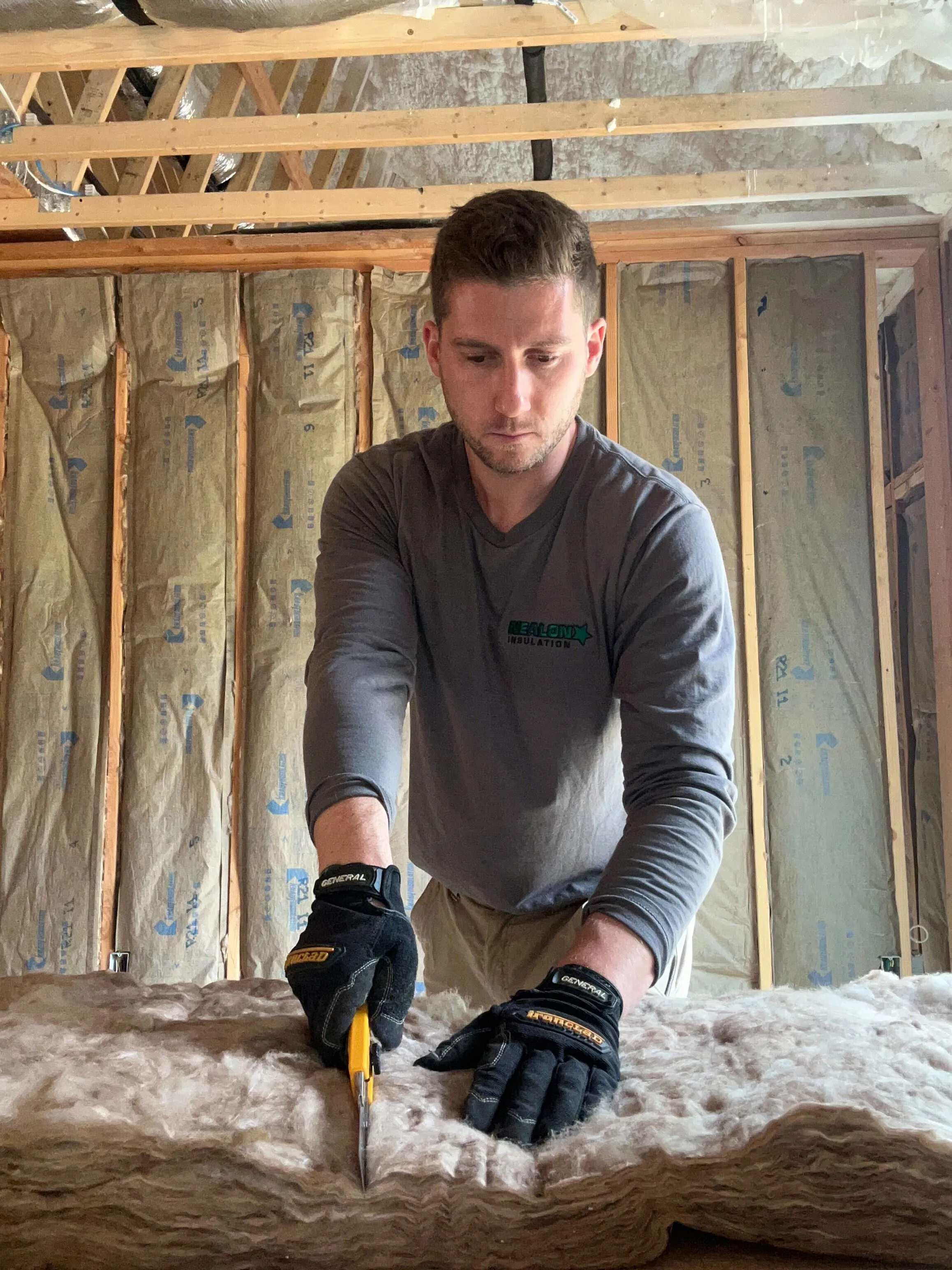

You finally did it. You added insulation — maybe to the attic, maybe the walls — and you waited for your heating bill to drop and your house to stop feeling like a cold storage unit. Then February rolled around and... nothing much changed. The bedroom is still drafty. The living room floor is still cold enough to make you flinch at 6am. You're still cranking the thermostat.
So what went wrong?
Probably nothing. The insulation is doing its job. The problem is that R-value — the number every insulation contractor leads with — only measures one part of what makes a house feel comfortable. And in a Connecticut winter, the other parts can easily undo all that good work.
Here's the thing most homeowners don't hear until after the job is done: insulation resists heat flow through a material. It doesn't stop air from moving through gaps. It doesn't control humidity. It doesn't prevent your body from radiating heat toward a cold wall. And in older Connecticut homes — most of which were built before anyone cared about energy codes — all three of those things are happening at once.
This post breaks down what R-value actually measures, what it misses, and what the real drivers of home comfort are. If your house still feels cold after insulation, this is the explanation you've been looking for.
R-Value Measures Resistance, Not Reality
R-value is a measurement of how well a material resists heat moving through it. That's it. It tells you how slow heat conducts through a piece of insulation under controlled lab conditions — no wind, no air movement, no moisture, no gaps. Just a flat sample of material sitting between two temperature plates.
That's a useful number. But it's not a complete picture of how a house performs in a Connecticut winter.
Think of it this way: a sleeping bag rated for 20°F will keep you warm — unless you leave the zipper open six inches. The bag's rating didn't change. But the heat is walking right out the gap. R-value works the same way. The number on the bag is real. The gap is just more real.
What R-value doesn't account for:
- Air movement — insulation doesn't stop air from flowing through gaps, cracks, and penetrations
- Moisture — wet insulation loses a significant portion of its rated performance
- Radiant heat loss — your body and your walls are constantly exchanging heat regardless of what's in the stud cavity
- Thermal bridging — heat moves through wood framing, metal fasteners, and concrete at rates that bypass the insulation entirely
- Installation quality — gaps, compression, and voids in the insulation itself reduce real-world performance below the rated value
In a lab, R-19 is R-19. In a 1965 Cape Cod on the Connecticut shoreline with settling batts, a leaky top plate, and rim joists that have never been touched, R-19 is something closer to R-11 on a good day.
The rating is a starting point. Your house doesn't care about starting points.
Thermal bridging explained.
Air Leakage Is Doing More Damage Than You Think
If R-value is the most oversold number in insulation, air leakage is the most underappreciated problem in older homes. And in Connecticut, where pre-1980 housing stock is everywhere and winters are serious, it's usually the first thing I want to look at.
Here's what's happening inside your walls and ceiling whether you know it or not: warm air is constantly rising and escaping out of the top of your house, and cold air is being sucked in at the bottom to replace it. This is called the stack effect, and it runs 24 hours a day all winter long. Your insulation is sitting there doing its job, and air is just routing around it through every gap it can find.
Should You Air Seal or Insulate First?
In a typical older Connecticut home, the usual suspects are:
- Top plates — the framing at the top of your walls where they meet the attic floor is almost never sealed in homes built before the 1990s
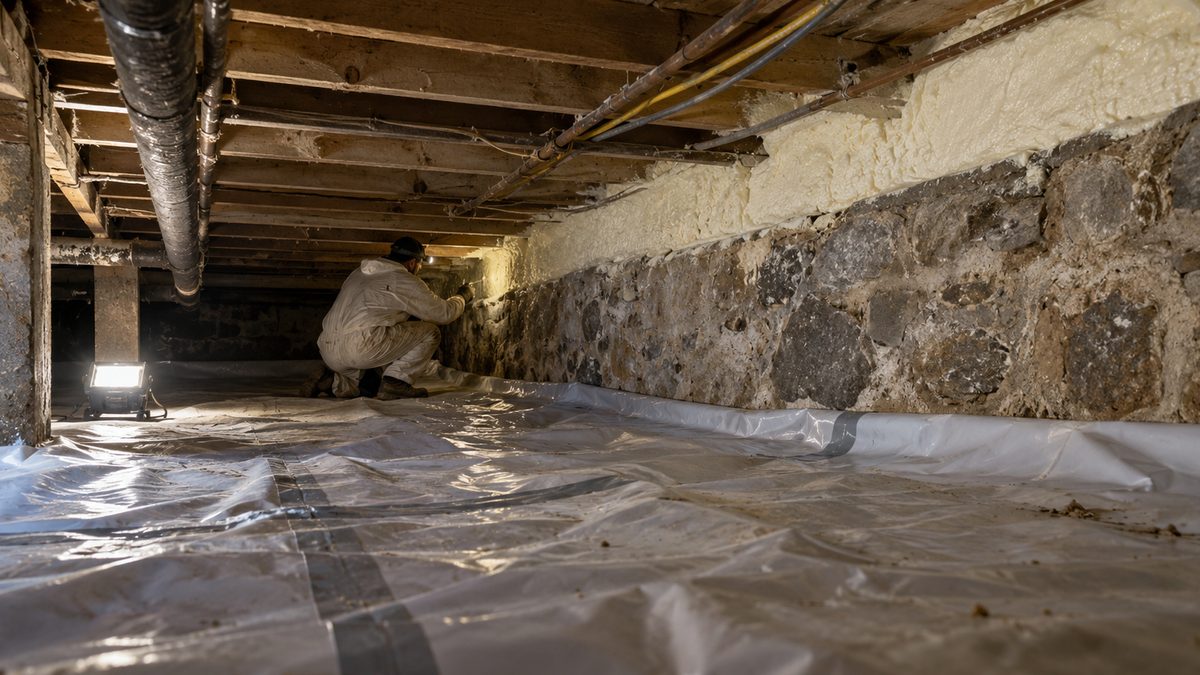
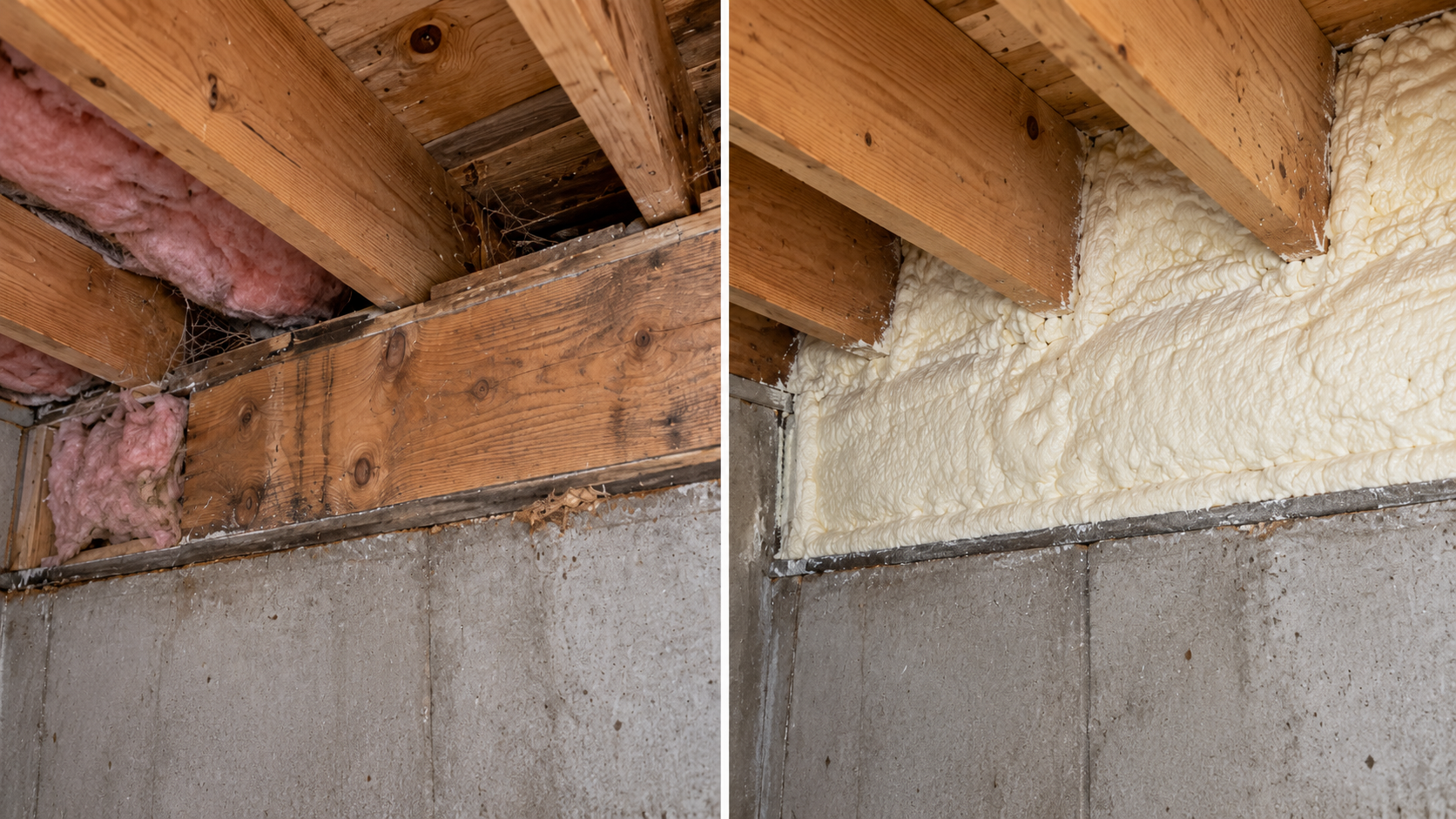
- Rim joists — the band of framing that runs around the perimeter of your foundation is one of the leakiest spots in the house
- Recessed lights — older can lights in the ceiling are basically open holes to the attic
- Attic hatches — often uninsulated, unsealed, and ignored entirely
- Plumbing and electrical penetrations — every pipe and wire that passes through a floor or ceiling is a potential air channel
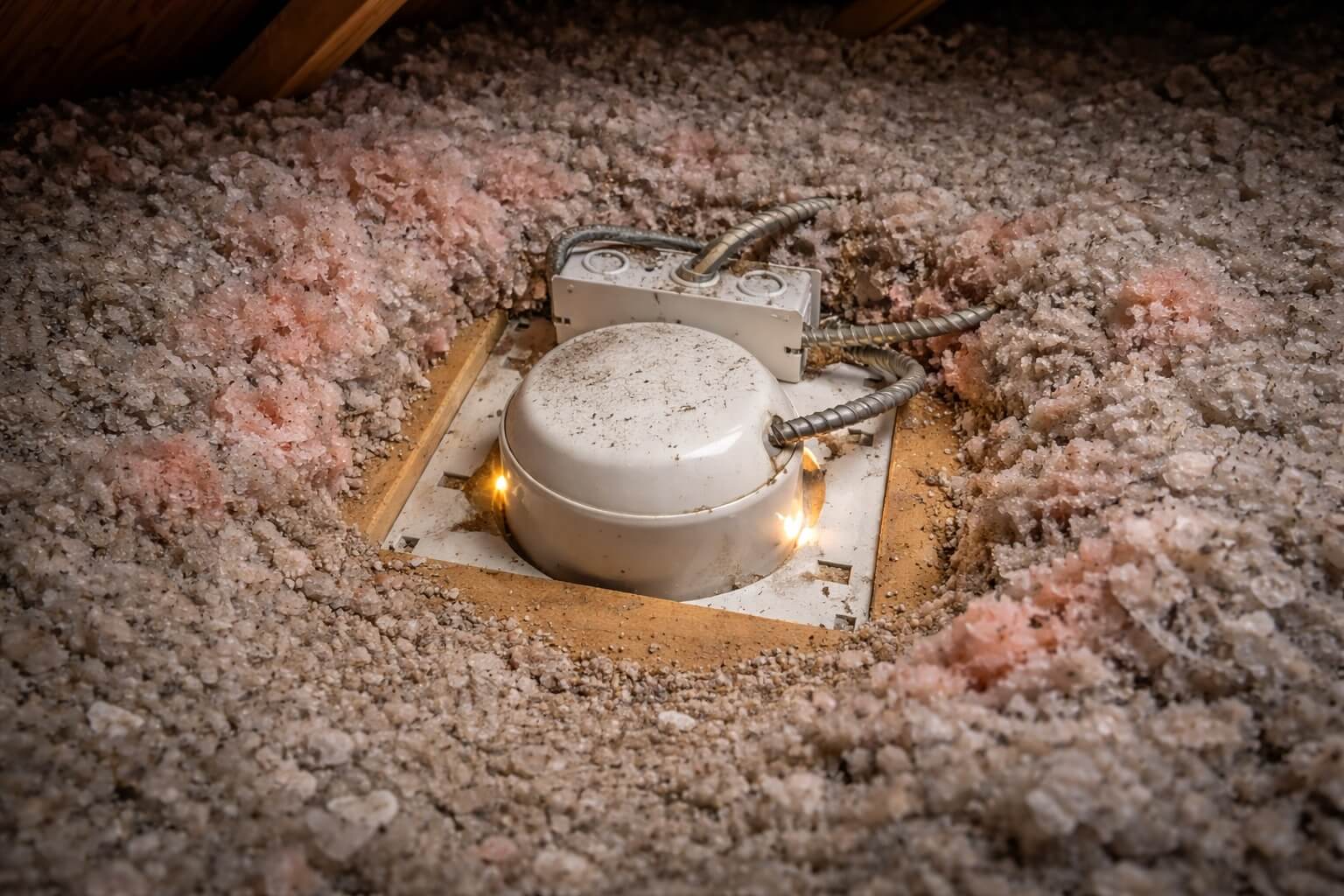
The insulation around all of these spots may be perfectly intact. But if the air is moving through the gaps, you're losing heat — and the insulation rating is essentially irrelevant at those points.
Air sealing and insulation are not the same thing. Insulation slows conductive heat transfer. Air sealing stops air movement. You need both, and doing one without the other leaves significant money and comfort on the table. We routinely find homes where adding insulation on top of unsealed framing did almost nothing, because the air leakage was the actual problem.
The Department of Energy estimates that air leakage accounts for 25–40% of heating and cooling energy loss in a typical home. That's not a rounding error. That's a major driver of your heating bill — and no R-value upgrade fixes it.
Wondering what air sealing actually involves — and whether your home needs it before insulation? Learn more about air sealing
Humidity Is Messing With How Warm You Feel
Most homeowners think about temperature. They set the thermostat, they check the forecast, they add a sweater. What they don't think about is humidity — and in Connecticut, that's a mistake.
Here's the basic physics: humid air feels warmer in summer and colder in winter. When indoor air gets too dry — which happens constantly in New England heating season as cold dry air infiltrates and gets warmed up — your body loses heat faster through evaporation. The thermostat says 68°F. Your body feels 62°F. You turn the heat up. Your heating bill goes up. The house still feels cold.
The sweet spot for indoor relative humidity in winter is generally between 30% and 50%. Below that range, you feel colder than the air temperature suggests, you get static electricity, wood floors and trim start to dry out, and respiratory irritation goes up. Above 50%, you start creating conditions for condensation and mold — especially in an older home with cold surfaces near windows and exterior walls.
For shoreline homeowners, this gets more complicated. The Connecticut coast brings elevated outdoor humidity in shoulder seasons — late fall and early spring — when temperatures are cool enough to push that moisture into cold wall cavities and attic spaces. Wet insulation is dramatically less effective than dry insulation. Fiberglass batts that get moisture-laden can lose 30–40% of their rated R-value. Now you've got both a comfort problem and a performance problem at the same time.
What this means practically:
- A whole-house humidifier or point-of-use humidifiers can make a real difference in winter comfort without touching your insulation
- Vapor management — where and how you place vapor retarders in your wall and ceiling assemblies — affects both moisture control and long-term insulation performance
- Air sealing helps here too: less cold dry air infiltrating means your indoor humidity levels are easier to maintain
Humidity isn't a footnote. In Connecticut, it's one of the primary reasons a well-insulated house can still feel uncomfortable for half the year.
How insulation helps indoor air quality?
Thermal Bridging — The Heat Highway You Didn't Know About
Here's something that surprises most homeowners: the wood framing inside your walls is actively working against your insulation. Not because it's failing — just because of basic physics.
Wood conducts heat. Not as fast as metal, but fast enough to matter. Every stud, joist, and header in your wall assembly creates a direct path for heat to move from the warm side of the wall to the cold side, bypassing the insulation in the cavities entirely. This is called thermal bridging, and it quietly undermines the performance of every insulated wall in your house.
In a standard 2x4 wood-framed wall, framing typically makes up around 20–25% of the total wall area. The insulation fills the cavities between the studs, but the studs themselves are essentially uninsulated. The result is that a wall rated at R-13 with fiberglass batts doesn't actually perform at R-13 — it performs closer to R-9 or R-10 when you account for the thermal bridging through the framing.
The fix for thermal bridging is continuous insulation — typically rigid foam or mineral wool board installed on the exterior side of the sheathing, which wraps the framing in a thermal break. This isn't always practical in a retrofit situation, but it matters a lot in new construction and deep energy renovations.
For most CT homeowners doing a standard insulation upgrade, the takeaway isn't that you need to gut your walls. It's that you should understand why your walls may never perform at their rated value — and factor that into your expectations.
Comparing insulation materials for walls and wondering which holds up best against thermal bridging? See our insulation materials breakdown
Radiant Heat Loss and Cold Surfaces
Here's something that throws a lot of homeowners off: you can walk into a room that's 70°F and still feel cold. The thermostat isn't lying. The room air temperature really is 70°F. But you still feel like you're standing in a refrigerator.
The reason is radiant heat loss — and it has nothing to do with your insulation rating.
Your body constantly radiates heat outward toward the surfaces around it. Walls, floors, windows, ceilings — your body is always trying to equalize with whatever is nearby. When those surfaces are cold, your body dumps heat toward them faster than it can generate it, and you feel cold regardless of what the air thermometer says. This is the same reason sitting next to a single-pane window in January feels miserable even with the heat cranked up.
Mean Radiant Temperature is the technical term for the average temperature of the surfaces surrounding you, and it matters just as much as air temperature for how comfortable you actually feel. Thermal comfort researchers generally agree that perceived comfort is roughly an equal blend of air temperature and mean radiant temperature. Which means cold walls, floors, and windows can make a 70°F room feel like 60°F.
What drives cold surfaces in a Connecticut home:
- Under-insulated exterior walls — especially common in pre-1980 homes with little or no wall insulation
- Uninsulated or under-insulated floors over garages, crawl spaces, or cantilevers
- Single or older double-pane windows — glass surface temps can drop well below room air temperature on a cold night
- Concrete foundation walls — uninsulated basement walls radiate cold into adjacent living spaces all winter
The fix isn't always more R-value in the attic. If your walls are empty or your floors are uninsulated, adding attic insulation won't address the cold surfaces your body is reacting to. This is exactly why a whole-house assessment matters — you need to know where the cold is actually coming from before you throw money at it. Homeowners tackling wall insulation often report the biggest perceived comfort gains precisely because walls have the most direct effect on mean radiant temperature.
Not sure if your walls are insulated — or what your options are if they're not? Explore wall insulation options
So What Actually Makes a House Feel Comfortable?
At this point you might be thinking: okay, so R-value isn't enough. What do I actually need?
The honest answer is that comfort in a Connecticut home comes from getting four things working together at the same time. R-value is one of them. Here's the full picture:
Thermal resistance (R-value)
Yes, it still matters. Attic insulation at R-49 to R-60 — Connecticut's standard guidance — reduces conductive heat loss through your ceiling. Wall insulation reduces loss through the envelope. You need adequate R-value as the foundation. But it's the foundation, not the whole house.
Calculate what r-value your home needs.
Air sealing
This is the piece most homeowners are missing. Before adding any insulation, the gaps, penetrations, and bypasses in your building envelope need to be addressed. Top plates, rim joists, attic hatches, recessed lights — all of it. Air sealing paired with insulation consistently outperforms insulation alone. In our experience, homes that get both done together see noticeably better results than homes that only got one or the other.
Moisture and humidity management
Keeping indoor humidity in the 30–50% range in winter makes a measurable difference in perceived comfort. It also protects your insulation from moisture-related performance loss over time. In shoreline homes especially, vapor management in wall and ceiling assemblies isn't optional — it's part of doing the job right.
Surface temperatures
Cold walls, floors, and windows will make you feel cold no matter what the thermostat says. Insulating the right surfaces — not just the attic — brings mean radiant temperature up and makes rooms feel warmer at lower air temperatures. That translates directly into lower heating bills without sacrificing comfort.
When we do a home assessment at Nealon, we're looking at all of these factors together. We're not just counting R-value. We're looking at where the air is moving, where the moisture is going, and which surfaces are pulling heat away from the people living in the house. That's the only way to give a homeowner an honest answer about what's actually going on.
If you're eligible for Energize CT rebates — and many Connecticut homeowners are — a comprehensive air sealing and insulation project can qualify for meaningful financial assistance. It's worth asking about before you start. For a deeper look at what the process looks like, check out our Energize CT rebate guide.
Thinking about a full home insulation upgrade and want to understand where to start and what it costs? Read our complete guide to adding insulation to an existing home
The Bottom Line on Home Comfort
R-value is not a lie. It's just incomplete.
A well-insulated home that still leaks air like a sieve, struggles with humidity, has cold walls radiating heat away from the people inside, and loses a quarter of its rated performance to thermal bridging — that home is going to feel uncomfortable no matter what the insulation label says. And in Connecticut, where winters are serious, heating costs are punishing, and most of the housing stock was built before anyone thought hard about building science, incomplete is the norm.
The good news is that all of these problems are solvable. Air sealing is straightforward and cost-effective. Humidity management doesn't require a major renovation. Wall and floor insulation upgrades address the radiant comfort issues that attic insulation never could. And when you approach it as a system — R-value plus air sealing plus moisture control plus surface temperatures — the results are noticeably different from just adding insulation and hoping for the best.
If your house still feels cold after insulation, you're not crazy. You're just missing a few pieces. Let's figure out which ones.
👉 Contact Nealon Insulation to schedule a free home assessment — we'll look at the full picture, not just the R-value.
Frequent Questions About Home Comfort and R-Value
Does adding more insulation always make a house warmer?
Adding more insulation does not always make a house warmer because insulation only slows heat transfer. Homes with major air leaks, moisture problems, unsealed rim joists, or empty wall cavities can still feel cold even with attic insulation rated at R-38 or R-49. Air sealing and complete thermal protection improve comfort more effectively than insulation alone.
What is the stack effect and why does it matter in winter?
The stack effect is the natural movement of warm indoor air rising and escaping through the upper parts of a house while cold outdoor air enters through lower gaps to replace it. Winter temperature differences of 40°F to 50°F increase this pressure-driven airflow in older Connecticut homes. Air sealing attic penetrations, rim joists, and basement leaks reduces heat loss caused by the stack effect.
How do I know if my house has an air sealing problem versus an insulation problem?
Drafts near outlets, baseboards, recessed lights, or attic access points usually indicate air leakage rather than insufficient insulation. Rooms with uneven temperatures, cold floors in winter, or hot upper floors in summer often show stack effect and uncontrolled airflow problems. A blower door test provides the most accurate diagnosis by measuring total home air leakage and identifying problem areas.
Can humidity control really make my house feel warmer without changing the insulation?
Proper humidity control can make a house feel warmer without changing insulation levels. Increasing indoor relative humidity from 20%–25% to 35%–45% reduces moisture evaporation from the skin, improving perceived warmth by the equivalent of about 2°F to 3°F. Whole-house humidifiers provide the most consistent control, but indoor humidity should remain below 50% to prevent condensation and mold growth.
What does a whole-home comfort assessment from Nealon actually look at?
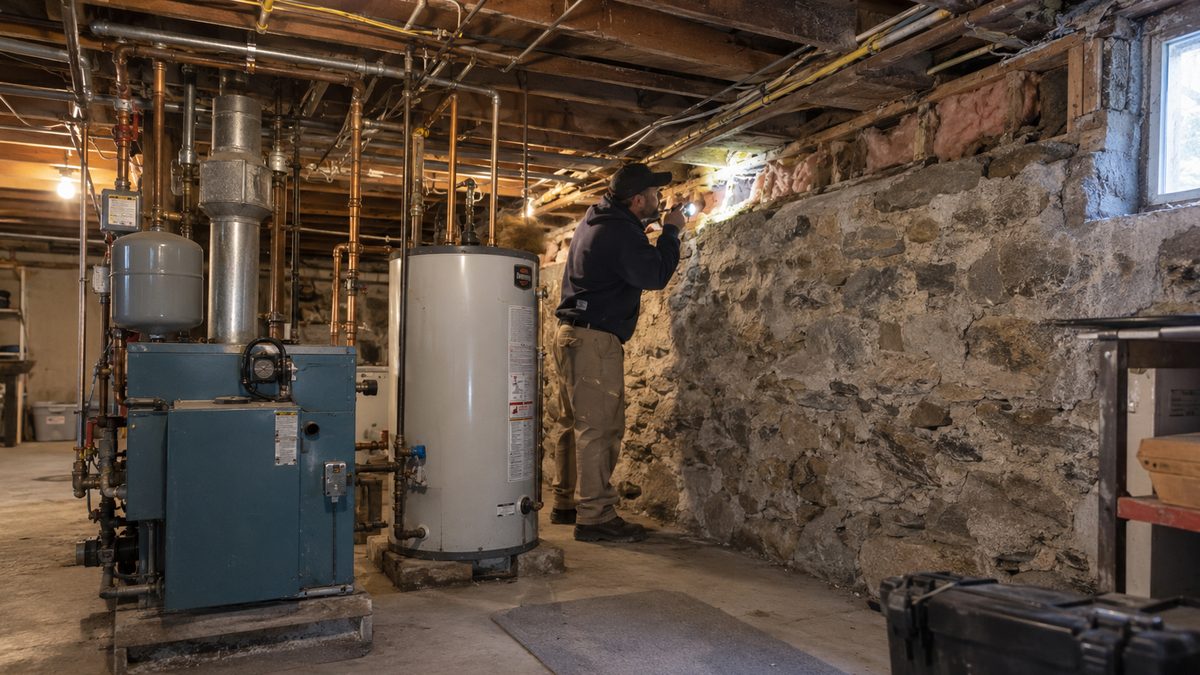
A whole-home comfort assessment from Nealon evaluates the entire building envelope to identify causes of energy loss and comfort problems. Technicians inspect the attic, walls, basement, rim joists, crawl spaces, insulation levels, air leakage, and moisture conditions. The assessment also reviews room comfort issues and heating system performance to prioritize the most effective upgrades. The assessment is free.
Related Articles
Let's Work Together
Ready to transform your home into an energy-efficient haven? Schedule your free energy assessment today and experience the Nealon difference for yourself.