
How Long Do You Have to Stay Out of the House After Spray Foam Insulation?
Most homeowners are advised to stay out of the house for up to 24 hours after spray foam insulation is installed. In many cases, re-entry can happen sooner, but 24 hours is the conservative, safety-first window that accounts for curing time, ventilation, and off-gassing.
Spray foam insulation is applied as a liquid that expands and hardens in place. During installation and the early curing phase, fumes are released as part of the chemical reaction. These fumes dissipate quickly when the job is done correctly, but they are the reason contractors recommend temporarily vacating the home—especially for children, pets, and anyone with respiratory sensitivities.
The exact amount of time you need to stay out depends on several factors, including the type of spray foam used (open-cell vs. closed-cell), the size and location of the project, and how well the space is ventilated. Understanding those variables helps homeowners plan ahead with confidence rather than guesswork.
Why Homeowners Are Asked to Leave During Spray Foam Installation
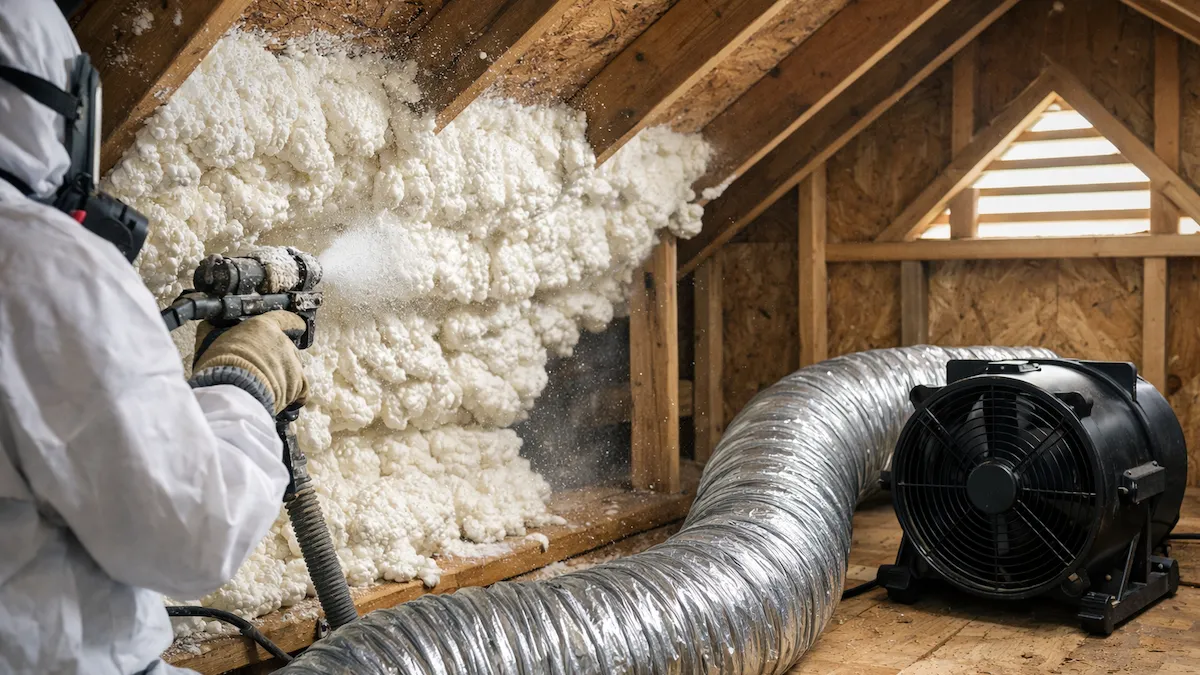
Homeowners are asked to leave during spray foam insulation installation because of temporary fumes released while the foam is being applied and cured. Spray foam starts as a liquid chemical mixture that reacts, expands, and hardens in place. During that reaction, gases are released into the air.
Professional installers wear protective equipment and use mechanical ventilation to control exposure during application. Vacating the home allows those safety measures to work as intended, preventing occupants from breathing concentrated fumes before they dissipate.
Another key reason for temporary vacancy is airflow. Spray foam installations rely on continuous air movement to clear fumes efficiently. Leaving the house empty helps ventilation systems work faster and more effectively.
This recommendation is a precautionary step, not a warning sign. Once cured, spray foam insulation becomes a stable, inert material that is safe for long-term residential use.
Why spray foam rim joists?
Typical Re-Entry Time After Spray Foam Insulation
For most residential projects, homeowners should plan to stay out of the house for up to 24 hours after installation. This timeframe covers curing, ventilation, and variability in conditions such as temperature and airflow.
While many spray foam products cure within hours, contractors recommend the longer window to ensure:
- Off-gassing has fully stopped
- Odors have dissipated
- Indoor air quality has returned to normal
By the time the recommended wait period has passed, the foam is fully hardened and the home is safe for normal occupancy.
Does Re-Entry Time Differ Between Open-Cell and Closed-Cell Spray Foam?
Yes. Foam type matters, and it can influence how cautious homeowners should be.
- Open-cell spray foam is lighter and more breathable. It typically cures faster and clears odors sooner when ventilation is adequate.
- Closed-cell spray foam is denser and applied in thicker layers. Because of this, it often requires a longer ventilation period, especially in enclosed spaces like attics or crawl spaces.
That said, installation quality and ventilation matter just as much as foam type. A well-ventilated closed-cell job can clear faster than a poorly ventilated open-cell installation. This is why contractor guidance should always outweigh generic timelines found online.
What Affects How Long You Need to Stay Out of the House?
Several job-specific factors influence how quickly fumes dissipate and when it is safe to return:
- Ventilation quality – Strong mechanical ventilation clears fumes faster
- Project size and location – Attics, crawl spaces, and whole-house jobs often take longer
- Weather conditions – Cold or humid conditions can slightly slow curing
- Installation quality – Proper mixing and application prevent lingering odors
Experienced contractors evaluate these variables before giving re-entry guidance, which is why their recommendations should always be followed.
Is Spray Foam Insulation Safe After Installation?
Yes. Spray foam insulation is safe once it has fully cured and ventilation is complete.
Safety concerns are tied to the installation phase, not the finished product. After curing, spray foam becomes chemically inactive and does not continue releasing fumes. When installed correctly, it meets building codes and manufacturer safety standards and does not negatively impact indoor air quality.
Problems that do occur are almost always related to improper installation or rushed re-entry—not the material itself.
Special Considerations for Children, Pets, and Sensitive Individuals
Homes with children, pets, or people with respiratory sensitivities should take a more cautious approach.
- Pets are often more sensitive to unfamiliar odors
- Children spend more time closer to floors and enclosed spaces
- Individuals with asthma or chemical sensitivities may notice lingering smells longer
In these cases, extending the re-entry window or allowing extra ventilation time can improve comfort and peace of mind. Planning ahead—such as arranging pet care or timing the job around travel—can make the process much easier.
How Contractors Ensure Safe Re-Entry
Reputable spray foam contractors follow strict safety procedures, including:
- Using mechanical exhaust ventilation during and after installation
- Applying foam in controlled lifts per manufacturer guidelines
- Monitoring curing and odor levels before approving re-entry
Professional contractors do not rely on guesswork. Re-entry guidance is based on actual site conditions, not arbitrary timelines.
How to Choose the Right Insulation Company for Your Home?
Signs It’s Safe to Return to Your Home
While contractor approval is always the final word, common signs include:
- No strong or chemical odors
- Foam that is fully cured and firm
- Ventilation systems have completed their run time
- Normal air circulation has returned
If odors linger or conditions feel uncomfortable, additional ventilation time is a simple and effective solution.
Common Spray Foam Safety Questions
Do all spray foam contractors follow the same re-entry guidelines?
No, spray foam contractors do not follow identical re-entry guidelines. Re-entry times vary based on foam type, ventilation quality, equipment used, and project size. Most professional contractors follow manufacturer specifications, but conservative timelines differ depending on job conditions and safety practices.
What happens if I return home too soon after spray foam installation?
Returning home too soon after spray foam installation can expose occupants to lingering fumes or odors that have not fully dissipated. This exposure may cause temporary irritation or discomfort but rarely leads to long-term health issues. Following contractor re-entry timelines prevents these avoidable issues.
Does re-entry time affect the final performance of the spray foam?
Re-entry time affects spray foam performance indirectly. Entering too soon often means ventilation or curing was rushed, which can impact comfort and odor clearance. While cured foam still insulates effectively, allowing full re-entry time ensures even curing, proper off-gassing, and a predictable installation outcome.
Can I schedule spray foam insulation if I work from home?
Yes, you can schedule spray foam insulation if you work from home, but planning is required. You cannot remain in the home during installation and initial curing. Most homeowners plan to be off-site for the day or overnight by working remotely elsewhere, scheduling before a weekend, or aligning the project with travel.
What questions should I ask a contractor before booking spray foam insulation?
Ask spray foam contractors clear safety and process questions before booking. Key questions include re-entry time after installation, foam type used, ventilation methods, signs it is safe to return, and post-installation contact options. Clear, confident answers usually indicate an experienced and professional contractor.
When to Talk to a Professional Before Scheduling Spray Foam
It is especially important to consult a professional if:
- Someone in the home has asthma or chemical sensitivities
- The home has limited ventilation or complex attic spaces
- The project involves multiple areas or the entire house
Early conversations help align expectations and avoid last-minute surprises.
What to Expect and How to Plan Ahead
For most homeowners, planning to stay out of the house for up to 24 hours is the safest and least stressful approach. With proper preparation and professional installation, spray foam insulation is a short-term inconvenience that delivers long-term comfort, efficiency, and air sealing benefits.
Ready to Talk Through Your Spray Foam Project?
If you are considering spray foam insulation and want clear guidance on safety, timing, and what to expect, a quick conversation can help you plan with confidence.
👉 Have questions about spray foam insulation or re-entry timing? Contact Nealon Insulation.
Related Articles
Let's Work Together
Ready to transform your home into an energy-efficient haven? Schedule your free energy assessment today and experience the Nealon difference for yourself.