
How to Remove Insulation (Without Making a Total Mess)

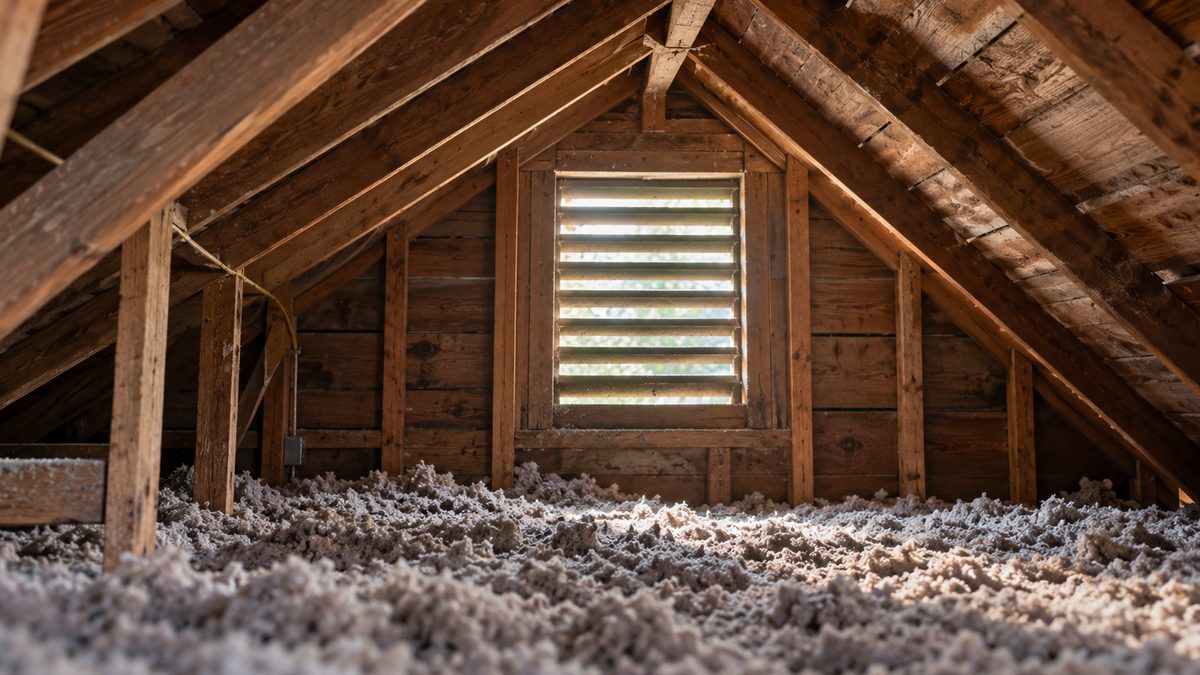
You go up into the attic for the first time in years — maybe you're prepping for a renovation, maybe you followed a home inspector up there, maybe you just noticed your heating bills climbing every winter and finally decided to investigate. And what you find isn't pretty. Insulation that's matted down and gray. A corner that smells like something lived there. Or that weird gravelly stuff you've never been able to identify.
Now you're wondering: does all of this have to come out? And if it does — can I do it myself?
Those are exactly the right questions. The answers depend on what you're dealing with, and getting it wrong in either direction costs you. Pull out insulation that didn't need to come out, and you've created a project. Leave in insulation that's contaminated or damaged, and you've got a health problem, an energy problem, or both.
This post walks through when insulation removal is actually necessary, how the process works, what's genuinely DIY-able versus what requires a professional, and what you should do the moment the old material is out. If you're a Connecticut homeowner — especially in an older home along the shoreline — there are a few things specific to this market worth knowing before you touch anything.
Why Would You Need to Remove Insulation in the First Place?
Most insulation, if it's installed correctly and left alone, can last decades. Fiberglass batts don't have an expiration date. Blown-in cellulose doesn't just spontaneously give up. So if you're thinking about removal, something has usually gone wrong — or the material was never right to begin with.
Here are the most common reasons homeowners end up pulling insulation out:
Rodent infestation. This is the big one in Connecticut. Mice and squirrels nest in attic insulation, and they don't leave quietly. They leave behind urine, droppings, nesting debris, and sometimes carcasses. Contaminated insulation isn't just unpleasant — it's a legitimate health hazard. Once that happens, spot-cleaning isn't really an option. The whole thing has to come out. We wrote a full breakdown of what rodent removal from attic actually looks like on a real Connecticut job if you want to see how that plays out start to finish.
Water damage or mold. A roof leak, ice dam, or chronic humidity problem can saturate insulation. Wet insulation loses most of its R-value immediately and becomes a breeding ground for mold. If it's been wet long enough, removal is the only path forward.
Hazardous materials. Homes built before 1980 — which is a lot of Connecticut's housing stock — may contain vermiculite insulation in the attic, which has a well-documented association with asbestos contamination. Some older fiberglass products also raise concerns. If you don't know what's up there, you need to find out before you touch anything.
Renovation or air sealing work. Sometimes insulation has to come out temporarily to do the work underneath it right — especially during deep energy retrofits where proper air sealing requires clear access to the attic floor.
It's just not doing its job anymore. Old, compressed, or improperly installed insulation may simply have degraded to the point where replacement makes more financial sense than leaving it. If you're on the fence about whether removal is warranted, why remove old insulation walks through the decision in more detail.
The Big Question — DIY or Hire a Pro?
Let's be straight with you: some insulation removal is genuinely manageable for a handy homeowner. Most of it isn't. And the consequences of getting it wrong range from "you'll be itchy for a week" to "you've just spread asbestos fibers through your living space."
Here's how to think about it honestly. For a broader look at where the DIY line sits on insulation work generally, DIY insulation vs. hiring a contractor is worth a read before you decide.
What's reasonably DIY-able
If you have an accessible attic with good headroom, a limited amount of unfaced fiberglass batts, no signs of contamination, and you're confident there's no hazardous material involved — a careful homeowner can bag and remove that material. You'll need a proper N95 respirator (not a dust mask), disposable coveralls, gloves, eye protection, and heavy-duty contractor bags. It's slow, unpleasant work, but it's doable.
What isn't — and this is the longer list:
The honest contractor answer: if there's any doubt about what's up there, have someone take a look before you start pulling things out. Connecticut's older housing stock means the odds of running into something unexpected are higher than you'd think.
How Insulation Removal Actually Works
If you're hiring a professional as your insulation removal company — which, for most of the scenarios above, you should — here's what the process actually looks like. No mystery, no magic. Just methodical work.
Inspection first
Before anything gets touched, a good contractor walks the attic and assesses what's there. What type of insulation? How much? Any signs of moisture, pest activity, or hazardous material? Is the attic floor accessible or buried under two feet of blown-in? This is also when you'd identify whether air sealing work needs to happen before new insulation goes in — and it almost always does in older Connecticut homes.
Containment and protection
For contaminated jobs — rodents, mold, suspected hazardous material — the work area gets contained before removal starts. That means sealing off the attic hatch, sometimes running negative air pressure, and making sure whatever is up there stays up there until it's bagged and out of the house.
The actual removal
This depends on what type of insulation you're dealing with.
- Blown-in insulation — whether cellulose or fiberglass — is removed with a commercial insulation vacuum. These are large, truck-mounted or trailer-mounted units with long hose runs that suck the material out and deposit it into collection bags for disposal. This is not a shop vac. A proper insulation vacuum moves serious volume and uses HEPA filtration to keep particulates contained. The work goes faster than most homeowners expect — a typical attic can be cleared in a few hours with the right equipment.
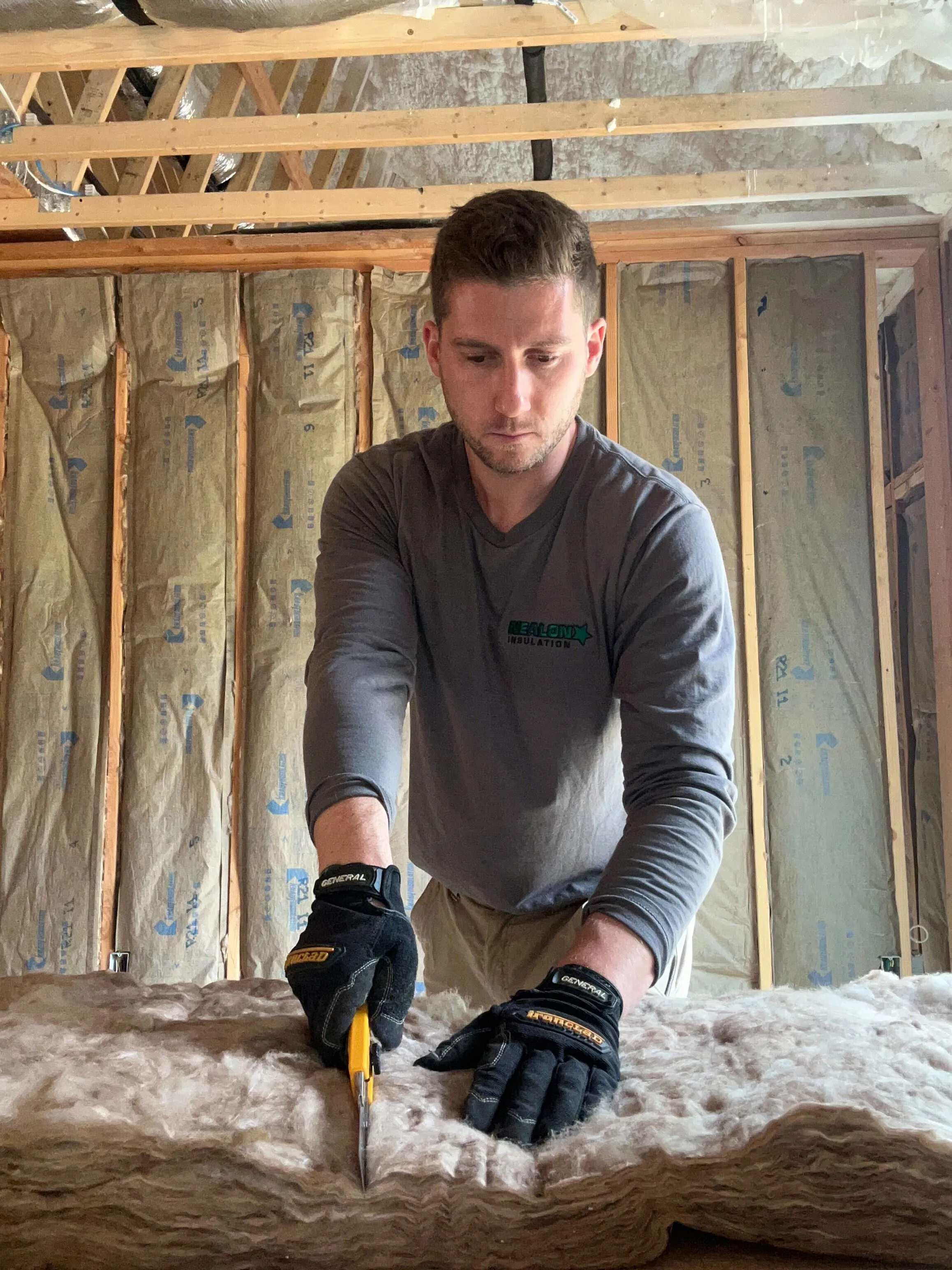
- Fiberglass batts are removed by hand. Technicians bag them on-site in heavy contractor bags. It's slower per square foot than vacuuming out blown-in, but straightforward in an accessible attic.
- Spray foam, as mentioned, is a different animal. It has to be mechanically cut away — scored, scraped, ground down. It's labor-intensive and rarely gets to a perfectly clean substrate, which matters for what comes next.
Disposal
Bagged insulation gets hauled off-site. If the material is contaminated or hazardous, disposal follows specific protocols. This is another reason DIY removal of contaminated insulation creates problems — you can't just throw bags of rodent-soaked cellulose in your curbside bin.
What happens after the attic is empty
This part matters as much as the removal itself. An empty attic is your best opportunity to air seal — to close up the bypasses, gaps, and penetrations that have been leaking conditioned air for decades. Recessed lights, top plates, plumbing chases, attic hatches — all of it. If you skip this step and just blow new insulation back in, you've lost the single best chance to actually fix the underlying problem.
In Connecticut, where heating costs are among the highest in the country, that air sealing work is often where the real payback lives.
How Much Does Insulation Removal Cost?
This is usually the first question, and it's a fair one. The honest answer is: it depends on enough variables that any number you find online should be treated as a rough starting point, not a quote.
That said, here's a realistic framework.
Typical cost ranges: Professional insulation removal generally runs between $1.00 and $2.50 per square foot for a straightforward attic job — meaning accessible space, no contamination, standard blown-in or batt material. For a 1,500 square foot attic, you're looking at roughly $1,500 to $3,750 before disposal fees and before any reinstallation work.
Contaminated jobs cost more. Rodent remediation, mold, or hazardous material abatement adds labor, containment, specialized disposal, and sometimes third-party testing. It's not unusual for those projects to run two to three times the base removal cost.
What drives the price up:
- Attic access. A pull-down stair with decent headroom is a different job than a hatch you have to shimmy through sideways. Tight access slows everything down.
- Depth and volume. An attic with 4 inches of old cellulose clears faster than one with 16 inches of compressed fiberglass. More material means more time and more disposal.
- Contamination. Any job involving rodents, mold, or suspected hazardous material requires additional containment, PPE, and disposal protocols. That adds cost — but it's non-negotiable.
- Disposal fees. Bagged insulation has to go somewhere. Tipping fees at Connecticut transfer stations vary, and contaminated material may require special handling.
The case for bundling removal with reinstallation: If you're already paying to have the attic cleared, that's the right time to air seal and reinstall. Mobilization costs are already covered. The attic is empty and accessible. Doing it in one project almost always costs less than two separate visits — and gets you to a finished, code-compliant attic in one shot.
Connecticut attics should hit R-49 to R-60 per current energy code guidance. If you're starting from scratch, you might as well land where you need to be.
Energize CT rebates: Depending on your utility and the scope of work, insulation and air sealing upgrades may qualify for rebates through Energize CT. It won't cover the removal itself, but it can meaningfully offset the cost of the new installation that follows. See our full guide to Connecticut insulation rebates to understand what's available and how to apply.
What to Do After the Old Insulation Is Out
An empty attic feels like a blank slate. It is — but only if you use it right.
This is the step most homeowners and, frankly, some contractors rush past. The insulation is out, the attic is clean, and there's pressure to get the new material in and close everything up. But what you do between removal and reinstallation determines how well the finished project actually performs.
Air seal before you insulate. Every time.
Insulation slows heat transfer. It does not stop air movement. Those are two different things, and confusing them is expensive. If you want the full breakdown on why sequence matters here, air sealing vs. insulation covers it in depth.
In a typical older Connecticut home, the attic floor is full of gaps — around recessed light cans, where interior partition walls meet the ceiling, around plumbing stacks and electrical penetrations, at the tops of exterior walls. Warm interior air finds every one of those gaps and moves through them freely, carrying heat and moisture into the attic. Adding insulation on top of unsealed bypasses is like putting a blanket over a screen door. It helps a little. It doesn't actually fix the problem.
With the attic floor exposed, you can see and seal everything. Spray foam and caulk close the small stuff. Rigid foam or site-built baffles handle the larger bypasses. This is the work that makes insulation perform the way the R-value label promises it will.
Inspect for what caused the problem in the first place.
If you're removing insulation because of water damage, a roof leak, or an ice dam — find the source before you put anything back. New insulation installed over an active moisture problem will be right back where you started inside of a few years.
Same goes for pest entry points. If mice got in once, they'll find their way back unless you've identified and closed the gaps. Look at eaves, soffits, utility penetrations, and anywhere a pipe or wire enters the attic from outside.
Choose the right replacement material.
For most Connecticut attics, blown-in insulation is the right call — either cellulose or fiberglass. Both conform well to irregular attic floors, cover obstructions cleanly, and can be installed to whatever depth hits your target R-value. Not sure which one is right for your situation? The cellulose vs. fiberglass insulation breakdown covers the tradeoffs honestly.
Fiberglass batts can work in accessible attics with regular joist bays and no obstructions, but they leave more room for installation error — gaps, compression, and incomplete coverage are common problems that show up in thermal imaging and nowhere else.
Hit the right R-value.
Connecticut's climate zone (5A) calls for attic insulation in the R-49 to R-60 range. If your old insulation was installed in 1985 and you've been running at R-19, the removal and replacement project is also your opportunity to get to where you should have been for the last forty years. The energy savings are real, and the comfort difference — especially in rooms directly below the attic — is usually noticeable within the first heating season.
Removing insulation isn't complicated, but it's not always simple either. What's up in your attic — and what's wrong with it — determines everything: whether it's a DIY afternoon or a professional remediation job, whether it costs $800 or $8,000, and whether the project ends with a clean attic or a much bigger problem than you started with.
The through-line in all of it is this: don't skip the inspection, don't skip the air sealing, and don't assume you know what's up there until someone has actually looked. Connecticut homes have a way of surprising you.
If the old insulation is out — or you're trying to figure out whether it needs to come out — the next step is getting eyes on the attic before anything else happens. That's where a good contractor earns their keep. Not by selling you the most expensive option, but by telling you what's actually there and what actually needs to happen.
Nealon Insulation has been doing this work on Connecticut shoreline homes since 1977. We've seen the mouse nests, the vermiculite, the ice dam damage, and the attics that haven't been touched since the Carter administration. We know what to look for — and we know how to fix it the right way, once.
Final Thought
Removing insulation isn’t glamorous, but it is the first step toward better energy efficiency, comfort, and peace of mind. Do it right, and you set your home up for decades of toasty winters and cool summers.
👉 Contact Nealon Insulation today and let’s talk about your project. We’ll bring the tools, the crew, and the “don’t-worry-we’ve-seen-worse” attitude.
Frequent Questions About Insulation Removal
Can I vacuum out blown-in insulation myself?
Technically, yes — but the equipment matters enormously. The commercial insulation vacuums professionals use are truck- or trailer-mounted units with serious suction capacity and HEPA filtration. A standard shop vac, or even a heavy-duty wet/dry vac, doesn't come close. It will clog, lose suction, and spread fine particulates into the air rather than capturing them. Some tool rental shops carry insulation vacuum attachments, and for a small, uncontaminated attic with easy access, that can be a workable option. But if you're dealing with any volume of material, or any contamination at all, the rental route tends to be slower, messier, and less complete than hiring a crew with the right equipment. You'll also still need to handle bagging and disposal, which has its own logistics. For most homeowners, the time and hassle calculation tips toward hiring a pro — especially when you factor in that the attic needs to be air sealed before new insulation goes in anyway.
How do I know if my old insulation contains asbestos?
You can't tell by looking — not reliably. Vermiculite has a distinctive appearance (gray, pebble-like, lightweight), and if you see it, treat it as suspect regardless. But asbestos fibers were also used as an additive in some older loose-fill and batt products, and those look no different from non-asbestos versions. The only way to know for certain is to have a sample tested by a certified laboratory. If your home was built before 1980, the safest approach is to assume there may be something up there until testing says otherwise. Don't disturb the material before you know what it is. In Connecticut, the Department of Public Health maintains a list of licensed asbestos inspectors and abatement contractors. This is not a corner worth cutting.
How long does professional insulation removal take?
For a typical Connecticut attic — say, 1,000 to 1,500 square feet, accessible via pull-down stairs, with standard blown-in cellulose or fiberglass and no contamination — a professional crew can usually clear the space in three to five hours. Larger attics, difficult access, or contaminated material will add time. A job involving rodent remediation, mold containment, or hazardous material abatement may stretch across multiple days depending on the scope and any required third-party testing or clearance inspections. The air sealing work that should follow removal is a separate phase and adds additional time — typically another half day to full day for a thorough job on an older home with lots of penetrations.
Will my homeowner's insurance cover insulation removal after water damage or a rodent infestation?
Sometimes — but it depends heavily on your policy language and the cause of the damage. Sudden and accidental water damage (a burst pipe, a storm-related roof failure) is more likely to be covered than long-term moisture intrusion or gradual leaks, which most policies exclude as a maintenance issue. Rodent damage is a gray area: some policies cover the resulting damage if you can demonstrate it was sudden and not the result of a long-standing infestation, but many exclude pest damage outright. The removal and remediation costs are often coverable if the underlying event is covered — but the reinstallation may be treated separately. Document everything before any work starts, notify your insurer before removal begins, and get the scope of work in writing from your contractor. A claims adjuster will want to see evidence of what was there and why it needed to come out.
Do I need a permit to remove and replace attic insulation in Connecticut?
In most Connecticut municipalities, insulation replacement alone does not require a building permit — it's considered routine maintenance. However, if the work is part of a larger renovation, if it involves changes to the structure, or if it's connected to a mechanical system upgrade, a permit may be required. Some towns also require permits for work that involves asbestos abatement, which is governed separately under state and federal regulations. The safest move is to check with your local building department before work begins — permit requirements vary town to town, and what's routine in one municipality may require paperwork in the next. A reputable contractor will know the local requirements and should be able to advise you before the project starts.
Related Articles
Let's Work Together
Ready to transform your home into an energy-efficient haven? Schedule your free energy assessment today and experience the Nealon difference for yourself.