
Is Blown-In Insulation Right for Crawl Spaces or Basements?
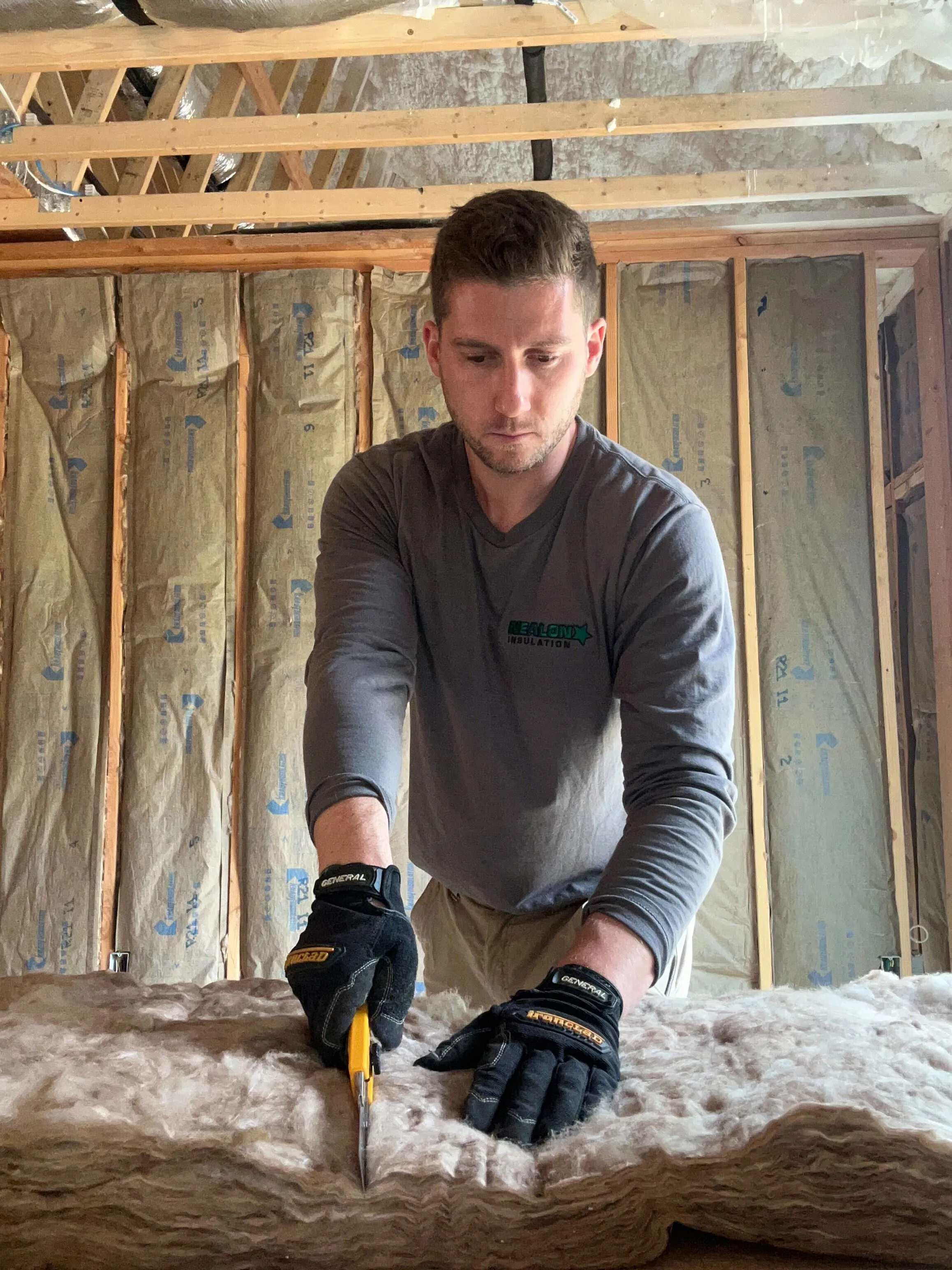
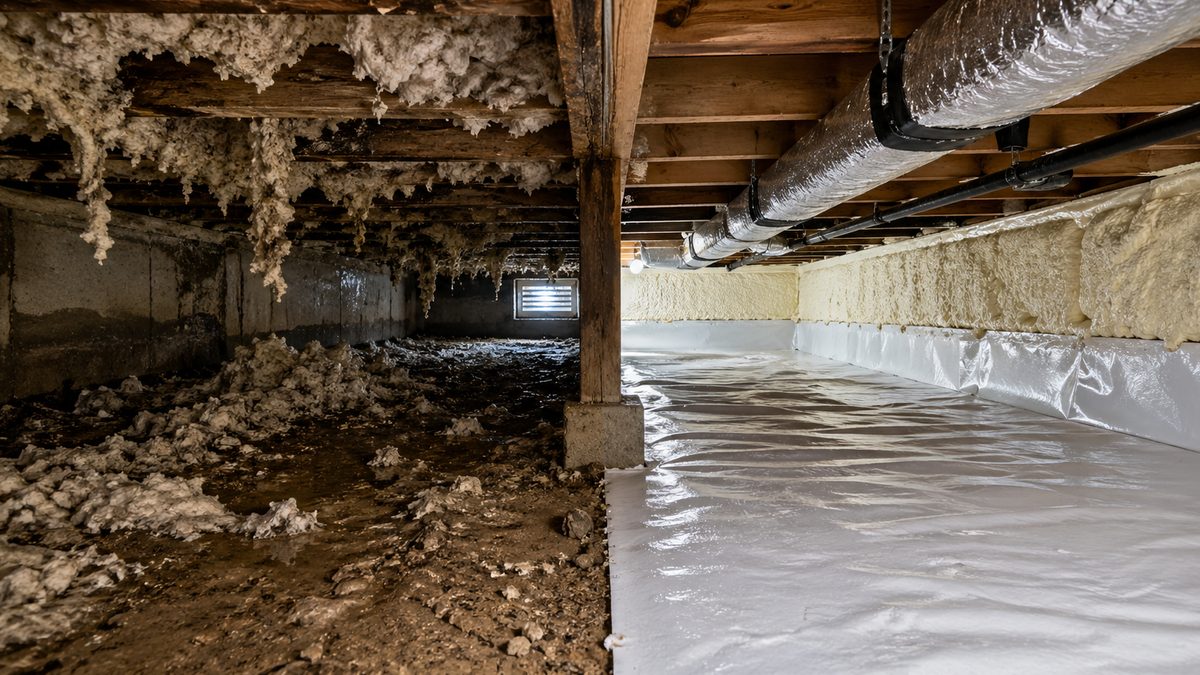
Blown-in insulation is one of the most versatile products in a contractor’s toolkit. It fills odd-shaped cavities, covers attic floors fast, and delivers solid R-value without a lot of fuss. So it makes sense that homeowners ask whether it works just as well in crawl spaces and basements.
The short answer: sometimes. The longer answer is what this post is about.
Below-grade spaces in Connecticut homes are a different animal than attics. You’re dealing with ground moisture, humidity that swings with the seasons, and in many older shoreline homes, crawl spaces that haven’t seen daylight since the Eisenhower administration. Drop the wrong insulation into that environment and you’re not solving a problem — you’re creating a new one.
This post breaks down where blown-in insulation works in crawl spaces and basements, where it doesn’t, and what you should be using instead if blown-in isn’t the right call.
What Blown-In Insulation Actually Does
Blown-in insulation — whether cellulose or fiberglass — is exactly what it sounds like. Loose material gets loaded into a machine, pushed through a hose, and blown into place. It conforms to whatever space it lands in, which makes it genuinely useful in irregular cavities where batt insulation would leave gaps.
It’s a strong performer in attics for a few reasons. It settles into every corner, it installs quickly over large floor areas, and it’s easy to hit Connecticut’s recommended R-49 to R-60 range without a lot of complexity.
How It Works in Practice
Cellulose is made from recycled paper treated with fire retardant and borate-based pest deterrents. Fiberglass blown-in is spun glass fiber, similar to batt insulation but in loose form. Both materials rely on trapped air pockets to slow heat transfer — that’s where the R-value comes from.
The catch is that both materials are porous and absorbent to varying degrees. They don’t form an air barrier on their own. And they don’t handle sustained moisture exposure without degrading.
If you want to understand how blown-in insulation is installed before evaluating whether it’s right for your space, that’s a good place to start.
Where It Performs Best
Blown-in insulation is at its best when it’s:
- Sitting on a flat, horizontal surface (like an attic floor)
- Protected from bulk water and ground moisture
- In a space with reasonable airflow and vapor management already in place
- Being added on top of existing insulation to bring R-value up to code
That last point matters in Connecticut, where a lot of pre-1980 homes are sitting at R-11 or R-19 in the attic when they should be closer to R-49. Blown-in is a cost-effective way to close that gap — up top. Down below is a different conversation.
What are the different types of blown-in insulation — and how do they compare?
The Problem with Blown-In in Crawl Spaces
Here’s the honest answer most contractors won’t give you upfront: blown-in insulation is generally a poor choice for crawl spaces. It’s not that the material is bad — it’s that the environment works against it in almost every way.
Moisture Is the Enemy
Crawl spaces in Connecticut are inherently damp. Ground moisture rises through the soil, humidity moves in through vents, and seasonal temperature swings create the perfect conditions for condensation. On the shoreline especially, you can add salt air and elevated ambient humidity on top of that.
Cellulose absorbs moisture readily. When it gets wet, it loses R-value, it compacts, and it becomes a hospitable environment for mold. Fiberglass is more resistant to moisture absorption, but it still loses thermal performance when it gets damp — and wet fiberglass sitting against wood framing is not a situation you want to leave unchecked.
Neither material does anything to address the moisture problem itself. They just sit in it. Understanding how to approach mitigating moisture in crawl spaces before any insulation goes in is the more important first conversation.
Installation Challenges in Tight Spaces
Blown-in insulation needs somewhere to land and stay. In an attic, gravity does the work — the material settles on the floor and stays put. In a crawl space, you’re often trying to insulate between floor joists overhead, which means the material needs to be held in place with netting or another retention method. That adds labor, adds cost, and still doesn’t solve the moisture issue underneath it.
Crawl spaces are also, by definition, tight. Getting equipment and hoses into a 24-inch clearance while working overhead is exactly as uncomfortable as it sounds, and uneven coverage is common when the space doesn’t allow for proper positioning.
What Happens When It Gets Wet
If blown-in cellulose in a crawl space gets saturated — from a plumbing leak, a bad storm, or just chronic humidity — it becomes a problem that compounds fast. Wet cellulose is heavy. It can pull netting loose, fall from between joists, and land on the vapor barrier below in a soggy pile. At that point you’re looking at mold remediation and a full reinstall, not a simple fix.
Fiberglass holds up better when wet but won’t dry out on its own in a closed crawl space environment. Moisture trapped between the insulation and the subfloor above is a recipe for wood rot and mold over time.
The bottom line on crawl spaces: the material isn’t the problem. The environment is. And blown-in insulation isn’t built for that environment.
What is the best crawl space insulation material for Connecticut homes?
What About Basements?
Basements are a more nuanced conversation. Blown-in insulation isn’t the right answer for every basement application, but it’s not a blanket no either. It depends heavily on what part of the basement you’re insulating and what you’re trying to accomplish.
Unfinished Basements — A Different Story
In an unfinished basement, the priority is usually the thermal boundary — meaning you want to stop heat loss at the floor above or at the foundation walls, not somewhere in the middle. Blown-in insulation blown into the floor joist cavities above an unfinished basement can work, but it has the same retention problem as crawl spaces. You need netting to hold it in place, coverage can be uneven, and it does nothing to address cold foundation walls or rim joist air leakage.
If the basement is conditioned — meaning it’s heated and cooled as part of the living space — insulating the floor above it actually works against you. You’d be pushing the thermal boundary up into the living space and leaving the basement itself cold and exposed. That’s a common mistake in older Connecticut homes where someone insulated the first floor ceiling without thinking through the whole system.
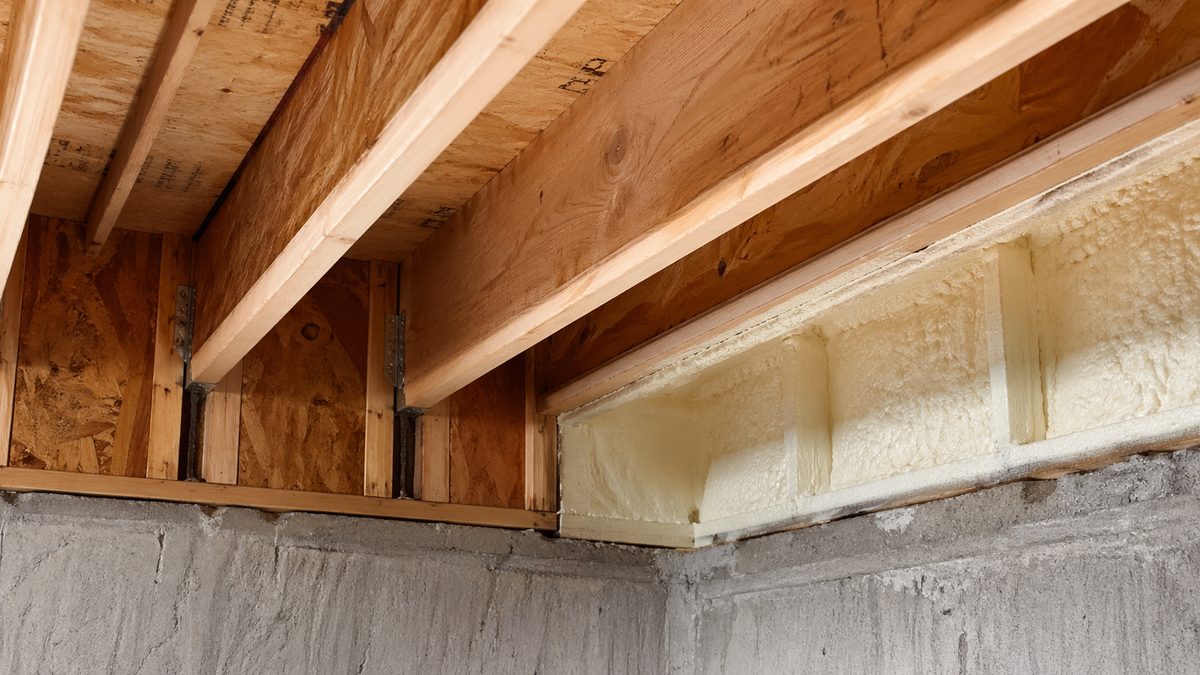
Spray Foam is Best for Rim Joists
This is where blown-in actually has a legitimate role in basement assemblies — though spray foam still wins here for most situations.
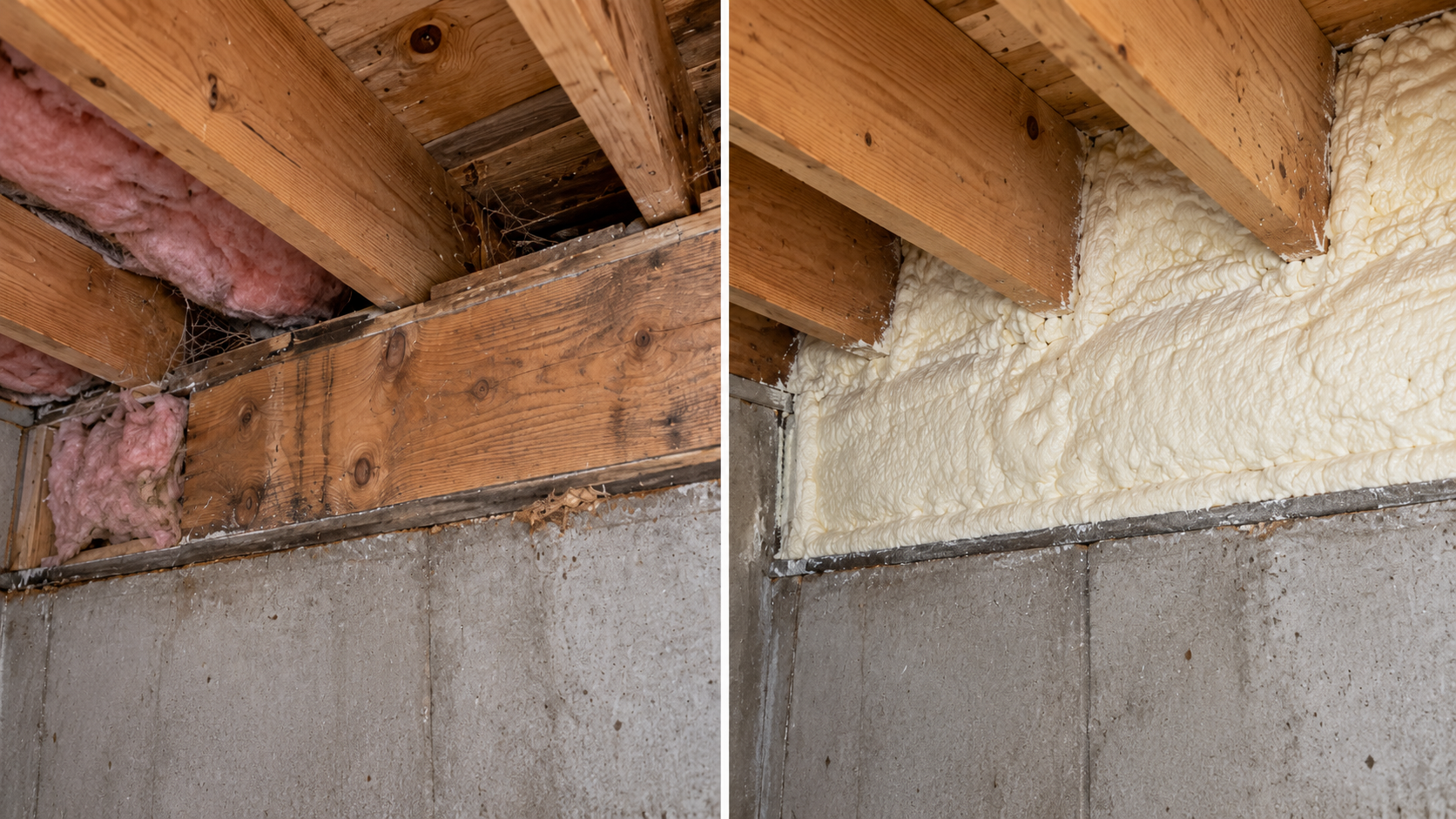
Rim joists are the band of framing that sits on top of your foundation wall and closes off the floor joist cavities at the perimeter. They’re notorious for air leakage and heat loss. In a pinch, dense-pack blown-in cellulose or fiberglass can be used to fill rim joist cavities if they’re enclosed and protected from moisture. But spray foam — either two-component kit foam or professionally applied closed-cell — air seals and insulates in one step, which is why it’s the preferred solution for most contractors working in this area.
Getting the air sealing right matters as much as the R-value when it comes to rim joists. A rim joist stuffed with fiberglass but not air sealed is still leaking conditioned air every time the wind blows. For a direct material comparison, how blown-in fiberglass compares to spray foam in moisture resistance covers the trade-offs in detail.
Finished Basements Need a Different Approach
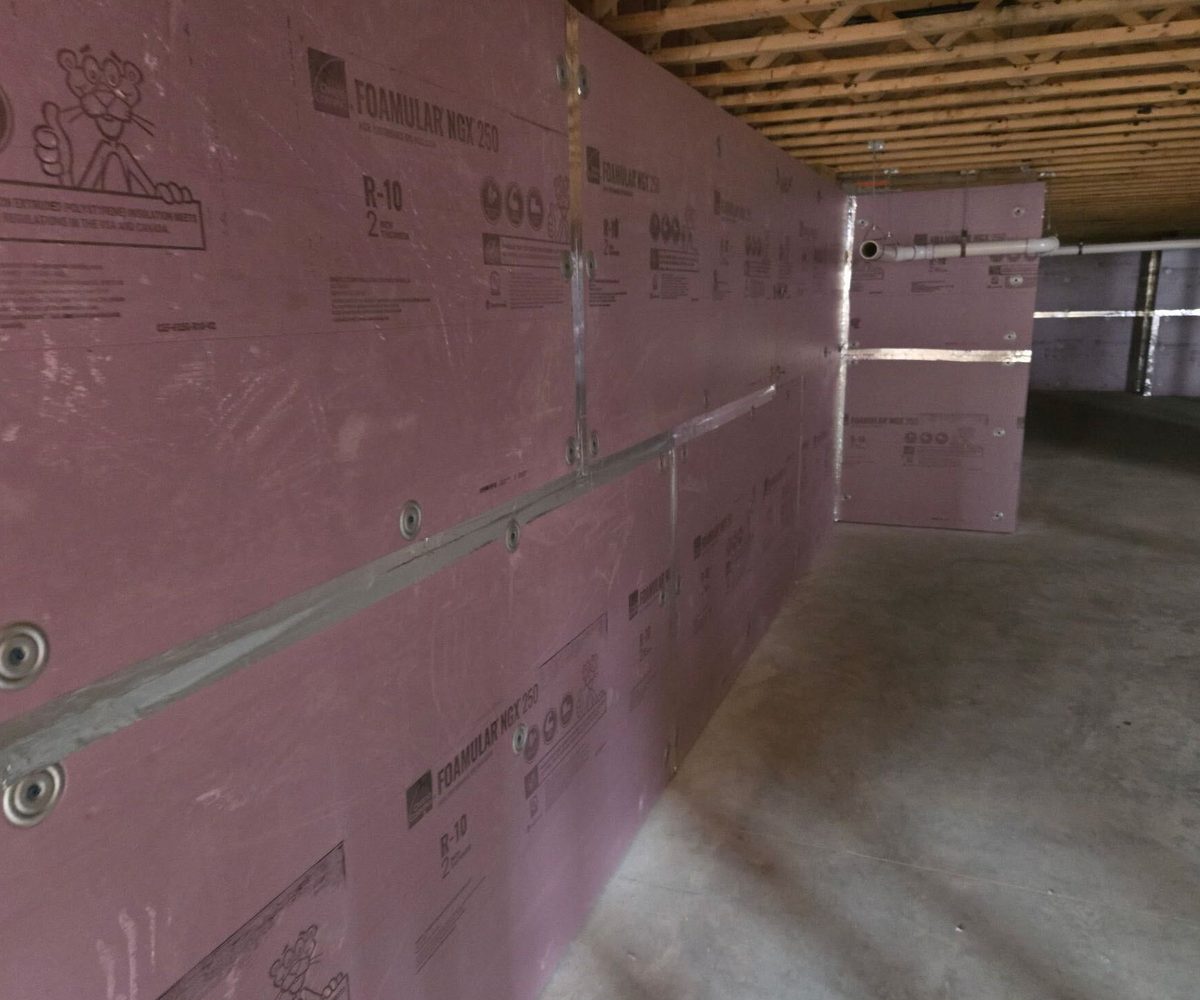
If the basement is finished or being finished, blown-in insulation is essentially off the table for wall assemblies. You need a material that can be applied directly to foundation walls without creating a moisture trap between the insulation and the concrete. Rigid foam board is typically the right call here — it doesn’t absorb moisture, it adds R-value, and it gives you a surface you can frame against if you’re building out the space.
Blown-in behind a finished wall in a basement is a situation where moisture can accumulate unseen for years before it becomes visible as a mold problem. That’s not a risk worth taking when better options exist.
Better Alternatives for Crawl Spaces
If blown-in isn’t the right fit for crawl spaces — and in most Connecticut homes, it isn’t — what should you be using instead? The answer depends on whether your crawl space is vented or unvented, and how serious the moisture situation is. Here are the materials and approaches that actually hold up in below-grade environments.
Spray Foam for Crawl Space Walls and Rim Joists
Closed-cell spray foam is the gold standard for crawl space wall insulation. It adheres directly to concrete or block foundation walls, it doesn’t absorb moisture, and it acts as both an air barrier and a vapor retarder in one application. That matters a lot in Connecticut crawl spaces where ground moisture and humid summer air are constants.
Closed-cell spray foam also has the highest R-value per inch of any common insulation material — around R-6 to R-7 per inch — so you can hit meaningful thermal performance even on a thin foundation wall without eating up a lot of clearance. For crawl space insulation in an unvented assembly, closed-cell foam on the walls is the approach most building scientists and energy auditors recommend.
Open-cell spray foam is less expensive but more vapor-permeable, which makes it a riskier choice in crawl spaces unless the moisture situation is already well controlled. When in doubt, go closed-cell below grade.
Crawl Space Encapsulation
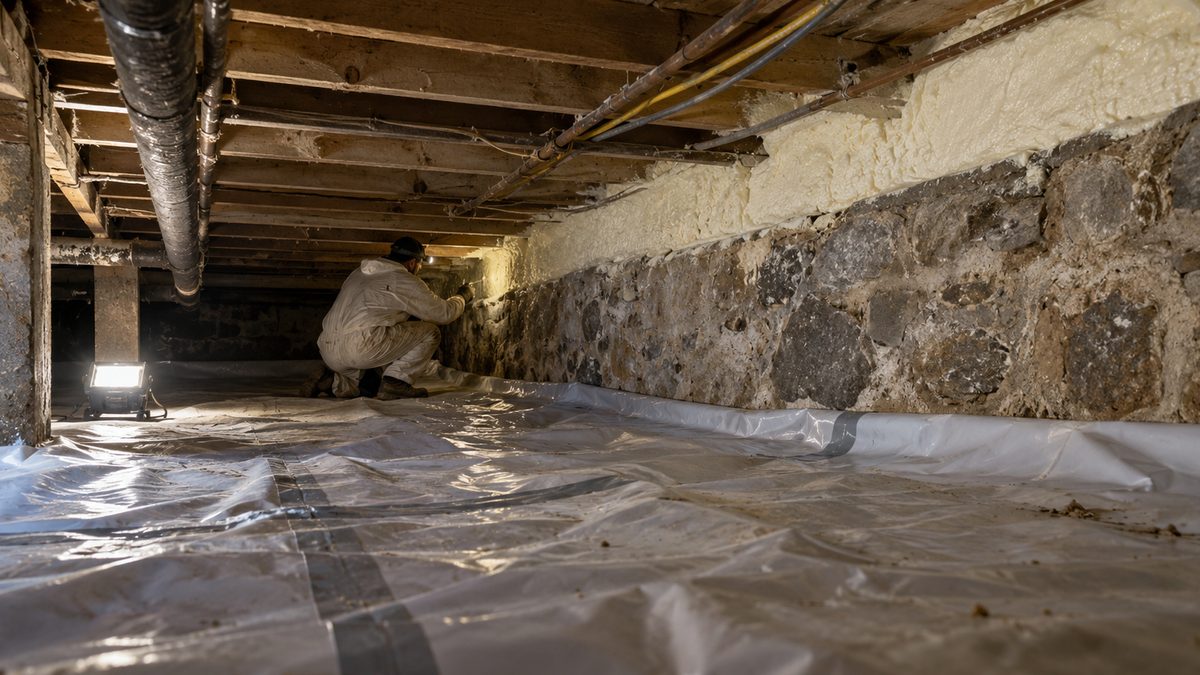
Encapsulation is often the right first step before any insulation goes in — and in some cases, it does more for comfort and moisture control than insulation alone. A crawl space encapsulation system typically includes a heavy-duty vapor barrier sealed to the walls and penetrations, a conditioned or dehumidified air supply to manage humidity, and sealed vents if the space is being converted to an unvented assembly.
Once the crawl space is encapsulated, the insulation strategy shifts. You’re no longer trying to protect the floor above from cold and moisture — you’re treating the crawl space as part of the conditioned envelope. Spray foam or rigid foam on the walls handles the thermal piece from there.
Skipping encapsulation and going straight to insulation in a damp crawl space is one of the more common mistakes homeowners make. You end up with insulation sitting in a wet environment, and the underlying moisture problem just keeps doing damage behind it.
Rigid Foam Board on Foundation Walls
Rigid foam board — either EPS (expanded polystyrene) or XPS (extruded polystyrene) — is another solid option for crawl space foundation walls. It doesn’t absorb moisture, it installs without special equipment, and it can be cut to fit around irregularities in older foundation walls. XPS in particular has a low vapor permeability rating, which makes it suitable for below-grade applications where moisture drive is a concern.
Rigid foam won’t air seal on its own the way spray foam does, so you’ll need to tape seams carefully and address gaps at penetrations. But for a homeowner or contractor looking for a cost-effective alternative to spray foam on crawl space walls, it’s a reasonable choice when installed correctly.
What rigid foam is not good for is the crawl space floor. The vapor barrier handles that job. Putting insulation on the floor of a crawl space that isn’t encapsulated is just giving moisture another place to hide.
What does crawl space encapsulation actually involve — and is it worth it?
How to Choose the Right Insulation for Your Situation
There’s no single material that wins in every below-grade application. The right call depends on your crawl space condition, your basement setup, your moisture levels, and what you’re trying to achieve — lower energy bills, better comfort, moisture control, or all three. The table below cuts through the noise.
A few things worth noting when reading this table. “Fair” doesn’t mean never — it means there are better options available and blown-in should only be considered when those options aren’t practical for the specific situation. “Poor” means the risk of moisture damage, performance loss, or premature failure is high enough that it’s not a path worth taking in Connecticut’s climate.
The other variable this table doesn’t capture is air sealing. Insulation and air sealing are two separate jobs, and below-grade spaces need both. Blown-in insulation does neither particularly well in crawl spaces or basement walls. Spray foam does both in one shot, which is a big part of why it dominates in these applications despite the higher upfront cost.
If you’re weighing the cost difference between spray foam and other options, it helps to think about it this way: the cheaper material installed in the wrong environment isn’t saving you money. It’s just delaying the repair bill.
Energize CT rebates may be available depending on the scope of work and your utility provider — worth checking before you commit to a specific approach, since rebates can meaningfully offset the cost of spray foam in particular.
Should you air seal before you insulate — or does the order not matter?
Conclusion
Blown-in insulation is a genuinely good product. It’s just not the right product for every space in your home, and crawl spaces and basements have a way of punishing the wrong material choice in ways that don’t show up until the damage is already done.
The pattern in Connecticut homes is predictable: a homeowner insulates a crawl space with whatever material is cheapest or most familiar, skips the moisture management piece, and ends up with compacted or moldy insulation a few years later — plus a subfloor that’s taken more abuse than it should have. Fixing that costs more than getting it right the first time.
The better framework is to think about below-grade spaces as moisture problems first and insulation problems second. Get the vapor barrier in place. Encapsulate if the space warrants it. Air seal the rim joists. Then choose an insulation material that’s suited to the environment — which in most crawl space and basement wall applications means spray foam or rigid foam board, not blown-in.
Blown-in still has a place in this picture. If you’re topping off attic insulation or dealing with hard-to-reach cavities above grade, it’s hard to beat. But below the first floor, the rules change. Connecticut’s climate doesn’t leave much margin for error when moisture is in the equation.
If your crawl space or basement is costing you in heating bills, comfort, or peace of mind, the right insulation strategy starts with an honest look at what’s actually going on down there.
👉 Basement Insulation Solutions — if your crawl space or basement is drafty, damp, or just not performing, we’ll tell you exactly what’s going on and what it’ll take to fix it.
Frequent Questions About Blown-In Insulation for Crawl Spaces and Basements
Can I use blown-in insulation in my crawl space if I already have a vapor barrier?
A vapor barrier helps, but it doesn’t make blown-in insulation a good fit for crawl spaces. The vapor barrier manages ground moisture rising up from the soil, but it doesn’t control humidity in the air, condensation on framing, or water intrusion from the sides. Blown-in cellulose can still absorb ambient moisture from the air in a vented crawl space, and fiberglass can trap moisture against the subfloor above even when the floor is covered. If you have a vapor barrier in place, the next step is usually encapsulation and spray foam on the walls — not blown-in between the joists. The barrier is a starting point, not a complete solution.
How much does it cost to insulate a crawl space with spray foam versus blown-in?
Spray foam costs more upfront — closed-cell spray foam typically runs between $1.50 and $3.00 per board foot depending on thickness, application, and market conditions. Blown-in cellulose or fiberglass is cheaper per square foot, but that comparison breaks down when you factor in the likelihood of premature failure in a damp environment. A crawl space insulated with blown-in that degrades in five years and needs to be removed and replaced has cost you significantly more than spray foam would have from the start. Energize CT rebates may be available for qualifying insulation work, which can help close the cost gap. Get a proper assessment before making the decision on price alone.
My crawl space has standing water sometimes after heavy rain. Does that change anything?
Yes — significantly. A crawl space with periodic standing water needs drainage and waterproofing addressed before any insulation conversation happens. Installing insulation of any kind in a space that floods is a waste of money. The water will destroy it, and the underlying moisture problem will continue damaging your framing, your subfloor, and anything else down there. The right sequence is: address drainage first, install a sump pump if needed, then encapsulate, then insulate. Skipping steps in that order doesn’t save time — it just means doing the work twice.
Is blown-in insulation ever the right choice for any part of a basement?
In limited situations, yes. Dense-pack blown-in cellulose can be used to fill enclosed rim joist cavities in a basement if the space is already well controlled for moisture and the cavities are properly enclosed with a rigid backing. It’s not the first recommendation — spray foam handles rim joists more effectively because it air seals at the same time — but it’s not a categorically wrong choice in a dry, conditioned basement environment. What blown-in is not well suited for is open basement wall cavities, finished wall assemblies, or any application where it would be exposed to ground moisture or unconditioned humid air on a regular basis.
Will insulating my crawl space or basement actually lower my heating bills?
Yes, meaningfully so in most Connecticut homes — especially older ones. Heat loss through an uninsulated or under-insulated crawl space floor can account for a significant portion of your total heating load, and rim joist air leakage adds to that. The Department of Energy estimates that air sealing and insulating crawl spaces can reduce energy use by 10 to 20 percent in homes where the crawl space has been neglected. In Connecticut, where heating costs run well above the national average, that translates to real savings over time. The key is pairing insulation with proper air sealing — insulation alone without addressing air movement leaves a lot of that savings potential on the table.
Related Articles
Let's Work Together
Ready to transform your home into an energy-efficient haven? Schedule your free energy assessment today and experience the Nealon difference for yourself.