
Home Energy Audit Connecticut: Nealon Insulation's Energy Audit Guide
Your heating bill doesn't lie. If you're paying more than your neighbors, keeping the thermostat lower than you'd like, or dealing with rooms that never quite reach a comfortable temperature, something is wrong with your building envelope. The question isn't whether there's a problem — it's where.
That's exactly what a home energy audit is designed to answer. In Connecticut, where heating costs rank among the highest in the country and a large share of the housing stock predates modern insulation standards, an audit isn't a luxury item for energy enthusiasts. It's a practical diagnostic tool that tells you where your home is losing heat, what it's costing you, and what you can do about it. This guide covers what an energy audit includes, what it costs in Connecticut, and why BPI certification matters when you're choosing who does the work.
What Is a Home Energy Audit?
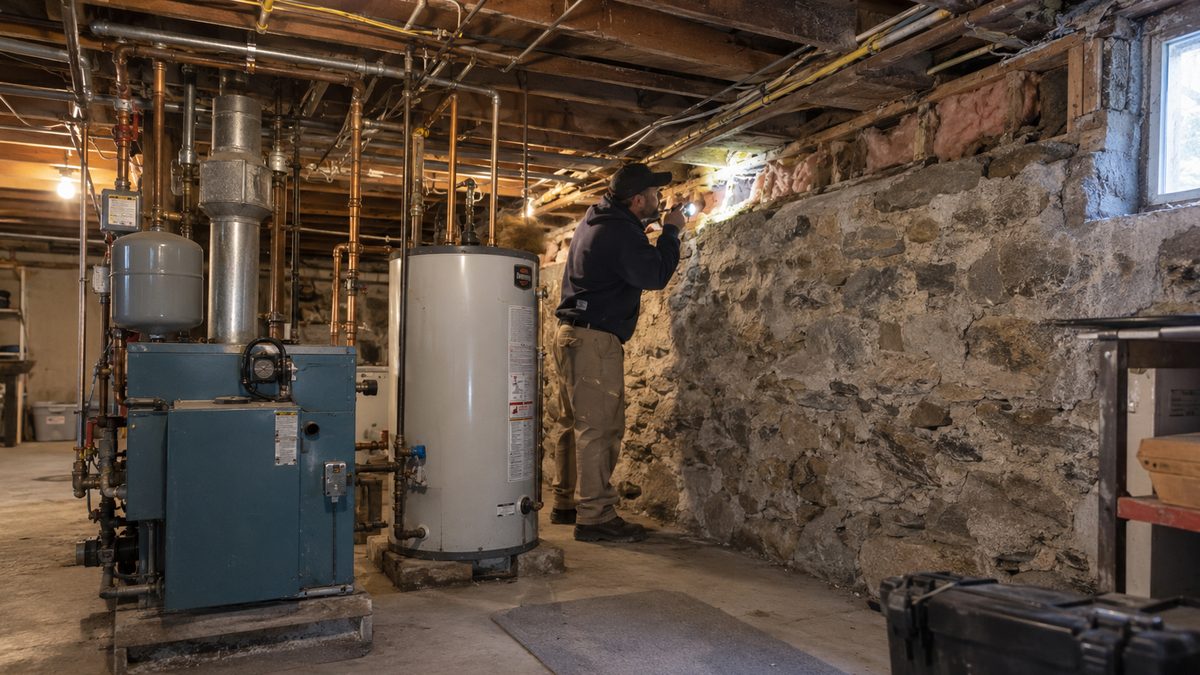
A home energy audit is a systematic assessment of how your home uses and loses energy. An auditor looks at your building envelope — walls, attic, basement, windows, and doors — along with your heating and cooling systems, to find where conditioned air is escaping and where energy is being wasted.
This is not a home inspection. A home inspection tells you whether your roof is leaking or your electrical panel is up to code. An energy audit tells you why your heating bill is $400 in January and what it would take to fix that. Different tool, different job.
In Connecticut, this kind of assessment matters more than it does in most states. We're in Climate Zone 5A — cold winters, humid summers — and our heating costs rank among the highest in the country. Add in the fact that a large percentage of Connecticut's housing stock was built before 1980, when insulation standards were minimal and air sealing wasn't even a concept anyone was thinking about, and you've got a lot of homes bleeding heat through every seam and gap. If you've already noticed the signs your home isn't properly insulated, an audit is the logical next step.
An energy audit gives you a clear picture of what's happening inside your walls, above your ceiling, and under your floors — before you spend a dollar on improvements.
How Connecticut homeowners are cutting heating costs with attic insulation and air sealing
What Happens During an Energy Audit
A professional energy audit isn't a guy walking around with a clipboard making notes about your windows. It's a structured diagnostic process with specific tools and tests. Here's what to expect.
The Initial Walkthrough
The auditor starts by touring the home with you. They're looking at the age and condition of your heating and cooling equipment, how the home is insulated (or isn't), where you're seeing comfort problems, and what your utility bills have looked like. This conversation matters — you know your house better than anyone, and a good auditor listens before they start testing.
The Blower Door Test
This is the centerpiece of any real energy audit. The auditor mounts a calibrated fan in an exterior doorframe, depressurizes the house, and measures how much air leaks in through gaps and cracks in the building envelope. The result is expressed in CFM50 — cubic feet per minute of airflow at 50 pascals of pressure. The number tells you exactly how leaky your house is. It also helps the auditor locate where the leaks are coming from, often using smoke pencils or other diagnostic tools to trace airflow in real time.
Thermal Imaging
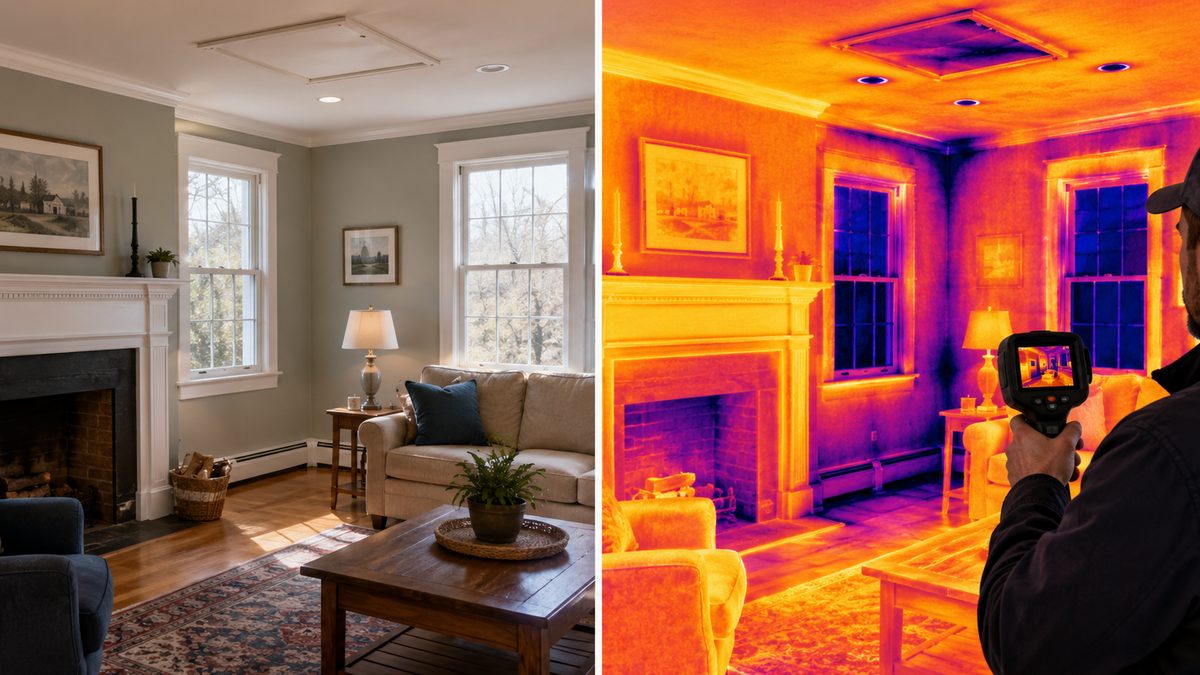
Many auditors use an infrared camera during or after the blower door test. Under depressurization, cold outside air rushes in through gaps — and the infrared camera makes that temperature difference visible. Missing insulation in a wall cavity shows up as a cold patch. A gap around a recessed light shows up as a streak. It turns invisible problems into something you can actually see on a screen, which makes the follow-up conversation a lot more concrete.
Combustion Safety Testing
If your home has gas or oil appliances — furnace, water heater, stove — a thorough auditor will test for combustion safety. This includes checking for carbon monoxide, testing flue draft, and making sure appliances aren't backdrafting into the living space. It's not glamorous, but it's important. Tightening up a house without checking combustion safety first is a mistake no certified auditor should make.
The Report and Recommendations
After the testing is done, you get a written report. A good report doesn't just list problems — it prioritizes them. It tells you which improvements will have the biggest impact on comfort and energy costs, what those improvements are likely to cost, and which ones qualify for rebates. Our air sealing services and insulation work almost always appear near the top of a well-done audit report.
What the stack effect is doing to your home's heating costs every winter
What a Home Energy Audit Costs in Connecticut
A standard home energy audit from a private auditor typically runs between $300 and $600, depending on home size and scope. Some comprehensive assessments with detailed modeling can run higher. For most homeowners, it's a few hundred dollars to find out where thousands of dollars in heating costs are going — which is a reasonable trade.
But Connecticut homeowners have a better option.
The Energize CT Home Energy Solutions Audit
Through the Energize CT Home Energy Solutions program, Connecticut homeowners can get a professional energy audit for a $40 copay. That's it. The program is funded through a utility surcharge, which means you've already been paying into it through your electric bill. You might as well use it.
The Home Energy Solutions audit includes a blower door test, health and safety checks, and immediate installation of some basic efficiency measures — LED bulbs, low-flow faucet aerators, water heater pipe insulation — at no additional cost. The auditor also identifies larger improvements and connects you to rebate programs for the follow-up work.
For insulation and air sealing specifically, Energize CT offers rebates of up to $10,000, with a rate of $2.00 per square foot for professionally installed work. That's real money — and you can see a full breakdown of Connecticut insulation rebates before you schedule anything.
What You Get for the Money
Whether you pay $40 or $400, a quality audit delivers the same core value: a prioritized list of improvements specific to your home, with cost estimates and rebate eligibility attached. The difference between a good audit and a bad one isn't the price — it's the auditor. Someone who runs a blower door test, uses thermal imaging, checks combustion safety, and produces a written report with clear recommendations is worth the investment. Someone who walks around and eyeballs things is not.
The audit cost is almost always recovered many times over in rebates and energy savings once you act on the recommendations.
How Energize CT rebates are calculated and what Connecticut homeowners qualify for
What Is BPI Certification — and Why It Matters
Not everyone who calls themselves an energy auditor has the same training. BPI certification is the credential that separates auditors who know building science from those who are guessing.
What BPI Stands For
BPI stands for Building Performance Institute. It's a national standards organization that develops certification programs for home performance contractors and energy auditors. BPI certifications are based on field-tested building science principles — how heat moves through a building, how air pressure works, how moisture behaves inside wall assemblies, and how all of those systems interact with each other.
The most common certification for auditors is BPI Building Analyst (BA). For insulation and envelope specialists, BPI Building Science Principles (BSP) is the relevant credential. These aren't weekend courses. Candidates have to pass both a written exam and a field exam before they're certified.
What BPI-Certified Auditors Are Trained to Do
A BPI-certified auditor understands the house as a system. That framing matters. A house isn't just walls and a roof — it's an interconnected set of systems where a change in one area affects everything else. Tighten the envelope without addressing ventilation and you can create moisture problems. Add insulation without air sealing and you've solved half the problem. A BPI-trained auditor knows how to diagnose the whole picture, not just the obvious symptoms.
That training also covers combustion safety — the part of the audit that most non-certified assessors skip entirely. BPI protocols require testing gas and oil appliances for backdrafting and carbon monoxide before any air sealing work is recommended. That's not a formality. It's a safety standard.
Why You Should Ask for It Before Hiring Anyone
When you're getting an energy audit — or hiring a contractor to do insulation and air sealing work based on audit findings — ask whether they hold a BPI certification. If they can't answer that question clearly, keep looking.
Employee's at Nealon Insulation, hold BPI-BSP certification. When we assess a home before insulation work, we're not eyeballing it. We're applying the same building science framework that BPI certifies auditors on — because the audit findings and the installation work have to be consistent with each other to actually solve the problem.
What to ask before hiring an insulation contractor in Connecticut
What to Do After Your Energy Audit
The audit report is only useful if you act on it. A lot of homeowners get the assessment, feel good about having done something, and then let the report sit in a drawer. Don't do that.
Prioritize by Impact, Not by Cost
Your report will list a range of improvements, and it can be tempting to start with the cheap ones just to feel like you're making progress. That's usually the wrong call. Start with the improvements that have the highest impact on air leakage and heat loss — which, in most Connecticut homes, means attic air sealing and insulation first.
The attic is where the stack effect works against you hardest. Warm air rises, finds every gap around light fixtures, plumbing penetrations, and framing members, and escapes into the attic. Stopping that airflow at the top of the house reduces the pressure that pulls cold air in at the bottom. There's a reason why air sealing and attic insulation work together — you can't get the full benefit of one without the other.
Connect Your Findings to Rebates Before You Spend Anything
Before you hire anyone to do the follow-up work, cross-reference your audit recommendations with what Energize CT covers. Professionally installed insulation qualifies for $2.00 per square foot, up to $10,000. Air sealing is often bundled into the same project. If your audit was done through the Home Energy Solutions program, the auditor should have already flagged which improvements are rebate-eligible — but it's worth confirming before you sign a contract.
The rebate structure is designed to be used in sequence: audit first, then improvements, then rebate application. Don't skip steps or do the work before confirming eligibility.
Don't Wait Too Long
Audit findings don't expire, but energy costs keep adding up while you wait. In Connecticut, a poorly insulated attic can cost a homeowner several hundred dollars a year in excess heating costs — sometimes more in older homes with multiple problem areas. The payback period on insulation and air sealing improvements is typically three to seven years, and rebates shorten that window considerably.
The audit tells you what to fix. The rest is just execution.
Frequent Questions About Home Energy Audits
Is a home energy audit worth it in Connecticut?
A home energy audit is worth it for most Connecticut homeowners, especially in homes built before 1980. The $40 copay for the Energize CT Home Energy Solutions audit makes the barrier to entry low enough that there's little reason to skip it. The audit identifies specific improvements, estimates costs, and flags rebate eligibility — so you're not guessing at what to fix or what it will cost. For homeowners dealing with high heating bills, uneven temperatures, or drafty rooms, the audit typically pays for itself many times over once improvements are made.
How long does a home energy audit take?
A full home energy audit typically takes two to four hours, depending on the size and complexity of the home. The blower door test and thermal imaging add time compared to a basic walkthrough assessment, but they're also what make the audit useful. Plan for a half-day and make sure someone is home to walk through the findings with the auditor at the end.
What is the difference between a home energy audit and a home inspection?
A home inspection evaluates the physical condition of a home's structure and systems — roof, foundation, electrical, plumbing — for the purpose of a real estate transaction. A home energy audit evaluates how the home performs as an energy system, identifying air leakage, insulation deficiencies, and mechanical inefficiencies that drive up utility costs. The two assessments have different scopes, different tools, and different outputs. You need both at different times — an inspection when you're buying, an audit when you want to reduce energy costs and improve comfort.
Do I need an energy audit before getting insulation rebates through Energize CT?
Yes. Energize CT requires a Home Energy Solutions audit before insulation and air sealing rebates are approved. The audit establishes a baseline, identifies eligible improvements, and generates the documentation the program needs to process rebate applications. Hiring a contractor and doing the work before completing the audit means you may not qualify for rebates — even if the work itself would have been eligible. Always complete the audit first.
What should I look for when hiring a BPI-certified energy auditor in Connecticut?
Look for a contractor or auditor who holds an active BPI certification — either Building Analyst (BA) or Building Science Principles (BSP) — and can provide their credential number on request. Confirm that the audit includes a blower door test, thermal imaging, and combustion safety testing, not just a visual walkthrough. Ask whether they produce a written report with prioritized recommendations and rebate guidance. An auditor who skips the diagnostic testing or can't explain their methodology clearly isn't worth hiring regardless of price.
A home energy audit is the starting point for any serious improvement to your home's comfort and energy efficiency. It tells you what's actually wrong — not what looks wrong — and gives you a prioritized roadmap for fixing it. In Connecticut, where the Home Energy Solutions program makes that audit available for $40, there's very little reason to skip it.
When you're ready to act on the findings, make sure the contractor you hire understands building science, not just insulation materials. BPI certification exists for exactly that reason. The audit and the installation work have to be consistent with each other — a contractor who understands both is going to get you better results than one who only knows how to blow in insulation.
👉 Contact Nealon Insulation — if your energy audit flagged insulation or air sealing as a priority, we can walk you through your options and make sure the work qualifies for every rebate you're entitled to.
Related Articles
Let's Work Together
Ready to transform your home into an energy-efficient haven? Schedule your free energy assessment today and experience the Nealon difference for yourself.