
Attic Reinsulation in Hebron, CT: An R-60 Case Study
The Homeowner's Problem
Denis called us because his energy bills were getting out of hand. His home in Hebron runs about 3,100 square feet and is roughly 40 years old, and heating a house that size through a New England winter was eating more fuel oil every year. Stack the rising electric costs on top of that, and the math stopped making sense.
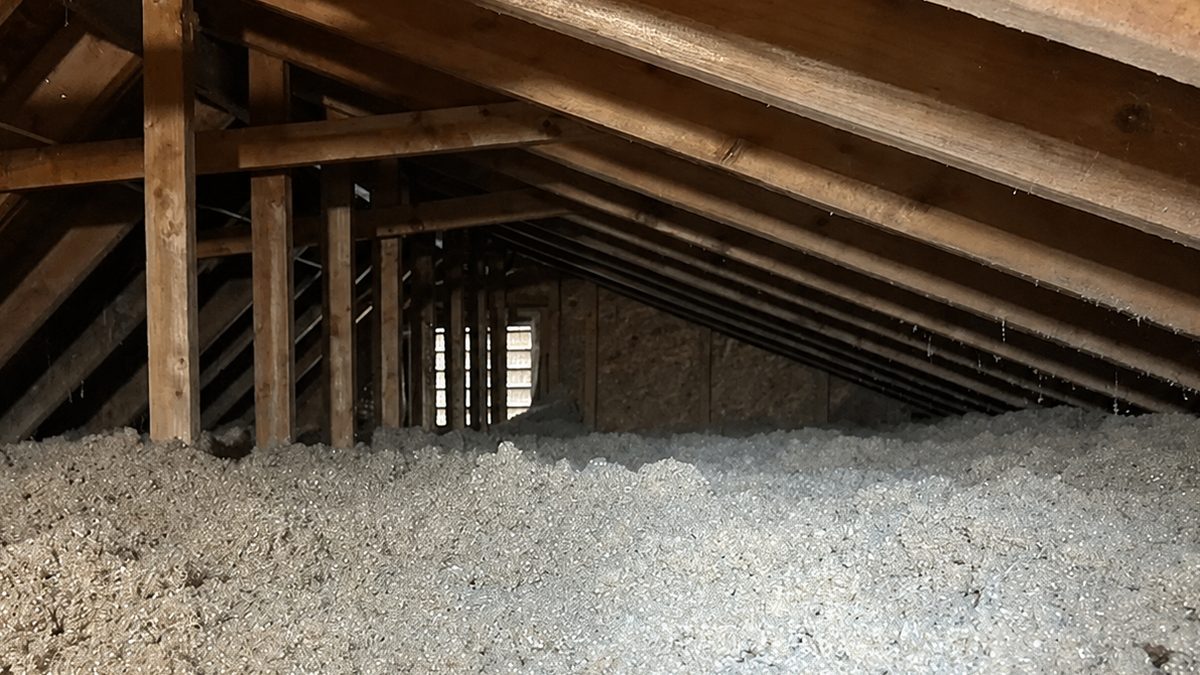
Here's the thing about a 40-year-old attic: the insulation up there rarely ages well. Denis's original blown-in fiberglass had settled and compressed over the decades, partly from various contractors tramping around up there over the years. What started out as a fluffy, working layer had flattened into a thin, tired blanket, which is one of the clearest signs attic insulation is due for replacement. And in an attic, thin insulation means your heat marches straight up and out through the roof all winter long.
Denis wasn't after a quick patch. He saw reinsulating the attic for exactly what it was: a necessity, and a smart long-term investment in a home he plans to keep. With oil and electric prices sitting where they are in Connecticut, getting the attic right is one of the highest-return moves a homeowner can make.
What We Found
Our estimator, Dave Bulgini, went through the attic top to bottom before we quoted a dime. What he found tells the story of a lot of older Connecticut attics.
First, the insulation itself. The old blown-in fiberglass had settled into a shallow, compressed layer sitting well short of the R-value an attic in this climate should hit. Connecticut's target for an attic is R-49 to R-60, and Denis's attic wasn't in the neighborhood. Flattened fiberglass has almost no bite left in it, no matter how good it looked the day it went in.
The bigger problem was the air. Once you looked past the fiberglass, the attic floor was full of gaps: cracks around the top plates, open wire and cable penetrations, and recessed light housings poking up through the ceiling. Every one of those is a little chimney letting warm, conditioned air escape upward. On a cold night, that attic was leaking air like a screen door on a submarine.
This is the part homeowners almost never see, and it's the part that matters most. You can pile fresh insulation a mile high, but if the air is still leaking underneath it, you're just insulating a colander. Moving air drags your heat right along with it, so we always deal with the leaks before adding a single inch of new material.
We also flagged the ventilation. The soffit vents along the eaves keep fresh air flowing up under the roof, and burying them under a foot and a half of new insulation would choke that airflow right off. Whatever we did next had to protect that venting while we built the depth back up.
Why air sealing is the secret ingredient to a comfortable, efficient home
The Solution
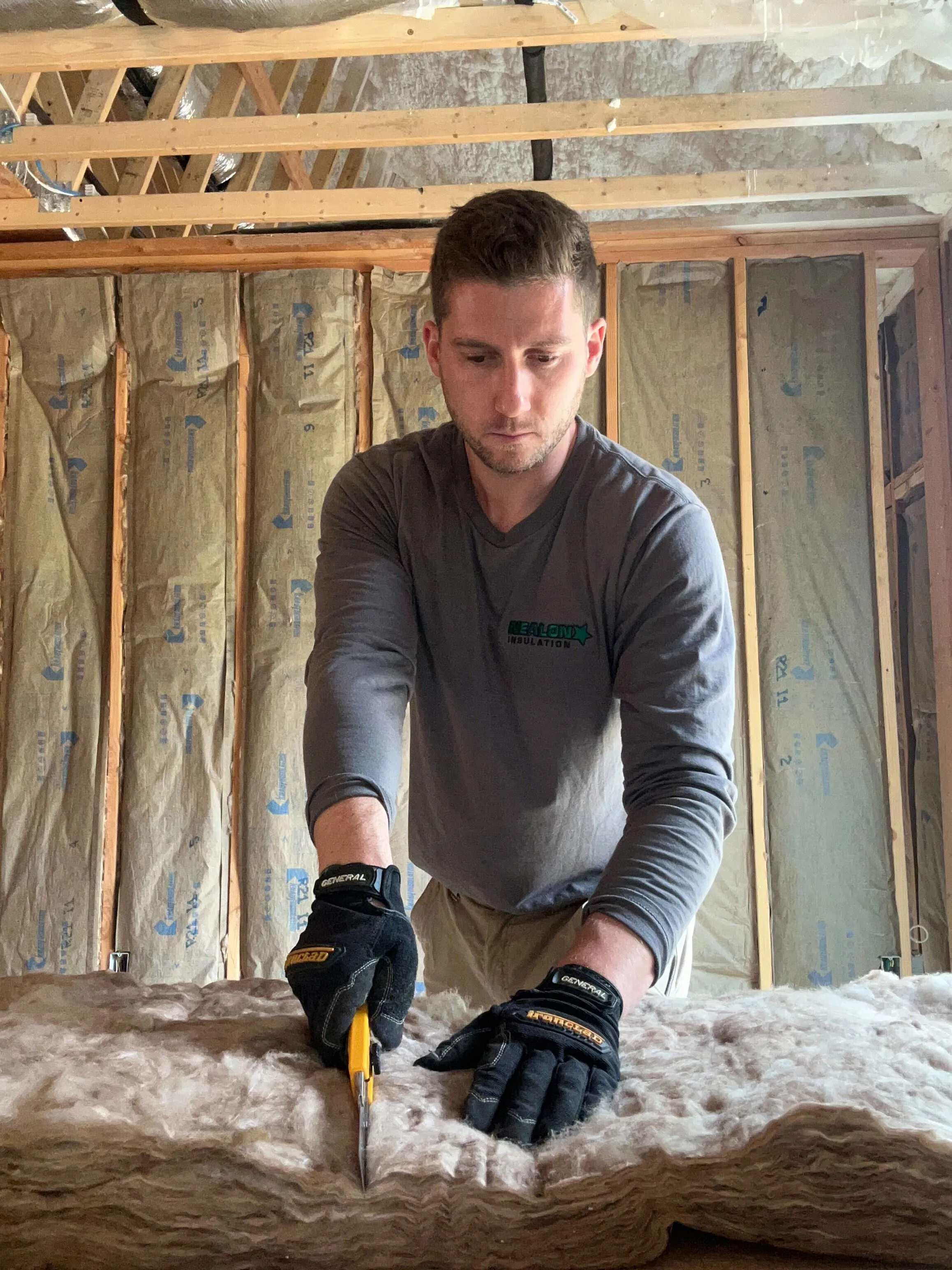
Every good attic job follows the same order, and Denis's was no exception: clear it out, seal it up, then insulate. Skipping steps is how you end up with an attic that looks great and still bleeds heat.
We started by removing all the old, settled fiberglass and hauling it out. That exposed the bare attic floor and every gap that had been hiding underneath it for 40 years.
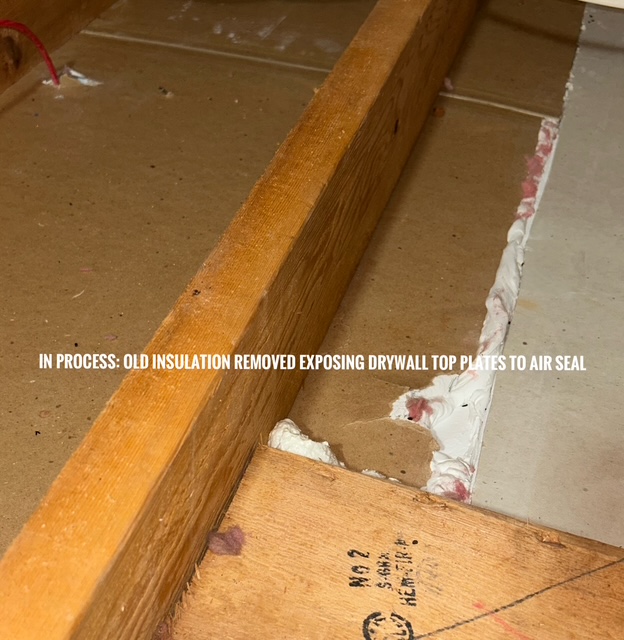
Next came the part that does the real heavy lifting. We went after every crack, top-plate gap, and wire and cable penetration with expanding foam, then capped and foam-sealed the recessed light housings so they'd quit acting like open vents into the attic. This is the air sealing that most "blow and go" outfits skip, and it's the whole difference between insulation that works and insulation that just lies there looking pretty.
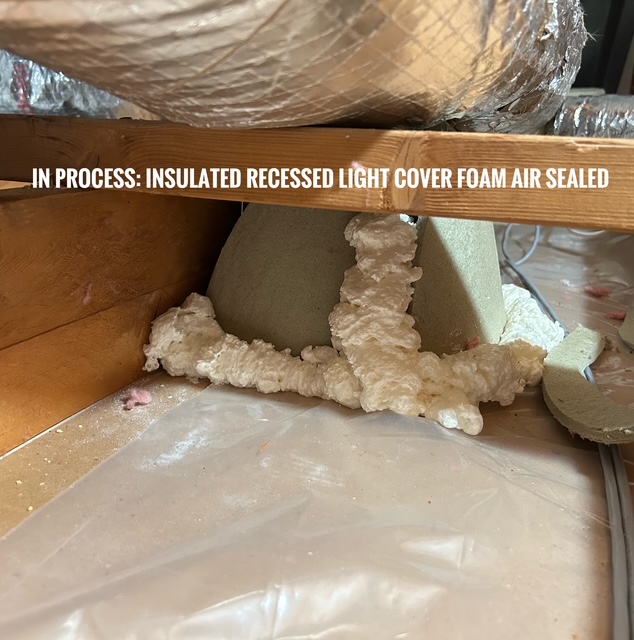
With the leaks closed, we laid down a vapor barrier. The crew cut 6-mil poly sheeting to fit precisely between the joists, giving the attic floor a clean layer to manage moisture before any new insulation went in.
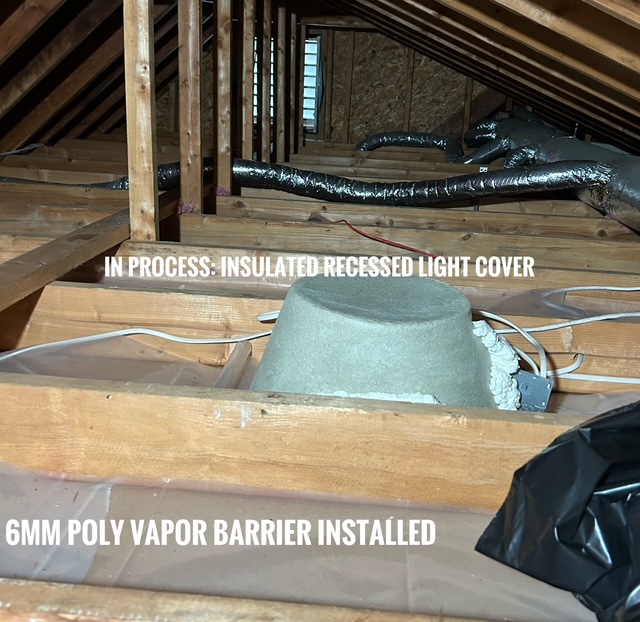
Then we protected the airflow. We extended the soffit vents up above where the new insulation line would sit, so fresh air keeps moving under the roof instead of getting smothered by a foot and a half of cellulose. Bury your vents and you trade a heat problem for a moisture problem, so this step is not optional.
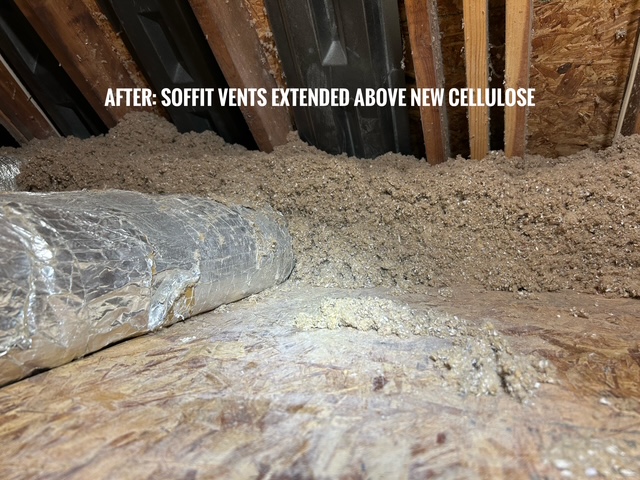
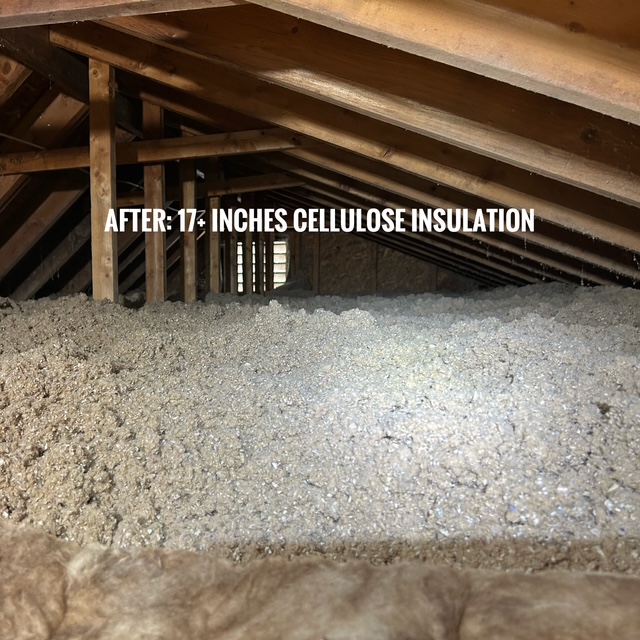
Finally, the insulation itself. We blew in 17 inches of Class 1 cellulose to bring the attic up to R-60, comfortably past Connecticut's R-49 attic minimum. We used GreenFiber Sanctuary cellulose, treated with borate so it resists fire and deters pests. It settles far less than the old fiberglass ever did, and it knits into a shell that adds to the air seal we'd just built underneath it.
Review from Denis
Their team was excellent. Dave Bulgini did a thorough inspection and prepared the estimate, Jen managed communications and administration, job crew was Jayden (lead / 8 years’ experience), Jeremy (7 years’ experience) and Nass who managed the equipment outside. At one point I saw Nass on his hands and knees picking up stray insulation bits off our lawn. That epitomizes their attention to detail. Chris Erardi was the operations foreman who came by to solve an access challenge. They’re experts at their craft and work efficiently as a team finishing up the job a day early. Very impressive!
How does attic ventilation work? A guide for homeowners
The Result
The payoff showed up right away. With the air leaks sealed and a full R-60 of fresh cellulose overhead, Denis's home finally holds onto the heat it pays for instead of donating it to the attic. The heating system stops running a marathon on every cold night, and that is exactly where the fuel savings live.
You can see the change in the attic itself. Where the old fiberglass had flattened down to a few tired inches, there is now 17 inches of even, consistent cellulose blanketing the whole floor, deep enough that it stands taller than the ductwork running through it.
There is also something to be said for a job done cleanly. The crew cleaned up the work area every single day, and even Cole, the dumpster contractor out of Old Saybrook, slid wood blocks under the container so it wouldn't dent the driveway. Denis's home sits in Hebron, right up the road from Colchester, and it is exactly the kind of older Connecticut house where careful, building-science work pays off for decades.
Denis summed it up better than we could. He said the work met or exceeded every expectation, that he'd hire the team again, and that he'd send his family and friends our way. He was kind enough to share all of it in a Google review that meant a lot to the whole crew.
👉 Get a Free Insulation Estimate — If your Hebron home is fighting a settled, worn-out attic and climbing oil bills, our attic insulation crew can help. No pressure, no obligation, just honest answers.
Related Articles
Let's Work Together
Ready to transform your home into an energy-efficient haven? Schedule your free energy assessment today and experience the Nealon difference for yourself.