
Historic Home Insulation in Simsbury, CT | Ensign House Case Study
Some homeowners call us because they're freezing. Some call because their energy bills are out of control. The owners of the Ensign House in Simsbury called us for a different reason entirely — they wanted to do things right.
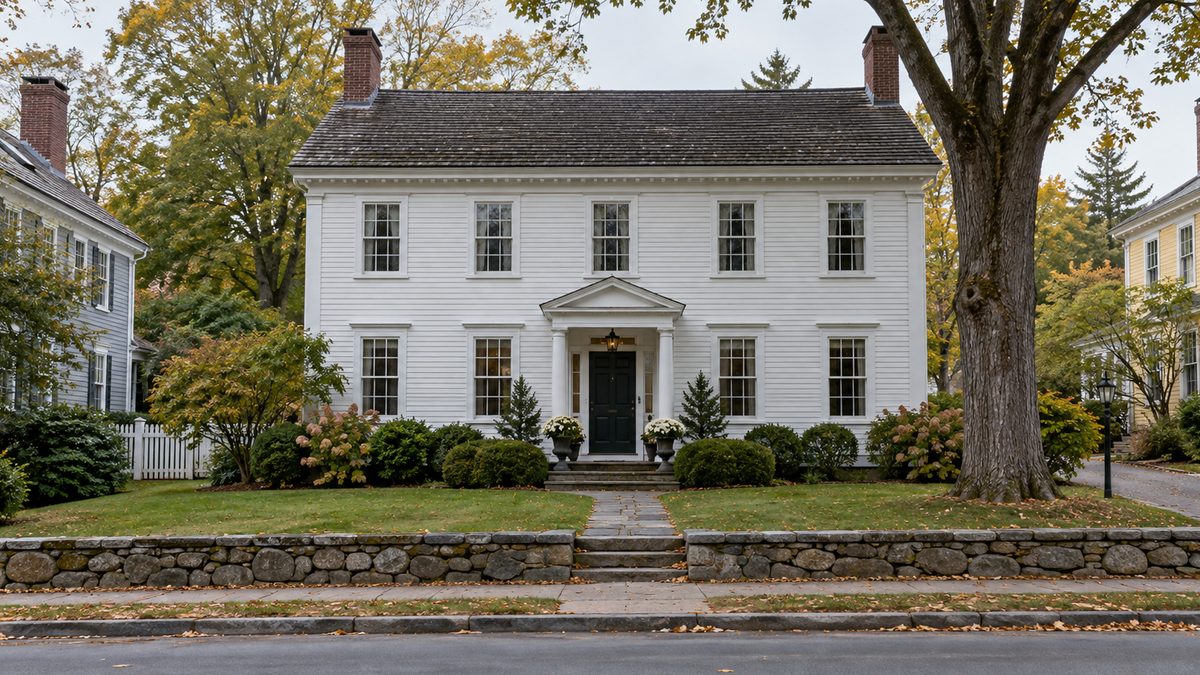
The Ensign House is a historic property undergoing a careful, thoughtful restoration. And when it came time to address insulation, the owners weren't interested in just any solution. They specifically wanted natural, green products — materials that were safe, environmentally responsible, and appropriate for a home with this kind of history. Cellulose. Mineral wool. Not the cheapest options on the shelf, but the right ones.
There was also a non-negotiable condition: nothing original gets touched. The plaster ceilings, the barrel ceiling upstairs, the paneled trim, the cove moldings, the stairwell with its original plaster and woodwork — all of it had to come out of the project exactly as it went in.
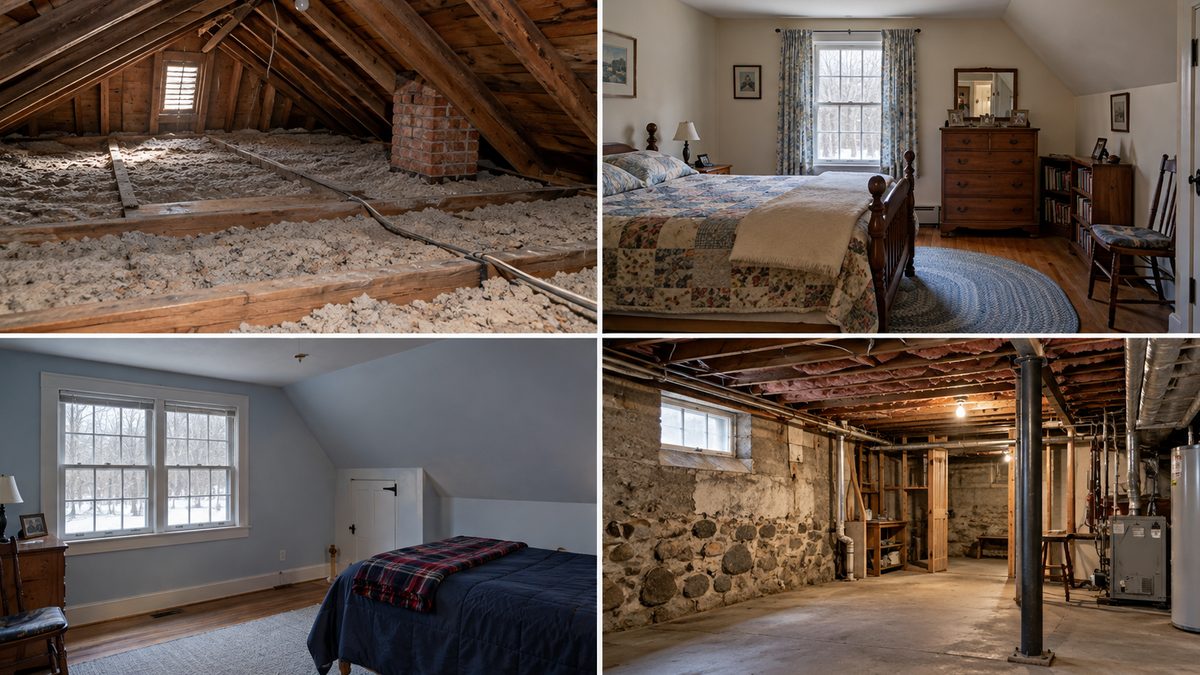
The challenge, of course, is that the Ensign House had never been insulated. Not partially insulated. Not poorly insulated. Completely empty — every wall cavity, every ceiling, every interior partition. Decades of Connecticut winters with nothing but old plaster and wood standing between the living spaces and the cold. Every floor, every wall, every ceiling was moving air freely between spaces — which in a New England winter means the heating system was working twice as hard for half the comfort.
The question wasn't whether the house needed insulation. It needed it badly. The question was whether it could be done without laying a finger on 200 years of craftsmanship.
We said yes.
What We Found
Walking through the Ensign House for the first time, the scope of the project came into focus quickly. This wasn't a case of inadequate insulation or outdated materials that needed upgrading. There was simply nothing there — every exterior wall, every interior partition, every ceiling cavity was completely empty. The entire building envelope was open to air movement, and air was taking full advantage.
That alone would make for a significant insulation project. But the Ensign House isn't a typical house.
The construction is what you'd expect from a historic Connecticut property of this age — plaster-on-plank walls and ceilings, post-and-beam framing, and an architectural vocabulary that doesn't leave a lot of room for error. Hidden framing pockets tucked into the structure. Angled brace cavities running at odd angles through the walls. A barrel ceiling on the upper floor with original plaster that's been there for generations. First-floor ceilings with elaborate cove moldings and paneled trim details that define the character of the home. A main stairwell with original plaster walls, period woodwork, and trim that no one wanted to see disturbed.
In a standard house, you might open up a wall, do the work, and close it back up. Here, opening anything up wasn't on the table. Every access point would have to be surgical — small, deliberate, and restorable. The hidden framing pockets and angled brace cavities that are common in post-and-beam construction meant we couldn't just drill a hole at the top of a wall cavity and assume the insulation would find its way everywhere it needed to go. Each area had to be mapped and approached individually.
The basement told a similar story — uninsulated rim joists running the full perimeter, and no insulation under the floor structure above. Cold air had a clear path into the living spaces from below.
The good news: the original plaster, trim, and architectural details were all intact and in good condition. The goal was to keep it that way.
How insulation for historic homes works without compromising original materials
The Solution
When the building has never been insulated and the rule is that nothing original gets touched, the work comes down to access — finding the right entry points, using the right materials, and closing everything back up so carefully that you'd never know we were there.
Choosing the Right Materials
Before a single hole was drilled, we made decisions about materials. The owners wanted green, natural products, and that aligned perfectly with what the building actually needed. We selected blown-in cellulose insulation as the primary insulation material throughout the home. Cellulose is made from recycled paper fiber, carries a strong fire rating, and — critically for a historic structure — it breathes. It manages moisture naturally rather than trapping it, which matters a great deal in an old building with plaster walls that have been doing their own version of moisture management for a very long time.
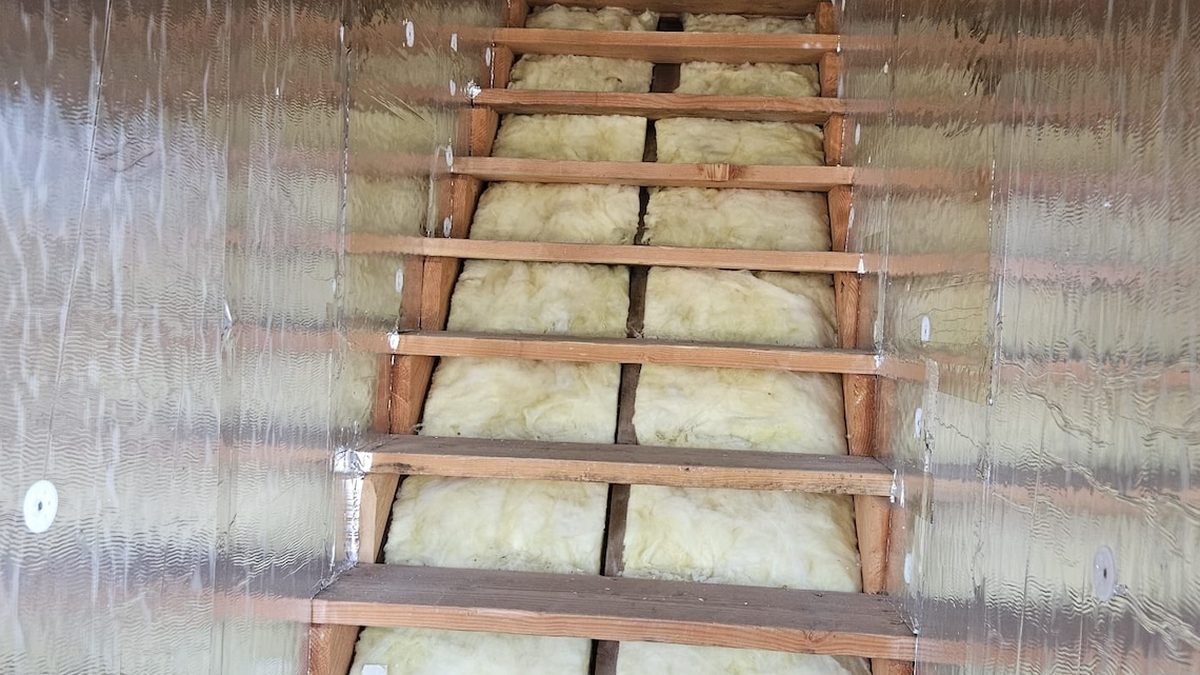
For the main stairwell, we brought in fire-rated mineral wool insulation installation. Mineral wool is inherently non-combustible, dimensionally stable, and dense enough to stay put in tight cavities — exactly what you want when you're working around original plaster and irreplaceable woodwork.
What insulation reduces your carbon footprint
Getting In Without Tearing Apart
The method we relied on throughout the Ensign House is sometimes called the drill and plug method. Small holes are drilled at carefully chosen locations — sized to allow a fill tube, nothing more — cellulose is blown in to completely fill the cavity, and then the hole is plugged and finished. No walls opened. No plaster removed. No trim disturbed.
This approach requires more planning than a standard installation. In post-and-beam construction, wall cavities don't always run clean from top to bottom. Hidden framing pockets interrupt the flow. Angled brace cavities cut across at unexpected angles. Each one needs its own access point, because a single hole at the top of a bay won't reach a pocket that's blocked by a diagonal brace three feet down. We mapped the framing, identified where the blockages were likely to occur, and drilled accordingly — sometimes several holes per bay to make sure every void was fully filled.
The wall insulation installation was handled this way throughout the home, including the walls between floors that had been allowing sound and air to move freely through the building for years.
How to insulate an old house without tearing down walls
The Ceilings
The barrel ceiling on the upper floor was one of the more delicate parts of the project. That ceiling is an architectural feature — a defining element of the room — and damaging it wasn't an option. We made carefully targeted access points to introduce cellulose into the cavity above, filled it completely, and patched the access points so the ceiling reads exactly as it did before we arrived.
The first-floor ceilings required the same discipline. Cove moldings and paneled trim details ran throughout, and every one of them had to be accounted for before we touched anything. Access points were chosen to avoid the decorative elements entirely, and the ceiling insulation installation was completed without disturbing a single piece of original trim.
How to insulate an old house with plaster walls
The Stairwell
The main stairwell got special treatment. Original plaster, period stairs, and detailed woodwork — we weren't going near any of it with standard cellulose. Instead, we used fire-rated mineral wool blown insulation around the stairwell, which gave us the fire resistance the space called for and the density to stay in place without putting any stress on the surrounding plaster or trim.
The Sloped Areas
In every exposed sloped roof area, we installed ventilation baffles before any insulation went in. This is non-negotiable in a structure like this — without baffles maintaining an air channel at the roofline, you lose ventilation, moisture builds up, and over time the structure suffers. The baffles went in first, then Class 1 cellulose filled the cavity behind them.
The Basement
Down below, we air sealed the perimeter rim joists running the full length of the foundation walls — closing off the cold air pathway that had been bleeding into the floor system above. We then installed basement insulation installation under the floor structure, bringing the bottom of the building envelope into line with everything we'd done above.
The Result
The Ensign House in Simsbury went from a completely uninsulated historic structure to a fully insulated, thermally efficient home — and if you walked through it today, you wouldn't find a single sign that we'd ever been there.
Every original plaster ceiling is intact. The barrel ceiling upstairs looks exactly as it did before the project started. The cove moldings and paneled trim on the first floor are untouched. The stairwell — plaster, woodwork, and all — came through without a scratch. The drill and plug access points have been patched and finished. The building looks the way it's supposed to look, because that was always the requirement.
What changed is everything you feel, not everything you see.
The walls, ceilings, and floor cavities that had been moving air freely through the building for decades are now fully filled. The rim joists in the basement are sealed. The sloped roof areas are properly vented and insulated. The stairwell is protected. The interior walls between floors — which had been doing nothing for sound — now provide meaningful noise control throughout the home. The third floor, insulated for both sound and heat retention, is a genuinely different space than it was before.
Heat stays where it belongs now. The stack effect that was pulling warm air up and out of the building — through all those empty cavities and uninsulated surfaces — has been addressed from the basement to the roof.
And the owners got exactly what they asked for. Natural products. Green materials. Cellulose and mineral wool — not spray foam, not fiberglass batts, not anything that felt out of place in a historic restoration. The insulation performs the way modern insulation should, installed in a way that respects what the building has always been.
That's the standard we held ourselves to on this one. We think it shows.
👉 Get an Insulation Estimate for your historic home — If your historic home needs insulation without compromising its original character, we can help. No pressure, no obligation, just honest answers.
Related Articles
Let's Work Together
Ready to transform your home into an energy-efficient haven? Schedule your free energy assessment today and experience the Nealon difference for yourself.