
How to insulate an old house without tearing down walls
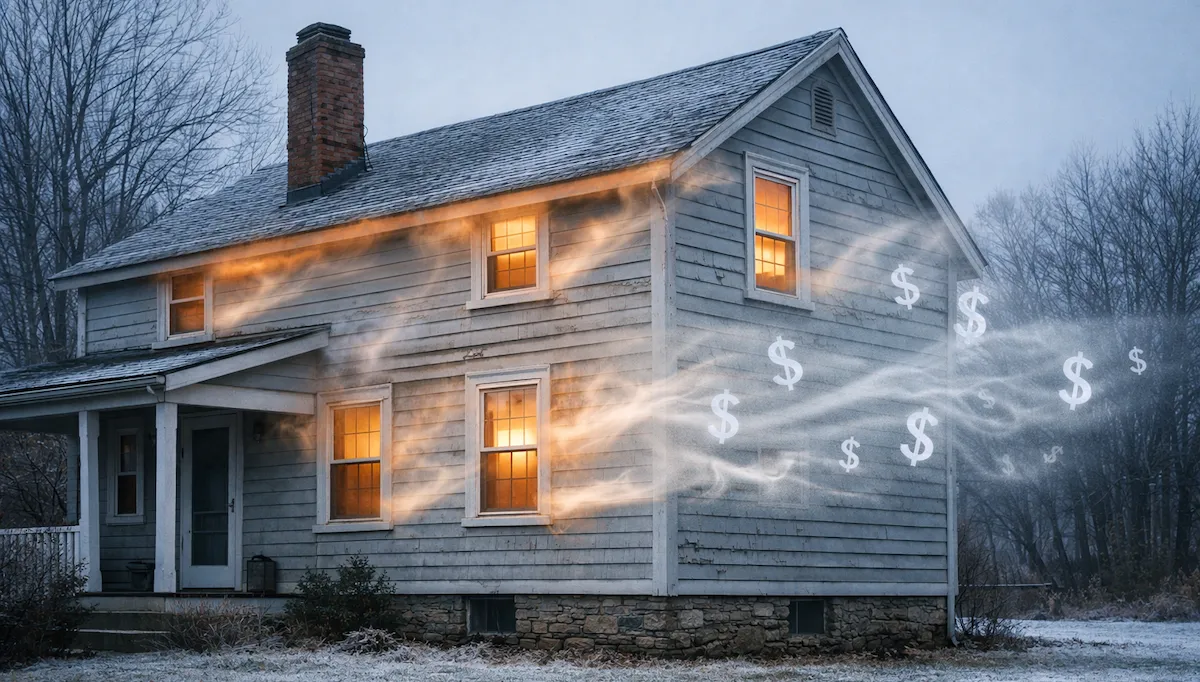
If insulating an old house were easy, nobody would be searching this topic at midnight while standing next to a drafty window. Older homes have charm, character, and usually a serious insulation problem. The good news is that improving comfort and efficiency doesn’t have to mean tearing down walls or living in a construction zone.
Here’s how insulating an old house without demolition actually works, when it makes sense, and how to avoid the common mistakes that trip homeowners up.
Why Insulating Old Houses Is So Tricky
Old houses were built in a very different era. Energy was cheap, insulation wasn’t standard, and building science hadn’t yet caught up with how heat, air, and moisture really move through a home.
Common challenges include:
- Plaster and lath walls instead of drywall
- Irregular framing and inconsistent wall cavities
- Balloon framing that connects basements to attics
- Decades of settling and retrofits
On top of that, many homeowners assume insulation upgrades automatically mean torn-up walls, dust, and weeks of disruption. That fear alone causes people to put off improvements while living with cold rooms, drafts, and high heating bills.
Fortunately, tearing down walls is usually the last option—not the first.
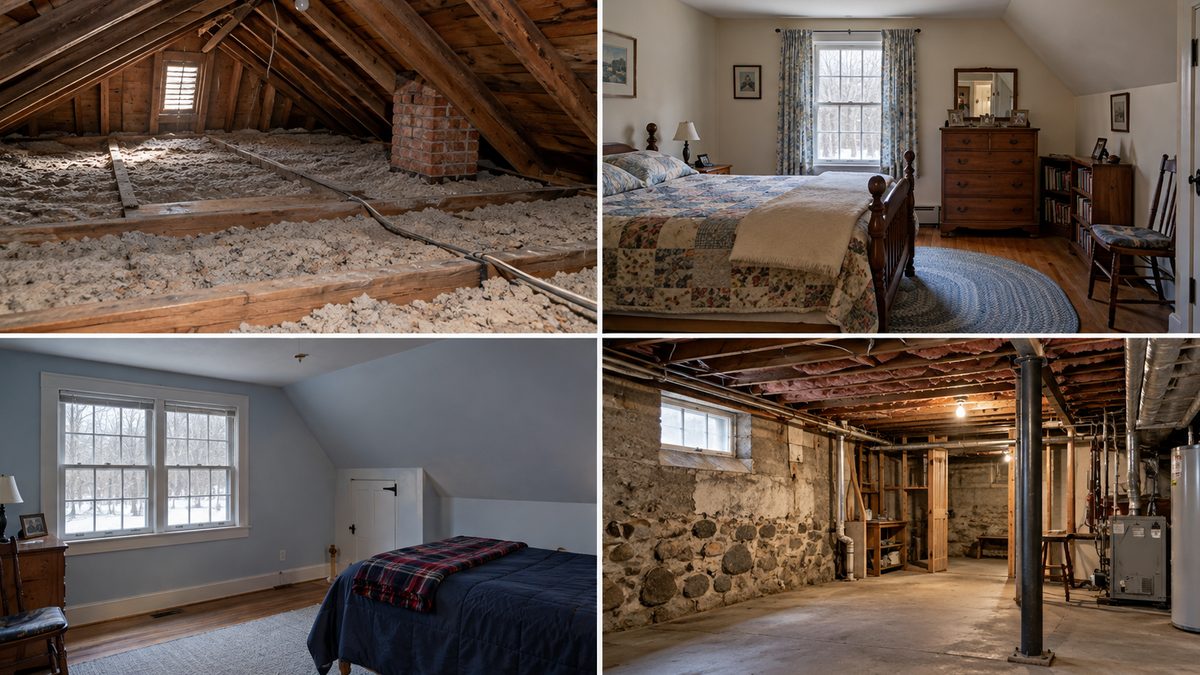
History of insulation in Connecticut.
Can You Really Insulate Walls Without Removing Drywall?
Yes. And in many cases, it’s the most practical approach.
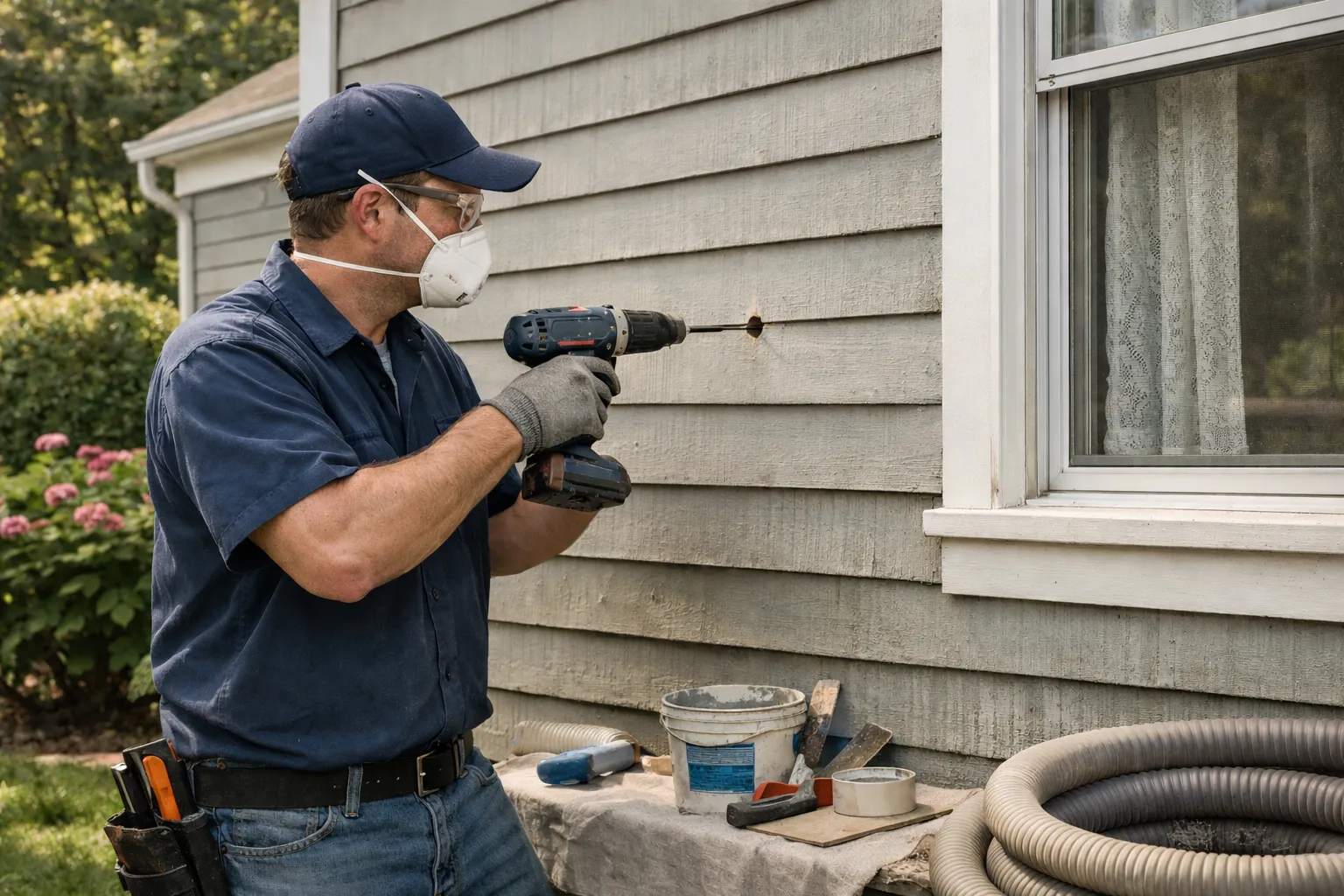
Insulating existing walls is typically done using a method known as drill-and-fill insulation. Instead of opening up entire walls, small access holes are drilled from the interior or exterior, insulation is installed into the wall cavities, and the holes are sealed and patched afterward.
This approach:
- Avoids major demolition
- Works with plaster and older framing
- Targets the actual source of heat loss
Not every wall in every home is a candidate, but for many older houses, insulating existing walls without removing drywall is both possible and highly effective.
What's the best insulation type for exterior wall insulation?
The Best Insulation Options for Old Houses With Existing Walls
Material choice matters more in older homes than in new construction. The insulation needs to adapt to irregular cavities and older building materials—not fight them.
The most effective options are:
- Blown-in cellulose
Dense, flexible, and excellent at filling irregular spaces. Dense-pack cellulose resists air movement and performs well in older homes with plaster walls or balloon framing. - Injection foam insulation
A slow-expanding foam designed for existing walls. It provides insulation and air sealing, but requires careful evaluation to avoid moisture issues. - Fiberglass (limited use)
Often less effective in retrofit applications due to uneven filling and air gaps, especially in older wall assemblies.
The “best” insulation depends on the house, not just the product.
How Blown-In Insulation Works in Older Homes
Blown-in insulation is simple in concept, but installation in an old house requires precision.
The process typically looks like this:
- Wall cavities are evaluated and mapped
- Small access holes are drilled strategically
- Insulation is installed under controlled pressure
- Cavities are filled completely to reduce drafts
- Holes are sealed and surfaces repaired
Dense-pack insulation helps prevent settling and limits airflow inside the walls. When done correctly, walls look exactly the same afterward—but perform dramatically better.
What About Historic Homes or 100-Year-Old Houses?
Historic and century-old homes require a more careful approach. These structures often rely on natural drying and airflow, and insulating without understanding that balance can cause problems.
Key considerations include:
- Balloon framing and continuous wall cavities
- Moisture management and drying potential
- Preserving original materials and finishes
Dense-pack cellulose is often favored when insulating historic homes because it allows walls to dry if moisture is present. Injection foam may also work, but only after careful evaluation.
The goal isn’t to make an old house behave like a new one—it’s to make it more comfortable without breaking how it works.
How to insulate a historic home
Will Insulating Existing Walls Actually Make a Difference?
In most older homes, the answer is an immediate yes.
Homeowners typically notice:
- Fewer drafts
- More even temperatures room to room
- Warmer walls and floors
- Lower heating and cooling demand
Wall insulation also improves the effectiveness of other upgrades. New windows, efficient HVAC systems, and attic insulation all perform better when walls stop acting like energy leaks.
Common Mistakes Homeowners Make When Insulating Old Houses
Problems usually come from approach—not insulation itself.
Common mistakes include:
- Choosing the wrong insulation material
- Ignoring moisture or air sealing issues
- Treating all walls the same despite different conditions
- Assuming it’s a straightforward DIY project
In older homes, mistakes are easy to hide and hard to fix later. That’s why planning matters as much as installation.
How Much Does It Cost to Insulate an Old House Without Opening Walls?
Costs vary, but insulating existing walls is typically far less expensive than opening walls and repairing finishes afterward.
Pricing depends on factors such as:
- Wall square footage
- Insulation type
- Access method (interior vs. exterior)
- Framing complexity
- Plaster versus drywall
While older homes can take more time, wall insulation is often one of the highest-value upgrades available—especially in homes that had little or no insulation to begin with.
Ballpark wall insulation costs with our insulation cost calculator.
Is This a DIY Project or a Job for a Professional?
In older homes, wall insulation is almost always a professional job.
Hidden wiring, unusual framing, moisture risks, and pressure-sensitive installation all raise the stakes. A professional assessment also helps determine whether wall insulation should come first—or whether attic, basement, or air sealing work will deliver better results initially.
The payoff is knowing the job was done safely, completely, and correctly.
When Insulating Existing Walls Is Not the Right Move
Wall insulation isn’t always step one.
It may be better to wait if:
- Moisture problems haven’t been resolved
- Major air leaks exist in attics or basements
- Structural or fire safety concerns are present
A whole-home approach ensures insulation upgrades actually deliver the comfort and efficiency homeowners expect.
Final Takeaway: The Smart Way to Insulate an Old House Without Demolition
Old houses don’t need to be gutted to be comfortable. Modern insulation methods make it possible to improve efficiency, reduce drafts, and lower energy costs—without tearing down walls or sacrificing character.
When insulation is treated as a strategic upgrade instead of a cosmetic one, the results are noticeable, durable, and well worth the investment.
Talk to a Professional Who Understands Old Houses
Experience matters with older homes. The right contractor understands how old houses are built, how they manage moisture, and how to insulate them without causing new problems.
👉 If you’re considering insulating an old house and want clear answers, contact Nealon Insulation.
FAQ's on Wall Insulation for Historic Homes
Will insulating my existing walls damage plaster or finished surfaces?
Insulating existing walls does not damage plaster or finished surfaces when performed correctly. Professional installers use low-pressure methods and carefully placed access holes. In older plaster homes, experienced contractors adjust drilling locations and insulation density to prevent cracking and protect original wall finishes.
How long does wall insulation take in an older home?
Wall insulation in an older home typically takes one to two days to complete. Project length depends on home size and wall accessibility. Installers use small access holes instead of demolition, which keeps disruption minimal. Homeowners can usually stay inside, and rooms are usable immediately after installation.
How do I know if my walls are already insulated or completely empty?
Determine whether walls are insulated by scheduling a professional assessment. Contractors use visual inspection, small test holes, and thermal imaging to confirm insulation presence. Older homes often have empty or deteriorated insulation, and identifying this condition ensures the correct insulation method is used.
Will insulating my walls cause moisture or mold problems later?
Properly installed wall insulation reduces moisture and mold risk rather than causing it. Problems occur only when installers ignore existing moisture issues or use the wrong insulation type. Qualified contractors assess ventilation, moisture pathways, and wall construction to ensure walls manage moisture safely after insulation.
What kind of results should I realistically expect after insulating my walls?
After insulating your walls, expect immediate comfort improvements, including fewer drafts and more consistent indoor temperatures. Energy savings vary by home, but reduced heating and cooling demand often lowers utility bills over time. Many homeowners also find previously uncomfortable rooms become fully usable again.
Related Articles
Let's Work Together
Ready to transform your home into an energy-efficient haven? Schedule your free energy assessment today and experience the Nealon difference for yourself.