
Crawl Space Vapor Barrier: What It Is, What It Costs, and Whether You Need One
There's a smell that gives it away. You walk in on a humid August afternoon and catch a faint musty note near the floor, or the hardwood in the back bedroom has started to cup at the edges. Down in the crawl space, the joists feel damp and the plastic somebody stapled up years ago is hanging in shreds. Now you're collecting quotes, and they're all over the map. One guy says a few hundred bucks of plastic will fix it. The next wants twelve grand to encapsulate the whole thing.
Here on the Connecticut shoreline, that gap between the cheap fix and the expensive one trips up a lot of homeowners, and most of the articles you'll find online quietly blur the two together. This one won't. Below is what a crawl space vapor barrier actually is, what it does for your house, what it really costs in Connecticut, and how to tell whether a basic barrier is enough or whether your crawl space needs the full treatment.
What a Crawl Space Vapor Barrier Actually Is
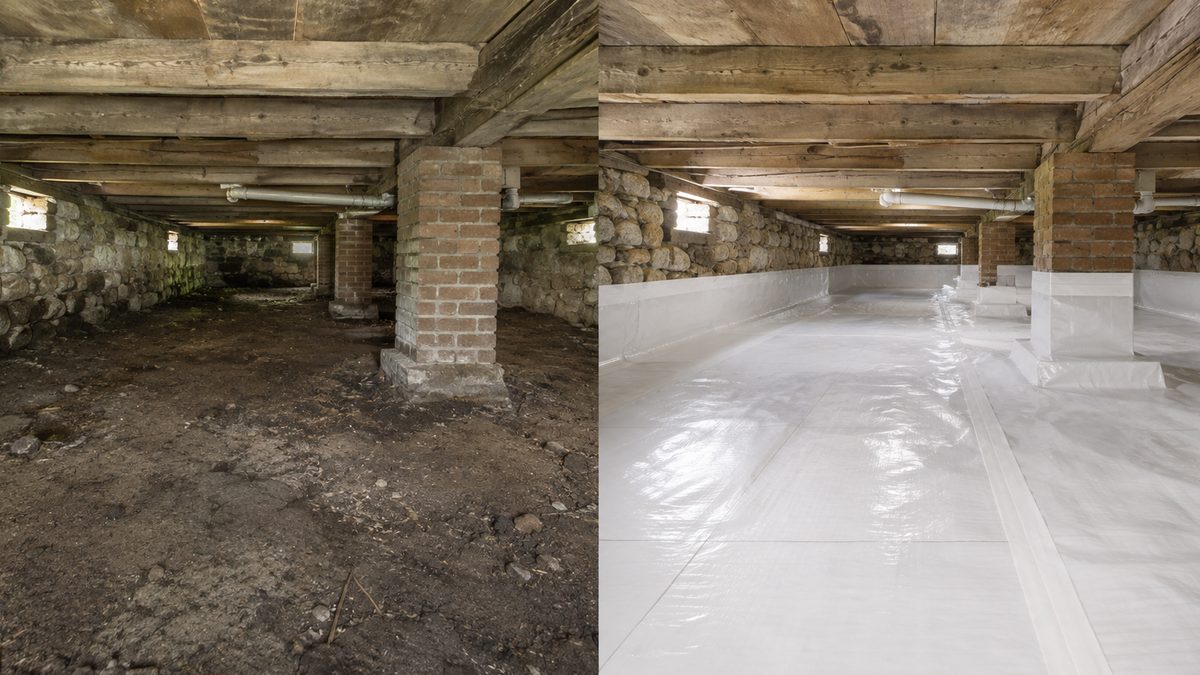
A crawl space vapor barrier is a sheet of polyethylene plastic laid across the crawl space floor to stop ground moisture from evaporating up into your home. The dirt or gravel under a house is never really dry. Soil wicks and releases water vapor around the clock, and that vapor rises straight into your floor framing, your subfloor, and any insulation down there. The barrier is the sheet that stands between the wet ground and the wood.
You'll hear it called a moisture barrier, a ground cover, or a vapor retarder. Same idea, and I'll stick with vapor barrier here so we're not chasing five words for one thing. Thickness runs from a thin 6-mil poly up to heavy 20-mil reinforced liners. Six mil is about the practical floor for actually controlling ground moisture, but thin poly tears the first time somebody crawls across it, so most professional installs use 10-mil or heavier.
Vapor Barrier vs. Crawl Space Encapsulation
A vapor barrier is one component; crawl space encapsulation is the whole system. A bare vapor barrier covers the dirt and stops ground moisture, and that's it. Encapsulation takes that same barrier, runs it up the foundation walls, seals the seams, closes the vents, adds air sealing and insulation, and usually a dehumidifier. If you want the full breakdown, here's what a complete crawl space encapsulation system includes.
The distinction matters because ground moisture is only one way water gets into a crawl space. In a vented crawl space, humid summer air pours in through the foundation vents, hits the cool surfaces down there, and condenses right onto your framing. Advanced Energy's field research on closed crawl spaces found that sealing the space held humidity far lower than a vented crawl space with only a floor barrier. So a sheet of plastic on the ground fixes the ground. It does nothing about the swamp air rolling in through the vents. Putting a barrier in a wide-open vented crawl space is a bit like drying the basement floor with the window open in a thunderstorm.
Not sure whether closing the vents helps or hurts? Here's whether you should vent your crawl space in Connecticut.
Benefits of a Crawl Space Vapor Barrier
A crawl space vapor barrier protects three things at once: your framing, your air, and your energy bill. Ground moisture is the quiet culprit behind a lot of older-home problems, and cutting it off at the source pays back in ways you can actually feel.
- Structure. Drier wood means mold, rot, and wood-boring insects have nothing to feed on. That's your joists and subfloor staying solid instead of soft.
- Indoor air. A big share of the air you breathe upstairs gets pulled up from below through the stack effect. Damp, musty crawl space air becomes damp, musty house air, so drying the crawl space cleans up the air you actually live in. It's also your first line of defense on crawl space mold prevention.
- Comfort and energy. A dry crawl space keeps the insulation down there dry, which keeps it working, and the floors above stop feeling clammy in the summer.
None of this requires the full encapsulation. Even the basic barrier moves the needle on all three, which is why it's the highest-return moisture fix in the whole house.
Wondering if it's worth sealing the whole thing? Here's why crawl space encapsulation is the upgrade older homes quietly need.
What a Crawl Space Vapor Barrier Costs in Connecticut
A crawl space vapor barrier runs from a couple hundred dollars in materials to a full five-figure encapsulation, depending on how far you take it. The plastic itself is cheap. Almost all of the cost in a real job is labor, access, and everything you seal beyond the floor.
What moves the price: crawl space size, how much clearance you've got (a belly-crawl costs more than a stand-up space), dirt versus gravel, whether there's standing water to solve first, the thickness of the poly, and whether the vents and walls get sealed.
Here's where Connecticut homeowners get a break, with one caveat. Energize CT rebates apply to the crawl space insulation portion of the work, not the plastic itself. The program covers up to $2.00 per square foot or 75% of the project cost, whichever is less, capped at $10,000, and it starts with a Home Energy Solutions audit that carries a $40 copay. So the vapor barrier is on your dime, but if you're adding crawl space insulation at the same time, that side of the job may qualify.
Want to see how the rebate math actually works? Here's how Connecticut insulation rebates are calculated and applied.
Do You Actually Need a Crawl Space Vapor Barrier?
If your crawl space has an exposed dirt or gravel floor, you need a vapor barrier, full stop. It's the cheapest, highest-return moisture fix in the house, and the building code already assumes a ground cover is down there. The real question isn't whether you need a barrier. It's whether a barrier alone is enough, or whether you need the full seal.
Go down there this weekend with a flashlight and look for these. The more you check off, the more likely you're past a simple barrier and into encapsulation territory:
- A musty or earthy smell in the crawl space or up on the first floor
- Condensation or water droplets on ducts, pipes, or the underside of the subfloor
- Hardwood floors above the crawl space cupping or feeling clammy
- Visible mold or dark staining on the joists or subfloor
- Open foundation vents in a humid, shaded crawl space
- Insulation that's sagging, darkened, or falling down
- Standing water or soggy soil after it rains
Prefer to work through it? Run the quick self-check below to see whether your crawl space needs a barrier or the full seal.
Check one or two of these on an otherwise dry dirt floor, and a well-installed vapor barrier is probably all you need. Check a handful, especially standing water, mold, or condensation on the ducts, and you're looking at full encapsulation, because plastic on the ground won't touch humid air pouring through the vents.
Now the honest DIY versus pro line. A handy homeowner can roll out and stake down a 6-mil barrier over a dry, accessible dirt floor in an afternoon, and running the checklist above costs nothing. Where you genuinely want a pro is the moment you've got low clearance, standing water, mold, or you're sealing seams up the walls and closing vents. That's professional vapor barrier installation territory. Encapsulation is not a plastic-and-staples job, and doing it half-right traps moisture instead of stopping it.
Worried about sealing a wet problem in instead of out? Here's how to keep existing moisture problems from getting sealed in behind insulation.
What to Do Next
Your next move is a ten-minute look in the crawl space, not a phone call. You'll learn more with a flashlight and your phone than any contractor can tell you over the line, and it makes every quote you get afterward more accurate.
- Look and smell. Note the floor (dirt, gravel, or existing plastic), any standing water, and whether it smells musty.
- Photograph the problem spots. Get the vents, the ducts, and any torn or missing barrier. Photos make quotes far more accurate.
- If the floor is bare dirt and dry, a barrier is your baseline fix, DIY or pro.
- If you checked off the moisture signs, book a Home Energy Solutions audit ($40 copay) or a crawl space assessment before you commit to anything.
A crawl space vapor barrier is the plastic on the ground that stops soil moisture from rising into your house, and for a dry, dirt-floor crawl space it's the best few hundred dollars you can spend. Encapsulation is the bigger system that seals the whole space, and it's the right call when humid air, standing water, or mold are in the picture, not just ground moisture.
The trap is paying encapsulation money for a barrier problem, or slapping down a barrier when you actually have an air problem. Match the fix to what your crawl space is actually doing, and you'll spend the right amount once instead of the wrong amount twice.
Frequent Questions About Crawl Space Vapor Barriers
How long does a crawl space vapor barrier last?
A crawl space vapor barrier lasts 10 to 20 years, depending on thickness and how much traffic the space sees. Thin 6-mil poly tears and degrades faster, while reinforced 12 to 20 mil liners hold up for two decades or more. Damp soil, sharp debris, and repeated crawling shorten the lifespan. Choose a reinforced liner and clear sharp rocks before installation to extend the barrier's life and protect the framing above.
How long does it take to install a crawl space vapor barrier?
A professional crew installs a floor-only crawl space vapor barrier in 1 day for most homes. Full crawl space encapsulation takes 2 to 4 days, since it adds wall liner, sealed seams, vent covers, and often a dehumidifier. Tight clearance, standing water, and debris removal add time. Clear the crawl space of stored items before the crew arrives to speed the job and lower the labor cost.
Does a crawl space vapor barrier get rid of the musty smell in my house?
A crawl space vapor barrier reduces the musty smell that comes from ground moisture evaporating into the home. A barrier alone will not clear odor caused by humid air entering through open vents or by existing mold on the joists. Standing water and active mold need direct treatment first. Seal the ground, close the vents, and treat any mold to remove the musty smell at its source and clean up the air upstairs.
Should a crawl space vapor barrier be sealed to the foundation walls?
A crawl space vapor barrier gets sealed to the foundation walls only when you are encapsulating the space, not for a basic floor-only barrier. Floor-only barriers cover the ground and overlap at the seams to block soil moisture. Encapsulation runs the liner 6 to 12 inches up the walls, sealed with tape and fasteners, to close the space off from vent air. Seal the walls and vents when humidity, condensation, or mold are present to control every moisture pathway, not just the ground.
Do I need a dehumidifier with a crawl space vapor barrier?
A basic crawl space vapor barrier does not require a dehumidifier, because it blocks ground moisture without sealing the space. A sealed, encapsulated crawl space often needs a dehumidifier to hold humidity below 60%, the level where mold growth starts. Homes on the humid Connecticut shoreline benefit most from added dehumidification. Add a dehumidifier after encapsulation to keep humidity under 60%, protect the framing, and stop mold before it forms.
👉 Contact Nealon Insulation — if your crawl space smells like a swamp in July, we'll tell you straight whether it needs a barrier or the full seal.
Related Articles

Let's Work Together
Ready to transform your home into an energy-efficient haven? Schedule your free energy assessment today and experience the Nealon difference for yourself.