
Can a Handyman Do Attic Insulation? A CT Contractor's Take
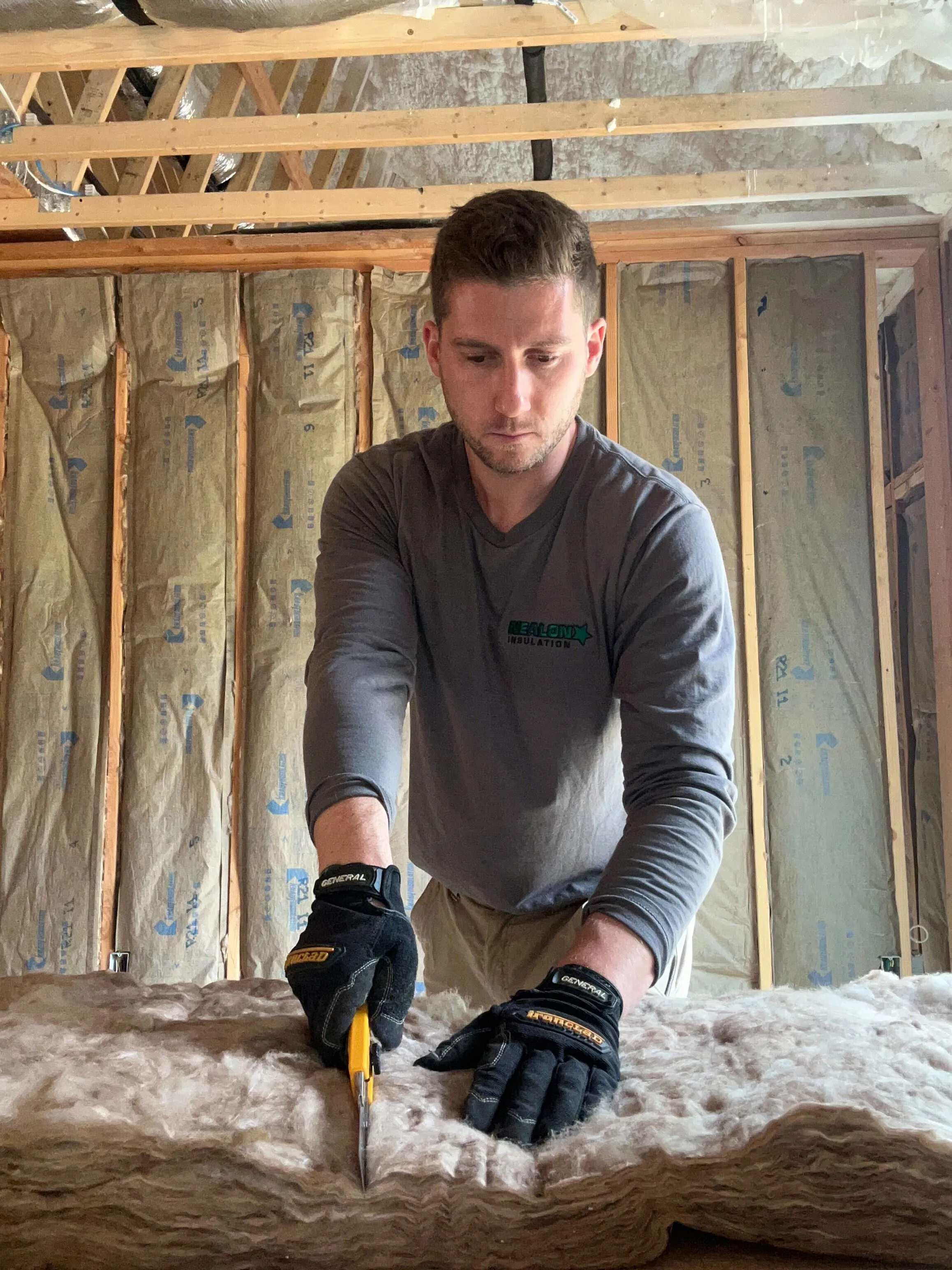
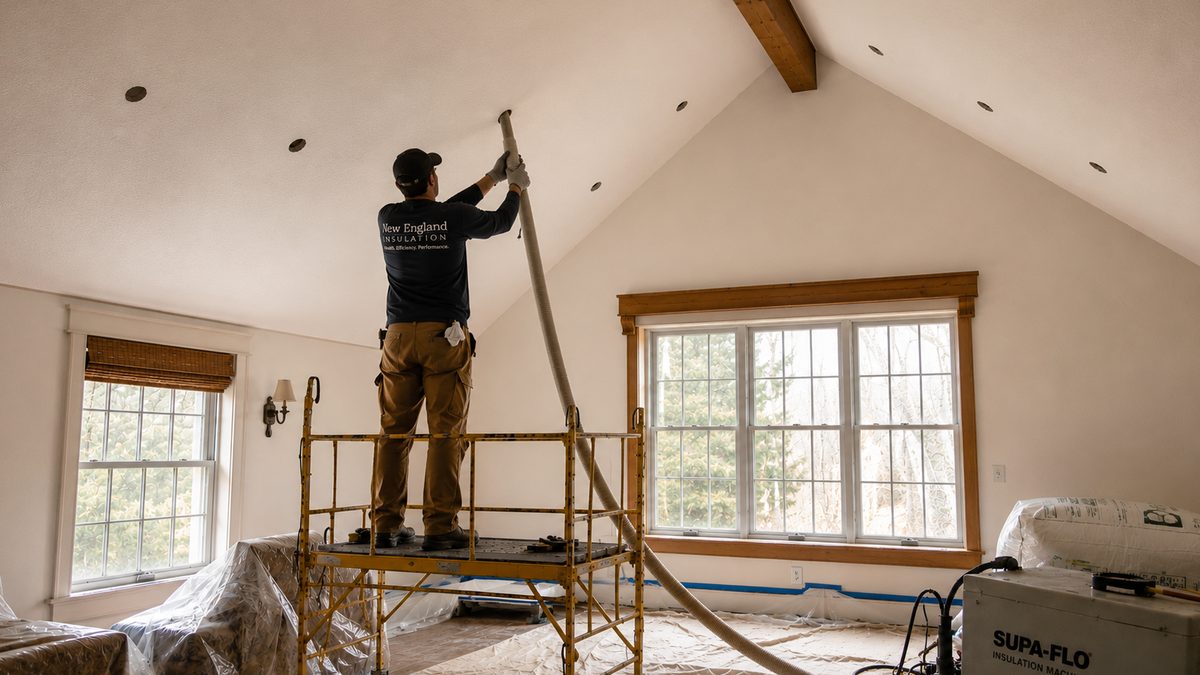
Every homeowner has had the thought at least once. You need something done, your handyman is available, and you figure: how complicated can it be? For a lot of jobs, that logic holds up fine. Attic insulation in a Connecticut home is one of the places it doesn't.
It's not that the material is exotic or the concept is hard to grasp. Blown-in insulation goes in the attic, R-value goes up, heat stays in the house. Simple enough on paper. The problem is everything that has to happen before the insulation goes in — and everything that can go wrong in an older home when those steps get skipped or handled by someone without the right training.
Connecticut is Climate Zone 5A. Winters are cold, heating costs are among the highest in the country, and a large share of the housing stock was built before anyone was paying attention to energy performance. In a pre-1980 home, opening up the attic often reveals settling, missing blocking, deteriorated baffles, and occasionally wiring conditions that need to be addressed before a single pound of insulation goes anywhere. That's not a handyman job. It's a job for a contractor who understands the building envelope, knows what to look for structurally, and has the carpentry capability to handle what they find.
There's also real money at stake. Energize CT rebates are available for qualifying attic insulation and air sealing work, but only when the job is done by a qualified contractor following the right process. Hire the wrong person and that rebate is gone before the work even starts.
This post walks through what attic insulation actually involves, where the handyman option falls short, and what to look for when you're hiring someone to do it right.
What Attic Insulation Actually Involves
Most homeowners picture attic insulation as a two-step job: open the hatch, blow in some material, close the hatch. That's understandable. From the ground floor, it looks simple. But the work that determines whether your insulation actually performs happens before a single pound of material goes in.
A proper attic insulation job starts with air sealing the attic floor before any material goes in. Every gap around recessed lights, plumbing penetrations, top plates, and attic hatches needs to be sealed before insulation covers it. Skip that step and you're insulating over a colander — warm air from your living space finds every hole and carries heat straight out of the house. In Connecticut winters, that's not a comfort issue. It's a heating bill issue.
After air sealing comes a ventilation check. Attic ventilation has to stay clear and balanced — soffit to ridge — or you end up with moisture problems, premature sheathing damage, and in colder months, ice dams along your eaves. Baffles need to be in place at every rafter bay to keep the insulation from blocking airflow at the soffits.
None of this is optional. And none of it is something you eyeball in twenty minutes.

Air Sealing Comes First
Air sealing is the unglamorous part of attic work, but it's where most of the energy savings actually come from. The U.S. Department of Energy estimates that air leakage accounts for 25–40% of heating and cooling energy loss in a typical home. In an older Connecticut house with decades of settling, that number can be worse.
A qualified insulation contractor will assess every penetration point before installing material. That means looking at the tops of interior partition walls, around chimneys (with proper fire-stop clearance), bathroom exhaust fans, and any electrical or plumbing that passes through the attic floor. Sealing these correctly requires the right materials — not caulk and good intentions.
Attic Ventilation Has to Be Right
Connecticut's climate creates a year-round ventilation problem. In winter, warm humid air rises from the living space and hits a cold attic deck. Without proper ventilation and air sealing working together, that moisture condenses on the sheathing. Over time, you get mold, rot, and a roofing repair bill you weren't expecting.
Baffles — also called rafter vents — keep airflow moving from the soffit vents up to the ridge. They also establish a physical boundary so blown-in insulation doesn't migrate into and block the soffit. Installing them correctly takes knowledge of the roof structure and enough time to do it right. It's not a step that should be skipped to save an hour.
What does proper attic ventilation actually look like — and what happens when it goes wrong? How Does Attic Ventilation Work? A Guide for Homeowners
What a Handyman Can (and Can't) Do
This isn't a shot at handymen. A good handyman is worth their weight in gold for the right jobs — a leaky faucet, a stuck door, a ceiling fan swap. The problem isn't skill. It's scope. Attic insulation in an older home is a specialized trade job, and treating it like a general repair task is where homeowners run into trouble.
BPI Certification and the Building Envelope
Attic insulation isn't just about what goes in the attic. It's about how the attic connects to the rest of the house — what building performance professionals call the building envelope. The envelope is the boundary between conditioned living space and the outside world: walls, floors, ceilings, windows, doors, and the attic floor.
A contractor certified by the Building Performance Institute (BPI) is trained to assess the building envelope as a system. That means understanding how air moves through a house, where thermal bypasses occur, and how insulation and air sealing work together to reduce heat loss. It's a whole-house perspective, not a materials-and-labor one.
A handyman doesn't hold BPI certification. That matters for two reasons. First, you get a more complete diagnosis of what your attic actually needs before anyone touches it. Second, BPI-certified contractors are recognized by Energize CT as qualified to perform rebate-eligible work. Hire outside that qualification and the rebate — sometimes worth hundreds to over a thousand dollars depending on scope — is gone.
Licensing and Documentation
Connecticut doesn't require a dedicated insulation license the way it does for electrical or plumbing, but that doesn't mean the paperwork is optional. A qualified insulation contractor carries proper liability coverage, provides a written scope of work, and documents the job in a way that holds up for rebate claims, insurance purposes, and future home sales. A handyman invoice for "attic work" doesn't give you much to stand on if questions come up later.
Wondering whether to tackle insulation yourself or hire a contractor? Here's how to decide. DIY Insulation vs Contractor: When to Do It Yourself and When to Hire a Pro
Why Older Connecticut Homes Need More Than a Handyman
Connecticut has a lot of old houses. That's part of the charm. It's also part of the challenge. A significant portion of the housing stock along the shoreline and inland towns was built before 1980, and many of those homes were built before anyone was thinking seriously about energy performance. Balloon framing, knob-and-tube wiring, minimal blocking, and settling over decades create conditions that a standard insulation job isn't designed to handle on its own.
This is where the difference between a handyman and a contractor with real carpentry capability becomes concrete.

The Carpenter Difference at Nealon
Nealon's crew includes experienced carpenters, and on older homes, that matters more than most homeowners realize. Before insulation goes in, there's often structural prep work that needs to happen first — and if nobody on the crew knows how to do it, it either gets skipped or you're waiting on a second contractor.
That prep work can include:
- Installing or replacing rafter baffles where old ones have collapsed or were never put in
- Adding blocking at the tops of partition walls to close thermal bypasses
- Repairing or sistering damaged rafters and joists discovered during the assessment
- Addressing deteriorated sheathing before it gets buried under insulation
- Building out or reinforcing an attic hatch to accept proper insulation coverage
None of these are insulation tasks. They're carpentry tasks. And in a pre-1980 home, it's rare to open up an attic and find everything perfectly ready to go.
What Gets Missed Without Carpentry Eyes
A handyman focused on the insulation job will focus on the insulation. A crew that includes carpenters looks at the whole picture. Knob-and-tube wiring, for example, requires specific clearances — you can't just bury it under blown-in insulation without addressing it first. Missing that isn't just a code issue; it's a fire hazard.
Settled framing can also create gaps at the tops of walls that funnel warm air directly into the attic space. Those gaps won't show up as obvious problems, but they'll show up on your heating bill every winter. Catching them requires someone who knows what to look for structurally, not just what the insulation spec calls for.
Getting the attic right in an older home is a two-trade job. Nealon brings both trades to the same visit.
Insulating an older home with plaster walls takes a different approach — here's what works. How to Insulate an Old House with Plaster Walls
Energize CT Rebates Require Qualified Contractors
If you're a Connecticut homeowner planning attic insulation, there's money available to offset the cost — but only if the work is done the right way, by the right contractor.
Energize CT is Connecticut's primary energy efficiency program, funded through the utilities and administered through Eversource and United Illuminating. It offers rebates on qualifying insulation and air sealing work, and for most homeowners, accessing those rebates starts with a Home Energy Solutions (HES) audit.
The HES Audit Is a Required First Step
The HES audit is a mandatory prerequisite for Energize CT rebates, not an optional add-on. A certified energy auditor visits your home, assesses the building envelope, identifies where heat loss is occurring, and documents the baseline conditions. That audit report is what ties the subsequent insulation work to the rebate program.
As of April 1, 2026, the HES audit carries a $40 homeowner copay. Income-eligible homeowners may qualify for the no-cost HES-IE program, which covers the audit and can significantly expand the rebate amounts available for the insulation work itself. If you're served by a municipal utility rather than Eversource or UI, the program structure is different — worth a conversation before you assume the standard pathway applies.
Why Contractor Qualification Matters for Rebates
Energize CT rebates require that the insulation work be performed by a participating, qualified contractor. That qualification isn't just a formality. It determines whether the work gets documented correctly, whether the rebate application can be submitted, and whether the improvement registers in the program's records.
Hire a handyman or an unqualified contractor and the rebate eligibility disappears entirely. The insulation might go in fine, but there's no audit trail, no program documentation, and no check coming back to you. On a full attic insulation and air sealing project, that can mean leaving several hundred to over a thousand dollars on the table.
Working with a qualified contractor from the start keeps the whole process clean — audit, installation, documentation, rebate.
Get the full breakdown on Connecticut insulation rebates and how to claim them. Connecticut Insulation Rebates: How to Save Big on Home Upgrades in 2026
What to Look for When Hiring an Attic Insulation Contractor
Not every contractor who offers attic insulation is equally equipped to do it well. Here's what to actually look for when you're vetting someone for the job — including the questions to ask before hiring an insulation contractor.
- BPI certification. This tells you the contractor understands building performance as a system, not just as a materials install. It's also a baseline requirement for Energize CT rebate eligibility.
- Experience with older homes. Ask directly. A contractor who mostly works on new construction has a different frame of reference than one who spends their days in 1950s capes and 1960s colonials. Older homes have quirks that require field experience to recognize and handle correctly.
- Carpentry capability on the crew. If the contractor can only install insulation and has to sub out or skip the structural prep, you're at risk of insulation going in over problems that will limit its performance or cause issues down the road. Ask whether they handle attic prep work in-house.
- Air sealing as part of the scope. Any contractor who quotes insulation without mentioning air sealing is leaving the most important part out. They should be able to walk you through how they approach sealing the attic floor before material goes in.
- Familiarity with the Energize CT program. If they can't explain the HES audit requirement or help you navigate the rebate process, that's a gap. A contractor who does this regularly in Connecticut knows the program and can tell you what to expect.
- Written scope of work. Before any work starts, you should have a document that spells out what's being done, what materials are being used, and what R-value you'll end up with. Verbal agreements on insulation jobs have a way of leading to misunderstandings about what got done and why.
A little due diligence upfront saves a lot of frustration later. The right contractor makes the whole process straightforward — audit, prep, installation, and rebate paperwork included.
Not sure if your attic insulation needs replacing? Here are the signs to look for. How to Tell If Your Attic Insulation Needs to Be Replaced
The Bottom Line on Attic Insulation and Who Should Do It
Attic insulation is one of the highest-return energy upgrades a Connecticut homeowner can make. But the return depends entirely on the job being done correctly — and correctly means more than just getting the R-value up.
It means air sealing the attic floor before any material goes in. It means making sure ventilation stays clear and baffles are in place. It means having someone on the crew who can recognize and address the structural conditions that older homes almost always present. And it means working with a BPI-certified contractor who can connect the work to Energize CT rebates so you're not leaving money behind.
A handyman can handle a lot. This isn't one of those jobs. The attic is where a significant portion of your home's heat loss happens, and getting it right requires the kind of expertise and preparation that a general repair contractor isn't set up to provide.
Nealon has been doing this work in Connecticut since 1977. The crew includes experienced carpenters who handle structural prep in-house, so older homes get the attention they actually need before insulation goes in. If your attic is overdue for an upgrade, start with the right team.
👉 Contact Nealon Insulation — if your attic is underperforming, we'll tell you exactly what it needs and handle everything from structural prep to rebate paperwork.
Frequent Questions About Attic Insulation Contractors
Does a handyman need a permit to do attic insulation in Connecticut?
Permit requirements for attic insulation in Connecticut vary by municipality, but many towns require a building permit for insulation work above a certain scope. A qualified insulation contractor knows the local requirements and pulls the necessary permits before work begins. A handyman who skips this step leaves the homeowner liable if an unpermitted job surfaces during a home inspection or insurance claim.
How much attic insulation do I need in Connecticut?
Connecticut attic insulation should reach a minimum of R-49, which requires roughly 14 to 18 inches of blown-in cellulose depending on the material's settled density. Homes with no existing insulation or compressed, degraded insulation from decades ago may need full removal before new material goes in. A contractor will measure existing conditions and give you a specific target rather than a ballpark.
Can I lose my Energize CT rebate if I hire the wrong contractor?
An unqualified contractor disqualifies the work from Energize CT rebates entirely. The program requires installation by a participating contractor in their network, and there is no retroactive path to claim the rebate after the fact. Confirming contractor eligibility before signing anything is the easiest way to protect the rebate.
How do I know if my attic has knob-and-tube wiring that could be a problem?
Knob-and-tube wiring is identifiable by its ceramic knobs and tubes running through joists and framing, along with the absence of a ground wire. Homes built before the 1950s in Connecticut are the most likely candidates. A contractor experienced with older homes will flag it during the assessment and advise on clearance requirements before any insulation goes over it.
How long does a professional attic insulation job take in Connecticut?
Most attic insulation jobs take one to two days from start to finish, including air sealing prep and blown-in installation. Older homes with structural prep needs — baffles, blocking, hatch work — may add time depending on what the assessment uncovers. A written scope of work given before the job starts should include a realistic time estimate.
Related Articles

Let's Work Together
Ready to transform your home into an energy-efficient haven? Schedule your free energy assessment today and experience the Nealon difference for yourself.