
Is DIY Insulation Actually Cheaper? What Connecticut Homeowners Should Know
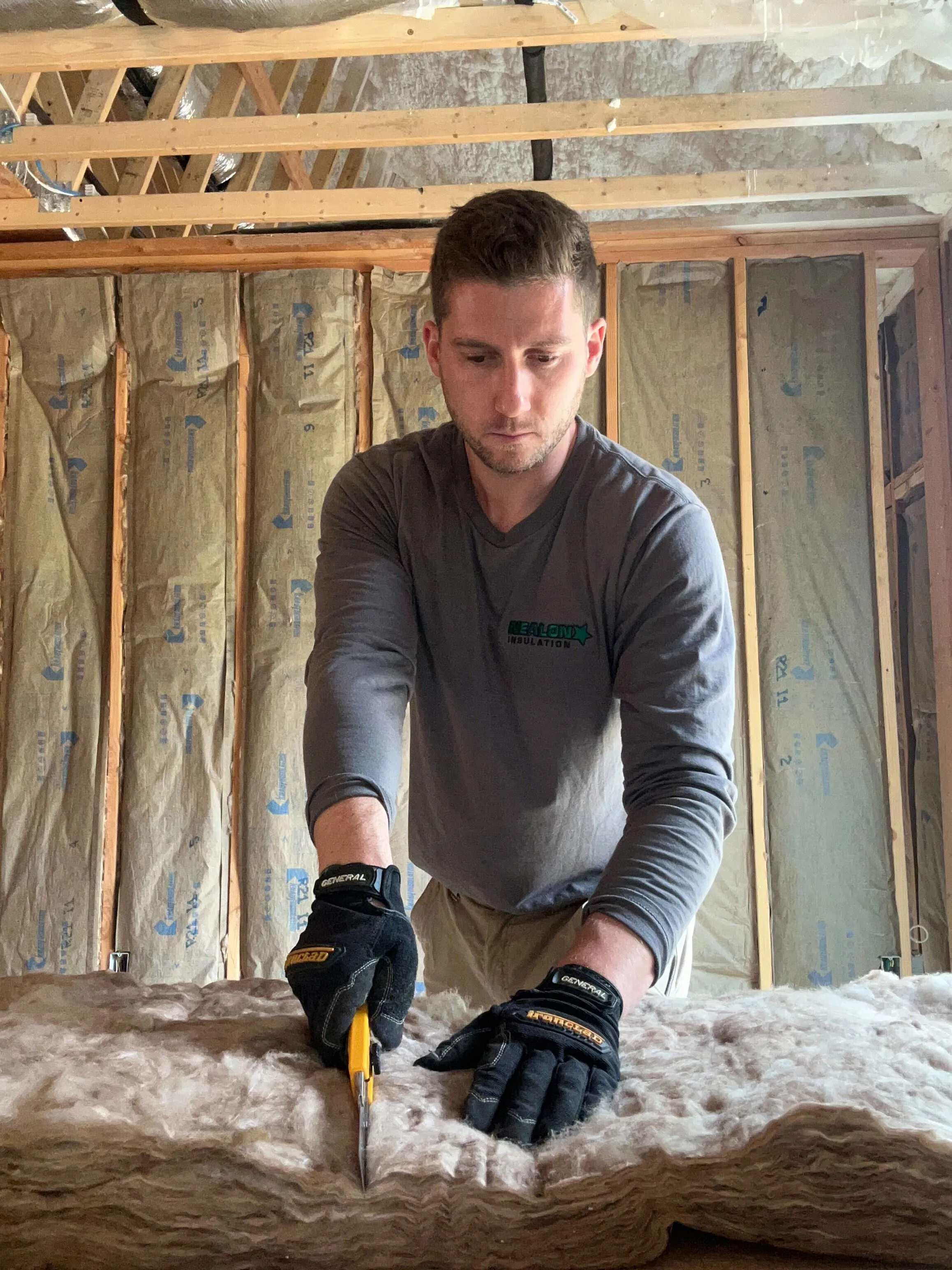
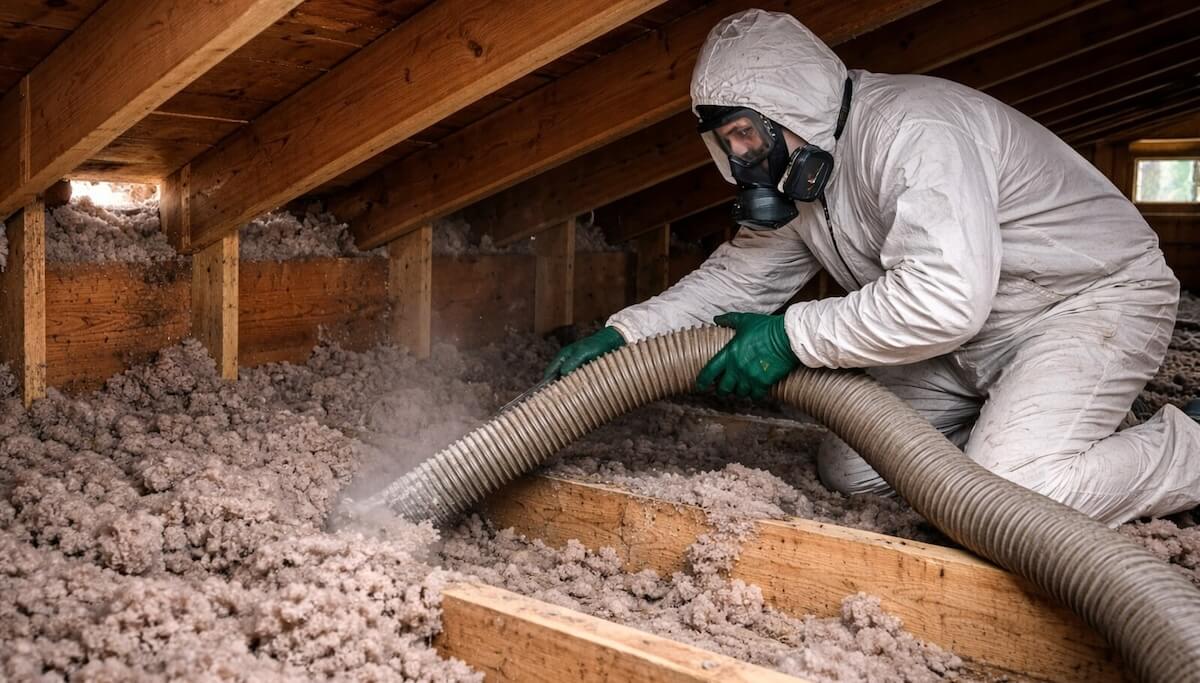
Every spring, someone calls us after spending a weekend in their attic. They bought the insulation, rented the blower, watched the YouTube videos. And the job looks done — bags emptied, hatch closed, hands washed.
Then the next heating bill arrives, and nothing's changed.
It's one of the more frustrating conversations to have, because the effort was real and the intention was right. The problem usually isn't that they did the work — it's that the work they did wasn't the work the house actually needed.
DIY insulation has genuine appeal. You control the timeline, you skip the labor markup, and there's something satisfying about improving your own home with your own hands. For certain projects, that logic holds up. But "certain projects" is a smaller category than most people assume — especially in Connecticut, where older housing stock, coastal moisture, and some of the highest heating costs in the country mean the margin for error is thin.
This isn't a post designed to talk you out of picking up a tool. It's designed to help you figure out whether your specific project is one where DIY saves you money — or one where it ends up costing you more than a contractor would have.
The answer depends on the job, the house, and a few factors most homeowners don't think to price in.
Where DIY Insulation Can Make Sense
Let's be fair about this — DIY insulation isn't always a bad idea. There are situations where a handy homeowner can do a decent job and save real money doing it.
The projects where DIY tends to work best share a few things in common: easy access, forgiving geometry, and low consequences for imperfection.
Adding unfaced fiberglass batts over existing attic insulation is a classic example. If your attic has a flat floor, decent headroom, and no major air sealing issues, rolling out batts isn't rocket science. Same goes for insulating an unfinished basement ceiling or stapling batts between exposed floor joists — straightforward work where a mistake is visible and fixable.
Where DIY tends to hold up:
- Open, accessible attics with no major bypasses or air sealing needs
- Unfinished basement ceilings with exposed joists
- Adding a second layer of batts over existing insulation in conditioned spaces
- Simple crawl space ground cover (vapor barrier on a flat dirt floor)
The material savings are real. Fiberglass batts are inexpensive and widely available. If you're doing a small, clean job and you're comfortable in tight spaces, you can come out ahead on a simple project.
That said, "simple" is doing a lot of work in that sentence — and most Connecticut homes aren't simple.
Is fiberglass or cellulose right for your home?
The Hidden Costs Most Homeowners Don't See Coming
The materials are just one part of the bill. Most homeowners price a DIY insulation job by walking through Home Depot and adding up bags of insulation. That number looks pretty good compared to a contractor quote — until you start factoring in everything else.
Equipment rental adds up fast. Blown-in insulation is one of the most cost-effective ways to insulate an attic, but you can't just pour it in by hand. You need a blower machine. Most big box stores will loan or rent one when you buy enough bags, but you're still hauling it, setting it up, and returning it — and if the job takes longer than expected, you're paying for extra time and extra bags.
Disposal of old insulation is its own project. If your attic has old fiberglass, vermiculite, or — in older Connecticut homes — cellulose that's gotten wet and compacted over the decades, removing it before you add new material is a significant job. Before you grab a HEPA vacuum and start bagging, it's worth reading up on attic insulation removal in Connecticut — the risks and costs involved often change the calculus on whether DIY makes sense at all.
Safety gear isn't optional. Fiberglass and cellulose both require respiratory protection, eye protection, and proper clothing. If you don't already own a fitted respirator, add that to the cost. A cheap dust mask isn't sufficient.
The time cost is real, even if it feels invisible. A professional crew can insulate an average attic in a few hours. A first-time DIYer in an unfamiliar attic, dealing with unexpected obstacles, can easily spend a full day or more. That time has value — especially if you end up needing to go back and fix something.
And that's the thing. Mistakes on insulation jobs aren't always obvious right away. You might not know you left gaps, compressed the batts, or missed a critical air bypass until your energy bills tell you something's wrong — months later.
Does old insulation need to be removed?
Where DIY Insulation Gets Expensive Fast
There's a difference between a project that's inconvenient and one that's genuinely high-risk. Some insulation work falls squarely in the second category — and doing it wrong doesn't just waste money, it can cause real damage to your home.
Spray foam is not a DIY product.
The two-component spray foam kits sold at hardware stores are not the same as what a professional uses. They have short working windows, require precise mixing ratios, and if something goes wrong — wrong temperature, wrong ratio, off-ratio expansion — you end up with either a sticky mess or foam that never fully cures. Removing badly applied spray foam is expensive and labor-intensive. Professional spray foam rigs are calibrated, heated, and operated by people who do this every day. The margin for error on a DIY kit is thin.
Air sealing skipped or done wrong.
This is the big one. Air sealing is what actually stops conditioned air from escaping your home — insulation just slows the transfer of heat. If you add insulation without addressing air bypasses first, you're treating the symptom, not the problem. Understanding whether you should air seal or insulate first isn't just academic — get it wrong and you can trap humidity in places that lead to mold and rot. In Connecticut's climate — cold winters, humid summers, shoreline moisture — this isn't a hypothetical risk. It happens.
Vapor barriers installed in the wrong location.
This one catches a lot of DIYers off guard. The rule isn't just "add a vapor barrier" — it's knowing which side of the assembly it belongs on, and whether you need one at all. Put it in the wrong place in a Connecticut home and you've created a moisture trap. The shoreline adds another layer of complexity with elevated humidity levels year-round.
Complex geometry: knee walls, cathedral ceilings, rim joists.
These aren't attic-floor jobs. Knee walls require a specific approach to insulate and air seal correctly. Cathedral ceilings need a ventilation channel maintained above the insulation or you risk moisture accumulation in the roof assembly. Rim joists — the band of framing at the top of your foundation — are a major source of heat loss in older New England homes and need spray foam or cut-and-cobble rigid foam done precisely. None of these are beginner territory.
The pattern here is consistent: the more complex the geometry, the more the cost of a mistake outweighs the savings on labor.

Not sure how spray foam actually works — or whether it's right for your home? Open-cell vs. closed-cell spray foam: what's the real difference?
The Rebate Problem Nobody Talks About
Here's where the math on DIY insulation can really fall apart — and most homeowners don't realize it until after the fact.
Energize CT offers rebates on insulation upgrades that can meaningfully reduce the out-of-pocket cost of a professional job. But the rebate tiers are dramatically different depending on who does the work. A participating contractor qualifies for up to $2.00 per square foot — capped at $10,000. A DIY installation qualifies for just $0.25 per square foot, and only after a required post-installation inspection. That's an 8-to-1 difference in rebate value for the same project.
This changes the math significantly. Say a professional attic insulation job runs $2,000 and a DIY version of the same project costs $600 in materials. On the surface, that looks like $1,400 in savings. But if a rebate knocks $400 to $600 off the professional job — and in some cases, a home energy audit through Energize CT can unlock even more — that gap closes faster than most people expect.
Add in the fact that a properly installed professional job will perform better over time — no gaps, no compression, no missed bypasses — and the energy savings compound in the contractor's favor.
There's also the question of financing. Energize CT and utility programs occasionally offer low-interest financing for qualifying energy upgrades done through approved contractors. That's not an option for a DIY job either.
The rebate landscape changes, so it's always worth reviewing the step-by-step guide to applying for Energize CT rebates and checking current offerings at energizect.com before making a decision. The broader point stands: the sticker price difference between DIY and professional isn't the whole story. Factor in rebates, performance, and longevity, and the gap is often smaller than it looks — sometimes nonexistent.
Want to know if your home qualifies for Energize CT rebates before you start? Is your home eligible for Energize CT rebates?
What a Contractor Brings That's Hard to Price
There's a version of this conversation that's purely about materials and labor hours. But that framing misses something important — a good insulation contractor isn't just an installer. They're a diagnostician.
The job starts before anything gets installed.
When an experienced contractor walks through your attic or crawl space, they're not just measuring square footage. They're looking for why your house is uncomfortable or inefficient in the first place. Is it air leakage around a chimney chase? A bathroom exhaust fan venting directly into the attic? Old knob-and-tube wiring that can't be covered with insulation without a licensed electrician signing off first? These aren't things a homeowner typically knows to look for — and missing them means the insulation you install won't solve the problem you're trying to fix.
Code compliance matters more than most people realize.
Connecticut has minimum R-value requirements for insulation, and they exist for good reason. A contractor who's been working in this state knows what's required and what actually performs — those aren't always the same number. They also know what an inspector will flag and what a future buyer's home inspector will call out. A DIY job that's technically code-compliant on paper but poorly installed can still create headaches down the road.
Moisture and ventilation awareness — especially on the shoreline.
This deserves its own mention for Connecticut homeowners, particularly along the coast. Insulation decisions directly affect how moisture moves through a building assembly. A contractor who understands building science knows how to insulate without trapping moisture, how to maintain proper attic ventilation, and how to work with Connecticut's specific climate rather than against it. Get this wrong and you're not looking at higher energy bills — you're looking at rot, mold, and structural damage.
Accountability.
If a professional installs insulation and something goes wrong — performance doesn't match expectations, moisture shows up where it shouldn't — there's someone to call. A warranty means something when it comes from a business that's been operating since 1977 and plans to be around next year. A DIY job has no backstop.
None of this is an argument against ever picking up a tool. It's an argument for being honest about what you're actually buying when you hire a contractor — and recognizing that "labor cost" is a shorthand for a lot more than just hours worked.
Case Study: Solving Attic Moisture Buildup the Right Way
So When Should You DIY and When Should You Call?
After all of that, here's the honest answer: DIY insulation makes sense in a narrow set of circumstances. It's not that it's never the right call — it's that most homeowners overestimate how often their project falls into that category.
A useful way to think about it: the simpler, more accessible, and lower-stakes the job, the more DIY makes sense. The more complex, the more moisture-sensitive, or the more a mistake would be hidden inside a wall or roof assembly, the more a contractor earns their fee.
A straightforward decision framework:
- Do it yourself if the project is simple, accessible, low-risk, and you're comfortable with the work — think adding batts to an open attic floor or covering exposed basement joists
- Call a contractor if the job involves spray foam, air sealing, complex geometry, moisture-sensitive assemblies, or anything that requires diagnosis before installation
- Always call a contractor if there's any chance of old insulation containing hazardous materials, knob-and-tube wiring in the attic, or active moisture issues
Here's a side-by-side look at how common projects stack up:
The rebate column tells part of the story on its own. DIY jobs qualify for a fraction of the rebate value a professional installation earns — which means every professional job on that list has a lower real cost than the sticker price suggests.
The bottom line: if you're handy and your project is genuinely simple, go for it. But be honest with yourself about which category your house and your project actually fall into. Most Connecticut homes — especially older ones along the shoreline — have enough complexity that a contractor isn't just convenient. They're the smarter financial decision.
Wondering what insulation actually costs for your home? Run the numbers with our insulation cost calculator.
The Bottom Line
DIY insulation isn't a bad idea — it's just a good idea for a smaller set of projects than most people expect. Simple, accessible, low-stakes work in an unfinished space? Go for it. But the moment you're dealing with spray foam, air sealing, moisture-sensitive assemblies, or a house built before 1980 with surprises behind every wall, the calculus changes fast.
The hidden costs — equipment, disposal, time, mistakes, and lost rebate value — have a way of closing the gap between a DIY job and a professional one. And on the projects where DIY goes wrong, the cost to fix it almost always exceeds what a contractor would have charged to do it right the first time.
Connecticut homes, particularly along the shoreline, aren't forgiving of insulation shortcuts. The climate is tough, the housing stock is old, and moisture doesn't wait for a second chance to find a gap you left behind.
If you're not sure which category your project falls into, that uncertainty is worth a conversation before you start pulling down boxes at the hardware store.
👉 Contact Nealon Insulation to talk through your project.
Frequent Questions About DIY Insulation Cost
Is it worth insulating my own attic to save money?
It depends on what the attic actually needs. If you have an open, accessible attic floor with no air sealing issues and you're simply adding a layer of batts or blown-in insulation on top of existing material, a DIY approach can save real money. But most attics — especially in Connecticut homes built before 1980 — need air sealing before any new insulation goes in. Skip that step and you'll add R-value without fixing the underlying problem. The energy bills won't budge much, and you'll have spent money on materials that aren't doing the job you bought them to do. Before committing to a DIY attic project, it's worth having someone take a look and tell you what the attic actually needs. That diagnostic step is hard to replicate on your own.
Can I do my own blown-in insulation, or do I need a contractor?
You can rent a blower machine at most big box stores when you purchase enough bags of insulation, so the equipment barrier is low. The bigger issue is knowing how much material to install, where to start, how to maintain consistent depth, and — most importantly — whether air sealing needs to happen first. Blown-in insulation applied over unsealed bypasses is a common and expensive mistake. You're adding material but not solving the heat loss. A contractor brings calibrated equipment, product knowledge, and the ability to identify what's actually going on before the blower turns on. For a large attic or one with any complexity, the professional route tends to produce better results and qualifies for Energize CT rebates at a significantly higher rate than a DIY job.
Will DIY insulation disqualify me from Energize CT rebates?
Not entirely, but the difference is significant. DIY insulation qualifies for a rebate of $0.25 per square foot through Energize CT, but a participating contractor qualifies for up to $2.00 per square foot — capped at $10,000. That's an 8-to-1 difference in rebate value for the same project. DIY jobs also require a post-installation inspection to qualify, adding a step that professional jobs don't. Before starting any insulation project, it's worth checking current rebate offerings at energizect.com and asking a participating contractor what you'd qualify for. The net cost of a professional job is often much closer to the DIY material cost than it first appears.
What are the most common mistakes homeowners make when insulating themselves?
The most frequent mistakes are: installing insulation without air sealing first, compressing batts (which reduces their R-value), leaving gaps around penetrations like pipes and wires, covering recessed lights that aren't rated for insulation contact, and placing vapor barriers on the wrong side of the assembly. That last one is particularly problematic in Connecticut's climate — a misplaced vapor barrier can trap moisture inside a wall or roof assembly and create mold or rot that takes years to show up and costs far more to fix than the insulation job ever saved. These aren't just beginner mistakes — plenty of well-intentioned, handy homeowners make them too, because the rules aren't intuitive without building science training.
How do I know if my existing insulation needs to be removed before adding new material?
Not all insulation needs to come out before you add more — but some does, and getting that wrong is costly either way. Old insulation that's been compressed, contaminated with moisture, or compromised by pests has lost most of its R-value and can harbor mold or allergens. Adding new material on top doesn't fix the underlying issue. In Connecticut homes, vermiculite insulation — found in some attics built before the 1980s — may contain asbestos and should never be disturbed without professional testing and proper abatement. Wet or damaged cellulose is another common finding in older homes along the shoreline, where humidity and roof leaks over the years can leave a compacted, ineffective layer behind. If there's any question about what's up there, a professional assessment before you start is the right call — not just for performance, but for safety.
Related Articles

Let's Work Together
Ready to transform your home into an energy-efficient haven? Schedule your free energy assessment today and experience the Nealon difference for yourself.