
Insulation Contractors for Older Homes: What to Look For
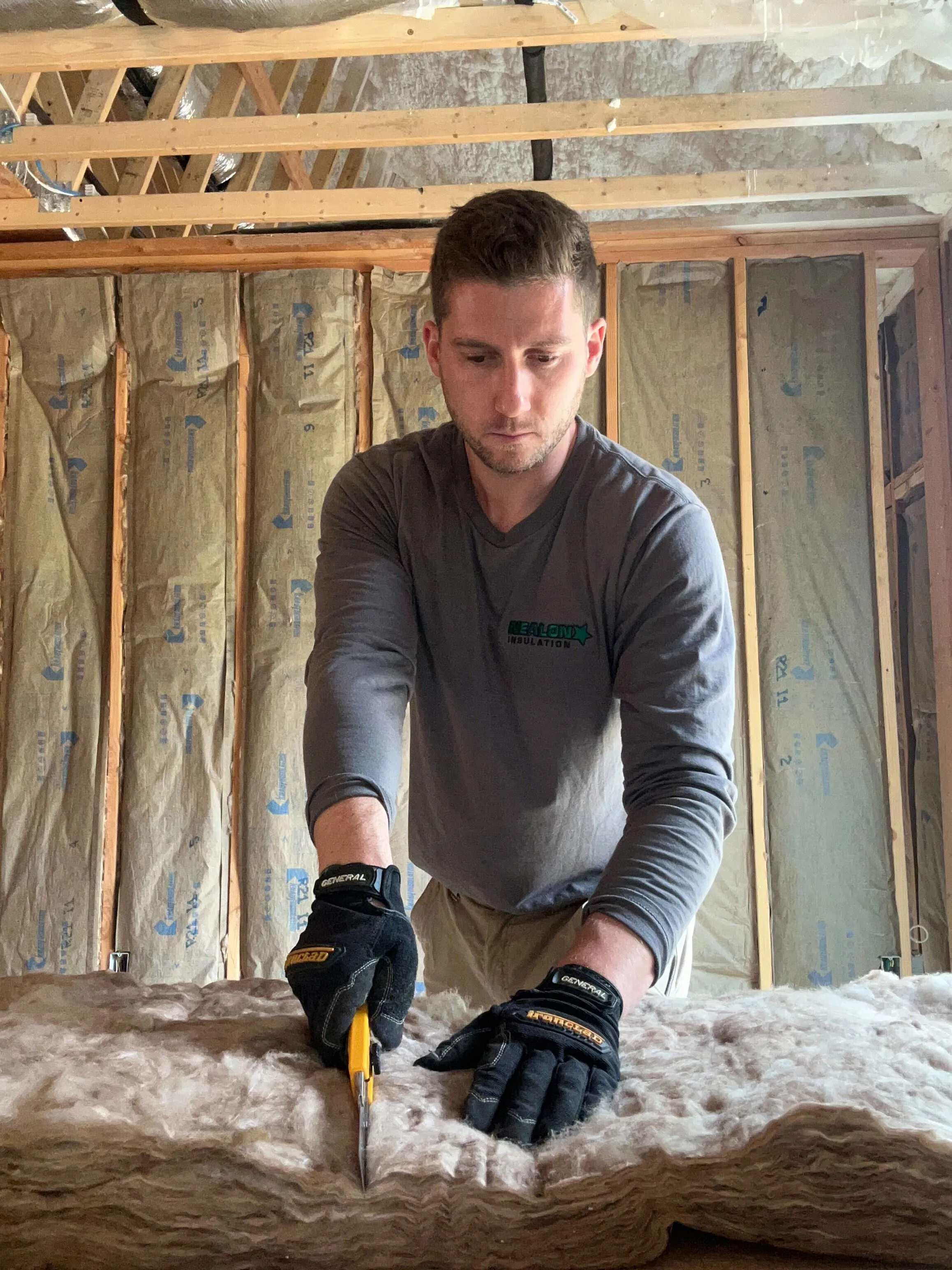

There's a certain kind of contractor who's great at new construction — clean framing, open bays, everything by the book. And then there's the kind who walks into a 1920s cape, spots the balloon framing immediately, and knows exactly what that means for air sealing before they've even pulled out a tape measure. For older homes, you want the second kind.
Connecticut has one of the highest concentrations of pre-1980 housing stock in the country. Colonials, Victorians, mid-century ranches, shoreline cottages built long before energy codes existed — these homes have character, and they have complications. Hiring the wrong insulation contractor doesn't just mean mediocre results. It can mean moisture trapped in walls, lead paint disturbed without proper protocol, or insulation that underperforms from day one because the air sealing that should have come first never happened.
This post covers what to look for in an insulation contractor for an older home — credentials, questions, red flags, and what a good scoping process actually looks like.
Why Older Homes Require a Different Kind of Contractor
Most insulation contractors are built for new construction — open stud bays, no surprises, everything square and accessible. Older homes are a different job entirely.
Connecticut has a lot of pre-1980 housing stock. Colonial-era capes, Victorian farmhouses, mid-century ranches, shoreline cottages built before anyone thought twice about energy efficiency. These homes have character. They also have quirks that can turn a straightforward insulation job into a complicated one if the contractor doesn't know what they're looking at.
Here's what sets older homes apart
- Balloon framing. Homes built before roughly 1940 often use balloon framing, where wall studs run continuously from the foundation to the roof. Air moves freely through these cavities — up through walls, into the attic, out through the eaves. A contractor who doesn't recognize this will miss the air sealing that makes the insulation work.
- Original plaster walls. Drilling into plaster for a blown-in fill is not the same as drilling into drywall. Done wrong, you crack the face or blow out the keys behind it. Done right, the patch is invisible. There's a real skill difference here.
- Knob-and-tube wiring. Homes built before the 1950s may still have knob-and-tube wiring. Connecticut code prohibits covering active knob-and-tube with insulation — a contractor who doesn't identify it before quoting the job is setting you up for a problem.
- No vapor barriers. Most pre-1980 homes were built without vapor barriers. Adding insulation without accounting for moisture movement in these assemblies can trap water in walls — here's a closer look at how moisture gets sealed in behind insulation and why it matters.
A contractor who works primarily on new builds may not flag any of these things. Not because they're dishonest — because they've never had to think about them.
Wondering how to insulate an older home's plaster walls without tearing them apart? How to Insulate an Old House with Plaster Walls
Credentials That Actually Matter
Every contractor you talk to will tell you they're licensed and insured. That's the minimum — it's not a differentiator. If you want to verify that claim before the conversation goes further, here's how to check if your contractor is registered and insured in Connecticut. When you're dealing with an older home, the credentials that actually matter go a layer deeper.
BPI Certification
A contractor with Building Performance Institute (BPI) certification has been trained to look at a home as a system — not just a collection of surfaces to fill with insulation. BPI-certified professionals understand how air movement, moisture, ventilation, and insulation interact with each other. In an older home, where all of those factors are usually working against you, that systems-level thinking is what separates a good outcome from an expensive mistake.
EPA Lead-Safe Certification
Any home built before 1978 may contain lead-based paint. When you're drilling into walls, cutting access panels, or disturbing original trim, lead dust becomes a real concern. Connecticut law requires contractors disturbing more than a certain threshold of painted surfaces in pre-1978 homes to hold EPA Lead-Safe certification. This isn't a nice-to-have — it's a legal requirement. If a contractor can't produce this certification for work on your older home, that's a hard stop.
Energize CT Installer Network Membership
Contractors in the Energize CT Insulation Installers Network have met the program's standards for training, equipment, and installation quality. More practically: if you want to access Energize CT rebates, your contractor needs to be in the network. Hiring outside it means leaving rebate money on the table.
Beyond credentials, ask how long they've been working specifically on older homes — not just how long they've been in business. Those are two different answers.
In case your wondering, Nealon Insulation is EPA Lead-Safe certified, BPI trained and part of the Energize CT insulation installers network.
Questions to Ask Before You Hire
A good contractor won't be bothered by direct questions. A bad one will get vague. Here's what to ask before anyone sets foot in your attic.
Have you worked in homes with knob-and-tube wiring?
This question does two things. It tells you whether the contractor knows what knob-and-tube is, and it tells you whether they have a protocol for handling it. The right answer involves identifying active circuits before work begins and coordinating with an electrician if needed. A shrug or a "we'll figure it out" is not the right answer.
How do you handle existing plaster walls?
Drill-and-fill work in plaster requires a different bit, a different technique, and a finishing process that leaves the wall intact. Ask them to walk you through it. If they describe the same process they'd use on drywall, they probably haven't done much plaster work.
What's your approach to moisture before you add insulation?
Insulation traps whatever is already in the wall assembly. If there's a moisture problem — a slow leak, a condensation issue, a missing vapor barrier — adding insulation makes it worse. A contractor who skips this question in their own assessment is one you don't want adding insulation to your walls.
Do you pull permits when required?
In Connecticut, certain insulation work requires a permit. Not every job does, but the contractor should know which ones do and be willing to pull them. A contractor who discourages permits to keep the job moving faster is saving themselves time at your expense.
Can you walk me through what you found and why you're recommending it?
This is the most useful question on the list. You're not testing their technical knowledge — you're testing whether they actually did an assessment or just eyeballed the job and wrote a number. A contractor who can explain what they found, why it matters, and what they're recommending as a result has earned a second conversation.
Not sure what questions to bring to your first contractor conversation? 10 Smart Questions to Ask Before Hiring an Insulation Contractor
Red Flags to Watch For
Most contractors are straightforward. But older home insulation attracts a fair share of generalists who underestimate the job — and occasionally someone who's just trying to close a sale. Here's what to watch for.
Pushing one material for every job
Every insulation material has a best use case. Spray foam is excellent for air sealing and rim joists. Blown-in cellulose is well-suited for dense-packing older walls. Fiberglass batts work well in open cavities. A contractor who recommends the same material regardless of what they find in your home is either not doing a real assessment or only carries one option. Neither is good.
No mention of air sealing before insulation
Adding insulation without air sealing first is one of the most common mistakes in older home retrofits. Insulation slows heat transfer — it does not stop air movement. That's why air sealing comes before insulation on any well-scoped job. In a balloon-framed home with open wall cavities and gaps around every penetration, skipping air sealing means the insulation underperforms from day one.
Quoting without an inspection
A number delivered over the phone or based on square footage alone is not a real quote for an older home. There are too many variables — existing insulation condition, framing type, wiring concerns, moisture history — to price the job accurately without getting inside the walls and attic. A low number that comes without an inspection is a number that will change.
Vague answers about lead paint protocols
If the home was built before 1978 and the contractor doesn't bring up lead paint unprompted, ask directly. Their answer matters. "We're EPA Lead-Safe certified and here's what that means for your job" is the right response. Hesitation, dismissal, or a pivot to cost is not.
No verifiable reviews or references
In Connecticut's shoreline communities, word travels. A contractor who's been doing good work on older homes for any length of time will have reviews, references, or both. Google, Houzz, Angi, and the BBB are all reasonable places to check. If someone is resistant to providing references for a job of any real scope, that's worth noting.
What a Good Scoping Process Looks Like
Knowing what a good contractor does before the work starts is just as useful as knowing what red flags to avoid. Here's what a thorough scoping process looks like on an older home.
Want to understand how to compare quotes once you've got them? How to Compare Two Insulation Quotes
Why Carpentry Skills Matter in Older Home Insulation
Insulation and carpentry don't always show up in the same sentence, but on an older home they belong together. The physical reality of working in a pre-1980 house is that things need to be cut, patched, framed, and finished — and a contractor who can only do the insulation part will either skip those steps or hand them off to someone else.
Plaster patch work after drill-and-fill
Dense-packing an older wall means drilling holes — typically two or three per stud bay — filling the cavity, and patching the holes so the wall looks like nothing happened. On drywall, patching is straightforward. On original plaster, it requires the right materials and technique to blend with the surrounding surface. A contractor who leaves ragged holes or mismatched patches in a plaster wall has handed you a finishing problem they should have owned.
Deteriorated blocking and missing framing
Older homes sometimes have deteriorated blocking, missing fire stops, or framing that's shifted over decades of settling. Before insulation goes into those cavities, the framing needs to be sound. A contractor with carpentry skills can address minor framing issues in the same visit. One without those skills either skips the correction or pauses the job while a separate trade gets scheduled — adding time, cost, and coordination to a project that didn't need the complication.
Access panels in finished spaces
Knee walls, crawl space entries, and finished basement ceilings sometimes need new or improved access panels to do insulation work properly. Cutting and framing an access panel is basic carpentry — but it's the kind of task that reveals whether a contractor thinks about the whole job or just the insulation portion of it. A well-framed, properly finished access panel is a small thing that says a lot about how a contractor works.

Why it matters for older homes specifically
New construction doesn't require much of this. Everything is open, square, and accessible. Older homes are the opposite — finished surfaces, irregular framing, surprises behind every wall. A contractor who brings carpentry capability to the job isn't just more convenient. They're less likely to leave something undone that affects how the insulation performs or how the home looks when the work is finished.
Energize CT Rebates and Older Homes
One of the more practical reasons to choose a qualified contractor for an older home is that the right one can help you access rebates that offset a meaningful portion of the project cost. Most pre-1980 Connecticut homes qualify, and the Energize CT program makes a well-scoped insulation project significantly more affordable than the sticker price suggests.
The HES audit comes first
Before any rebates are on the table, a Home Energy Solutions (HES) audit is required. The audit costs $40 as a copay and involves a certified assessor walking through the home, identifying air leaks, evaluating existing insulation, and documenting what the home needs. The audit report becomes the basis for the rebate application. Income-eligible homeowners may qualify for the no-cost HES-IE program instead.
The audit isn't just a bureaucratic hurdle — on an older home, it's genuinely useful. Assessors find things that aren't obvious from a visual inspection, and the report gives your insulation contractor a clear starting point. If you want to understand the full process before you begin, we've put together a step-by-step guide to applying for Energize CT rebates.
Current rebate amounts
Eligible insulation installations qualify for rebates up to $2.00 per square foot, or 75% of total project cost, whichever is less — up to a maximum of $10,000. Full details are on the Energize CT insulation rebates page.
Your contractor has to be in the network
Rebates only apply when the work is done by a contractor in the Energize CT Insulation Installers Network. This is another reason contractor selection matters beyond the quality of the work itself. Hiring outside the network means the rebate money stays on the table regardless of how good the installation is.
Curious about the Connecticut Historic Home Tax Credit and whether your property qualifies? Connecticut Historic Home Tax Credit: What to Know
Choosing the Right Contractor Is Half the Job
The material matters, the R-value matters, the coverage matters — but none of that lands right if the contractor doesn't understand balloon framing, can't handle a plaster patch, and has never thought twice about lead paint protocol. On an older home, contractor selection is part of the work.
The good news is that the right contractors are out there. They hold the certifications that matter, ask questions before they quote, and treat carpentry as part of the job rather than someone else's problem. Find one who does all of that, and your older home will perform better than most homeowners expect.
👉 Contact Nealon Insulation — we've been insulating older Connecticut homes since 1977, and we know what it takes to do the job right.
Frequent Questions About Choosing an Insulation Contractor for an Older Home
Can any insulation contractor work on an older home?
Any licensed contractor can legally take the job, but not every contractor has the skills an older home requires. Balloon framing, original plaster walls, knob-and-tube wiring, and missing vapor barriers all demand specific knowledge and techniques that most new-construction contractors have never needed. Hiring a generalist for a pre-1980 home increases the risk of missed air sealing, improper moisture management, and finish work that falls short.
What certifications should an insulation contractor have for a pre-1980 home?
An insulation contractor working on a pre-1980 home should hold BPI certification, EPA Lead-Safe certification, and membership in the Energize CT Insulation Installers Network. BPI certification confirms systems-level training. EPA Lead-Safe certification is legally required when disturbing painted surfaces in homes built before 1978. Energize CT network membership is required to access state rebates.
Is lead paint a real concern when insulating an older home?
Lead paint is a real concern in any Connecticut home built before 1978. Drilling into walls, cutting access panels, and disturbing original trim can release lead dust. Connecticut law requires contractors to hold EPA Lead-Safe certification when disturbing painted surfaces above a defined threshold — ask any contractor you're considering to confirm their certification before work begins.
Do I need a permit to insulate an older home in Connecticut?
Some insulation work in Connecticut requires a permit and some does not — the requirement depends on the scope and location of the work. Your contractor should know which permits apply to your specific job and be willing to pull them. A contractor who steers you away from permits to avoid paperwork or inspection is not looking out for your interests.
How do I know if a contractor is recommending the right insulation material for my home?
A contractor recommending the right material will explain the reasoning behind the choice — what they found during the assessment, what problem the material solves, and why it fits the specific conditions in your home. Blown-in cellulose suits dense-packing older wall cavities. Spray foam suits air sealing and rim joists. Fiberglass batts suit open cavities. If a contractor recommends the same material for every situation without explanation, the recommendation is not based on your home.
Related Articles
Let's Work Together
Ready to transform your home into an energy-efficient haven? Schedule your free energy assessment today and experience the Nealon difference for yourself.