
Why Connecticut Homes Overheat in Summer: 500 Weigh In

It is 1 a.m., the AC has been running since noon, and your upstairs bedroom still feels like a parked car in a lot. You kick the sheets off, do some quiet math on next month's electric bill, and wonder whether it is your air conditioner, your house, or just you. If that has been your July, you are not imagining it, and you are definitely not alone.
This summer we wanted hard numbers instead of hunches, so Nealon Insulation commissioned a survey of 500 Connecticut residents during the early-July 2026 heatwave. The results were blunt. Overheating at home is the norm here, not the exception, and air conditioning is not saving us. This post walks through what your neighbors reported, why so many Connecticut homes bake in summer, and how to tell whether yours is one of them.
What 500 Connecticut homeowners told us about summer heat
Most Connecticut homes get uncomfortable in summer, and the survey put a number on it. 87% of residents said their home becomes uncomfortable at least sometimes during summer, and 45% said it happens at least half the time. The heat is not just an annoyance either. It is stealing sleep and pushing people out of their own homes.
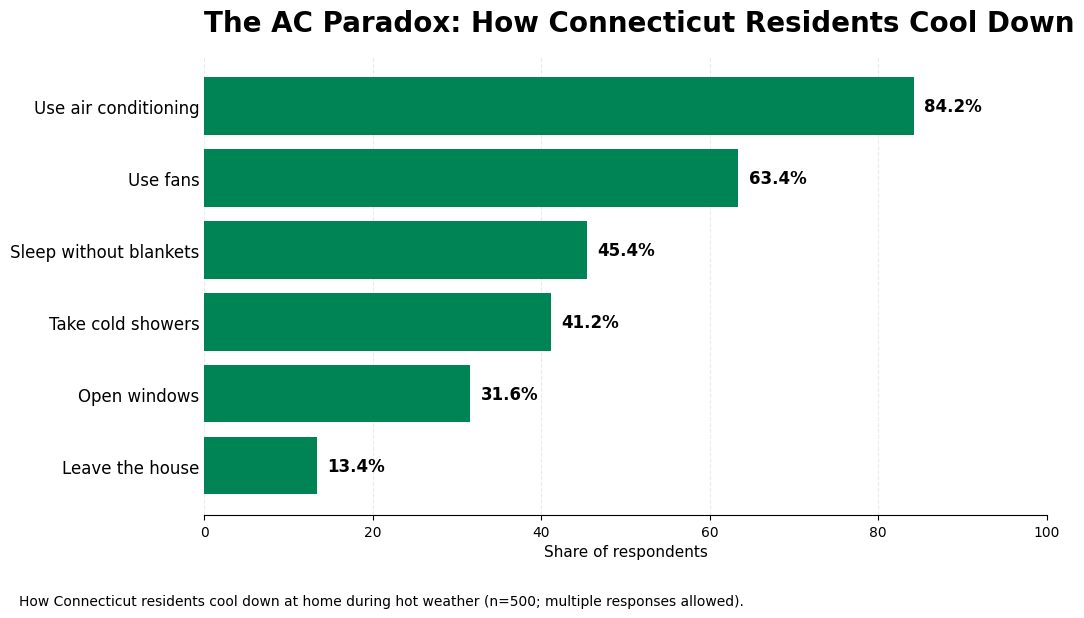
Read those last two numbers together. 84% of residents run AC, and 45% still left the house, retreating to a store, a mall, or a parked car, just to cool off. If your house bakes every July, you are in the majority, not the exception.
How insulation actually keeps a Connecticut house cool in summer
The AC paradox: why cooling equipment isn't fixing it
Connecticut is not short on air conditioners. 84% of residents use AC in hot weather, and only about 8% have none at all. Yet the equipment is not delivering comfort. Nearly half (45%) have left home to cool down elsewhere, and 36% have slept somewhere other than their own bed to escape the heat.
Part of the reason is what kind of cooling people actually have. Only 39% of homes have central air. A majority rely on window or portable units that cool one room, not a whole house. So residents layer on workarounds: sleeping without blankets, taking cold showers, and opening windows at night.
Here is the thing though. When 84% of a population owns cooling equipment and half of them still flee the house, the problem is not the machines. It is the buildings. Running the AC in a leaky, under-insulated house is like bailing a boat without plugging the hole. You can bail all night, but you are fighting the structure, and the structure usually wins until you close the gaps with proper air sealing.
Why your AC runs all day and still can't cool the house
Why older Connecticut homes overheat
Older Connecticut homes overheat because they were built for winter, not for today's summers. A majority of survey respondents (54%) live in homes built before 1980, decades before modern energy codes. Connecticut sits in Climate Zone 5A, and summers here now run hotter and longer than the era these houses were designed for.
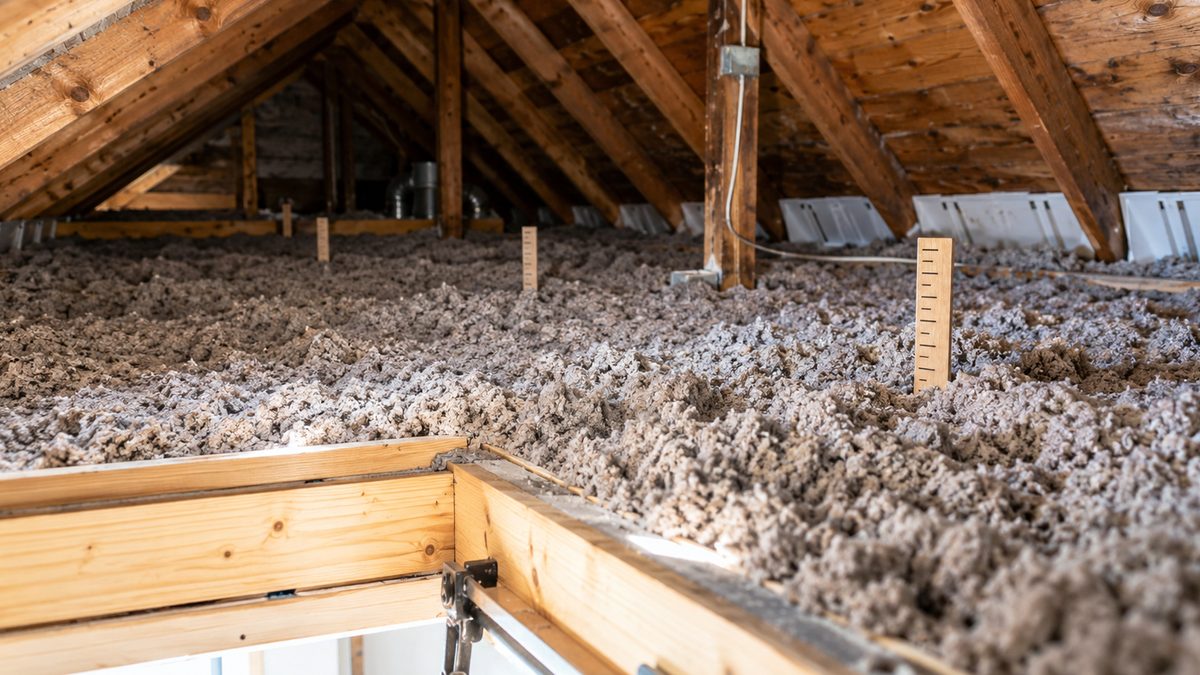
In a house like that, heat does not sneak in. It pours in, through an under-insulated attic, hollow walls, and dozens of small air leaks around lights, outlets, and the attic hatch. The attic is the worst offender: a roof baking in the sun can push attic temperatures past 130 degrees Fahrenheit, and that heat radiates straight down into your bedrooms. The Connecticut target for an attic is R-49 to R-60. Plenty of older homes sit at R-19 or less, sometimes just a few inches of tired 1970s insulation, which is why the upstairs never cools down no matter how hard the AC works. It helps to know what older Connecticut homes actually have for insulation before you assume the AC is the culprit.
How heat moves into your home through the attic, walls, and gaps
Is your home failing the summer test?
You can tell whether your home is part of that 45% without any special tools. Run down this list and count how many sound familiar:
- Your upstairs runs far hotter than your downstairs, even with the AC on.
- Certain rooms bake every afternoon while the rest of the house stays tolerable.
- The AC runs almost nonstop and still never hits the temperature you set.
- You have slept in another room, in the basement, or without blankets just to stay cool.
- Your electric bill jumps hard in summer compared to spring and fall.
If two or more of those ring true, the problem is almost certainly your building envelope, not your thermostat.
Want to confirm it yourself this weekend? Two quick checks:
- Measure your attic. Grab a tape measure and check the depth of your attic insulation. Under about 6 inches usually means you are below R-19 and well short of the R-49 to R-60 target.
- Find the drafts. On a breezy day, hold a lit incense stick or a damp hand near the attic hatch, recessed lights, and outlets on top-floor exterior walls. Air movement means leaks that let heat in and conditioned air out.
Both are things you can do without spending a dollar, and they tell you a lot about how much attic insulation Connecticut homes actually need versus what you have.
What actually fixes it, and what it costs
Fixing a house that overheats means sealing and insulating the envelope, in the right order. Chasing it with a bigger AC just raises the bill.
Air sealing first
Seal the leaks before you add insulation. Insulation piled on top of unsealed gaps is a lid on a pot full of holes: it helps, but not nearly as much as it should. Weatherstripping doors, gasketing outlets, and sealing the attic hatch are DIY-friendly weekend jobs. Sealing the attic floor at every penetration and dense-packing walls is where you want a pro with a blower door and the right materials.
Insulate the attic to R-49 to R-60
Bring the attic up to R-49 to R-60. For a hot upstairs, this is the single highest-impact upgrade you can make, because it shuts down the biggest heat-gain path in the house.
Then the walls and the rest
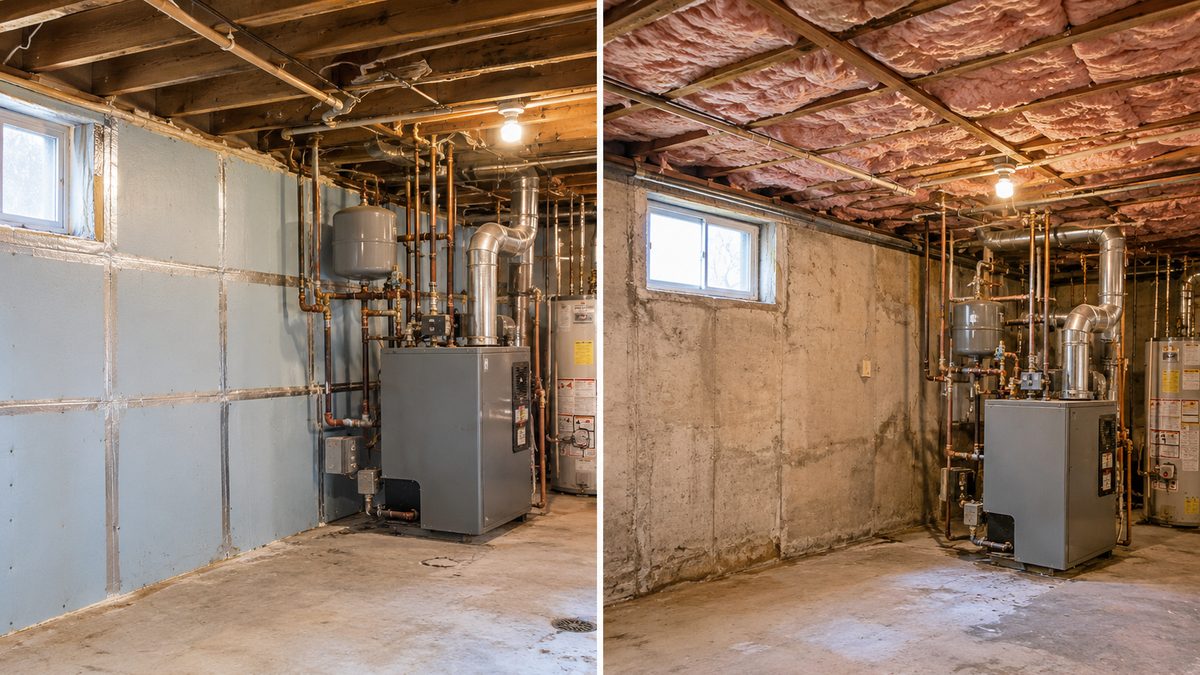
Dense-pack cellulose fills hollow walls without tearing them open, and it is the practical retrofit for most older Connecticut homes. Floors, rim joists, and basements come next as the budget allows.
On cost, expect roughly $1.50 to $3.00 per square foot installed for attic insulation, with material and access moving the number. This matters more in Connecticut than almost anywhere: the U.S. Energy Information Administration found the typical Connecticut electricity bill tops $200 a month, well above the roughly $144 national average, so every hour of heat your house lets in costs you more here than it would in most states. The good news is that Connecticut insulation rebates through Energize CT cover up to $2.00 per square foot or 75% of the project, capped at $10,000, after a Home Energy Solutions audit that runs a $40 copay as of April 1, 2026. Income-eligible households and Environmental Justice Communities qualify for deeper incentives.
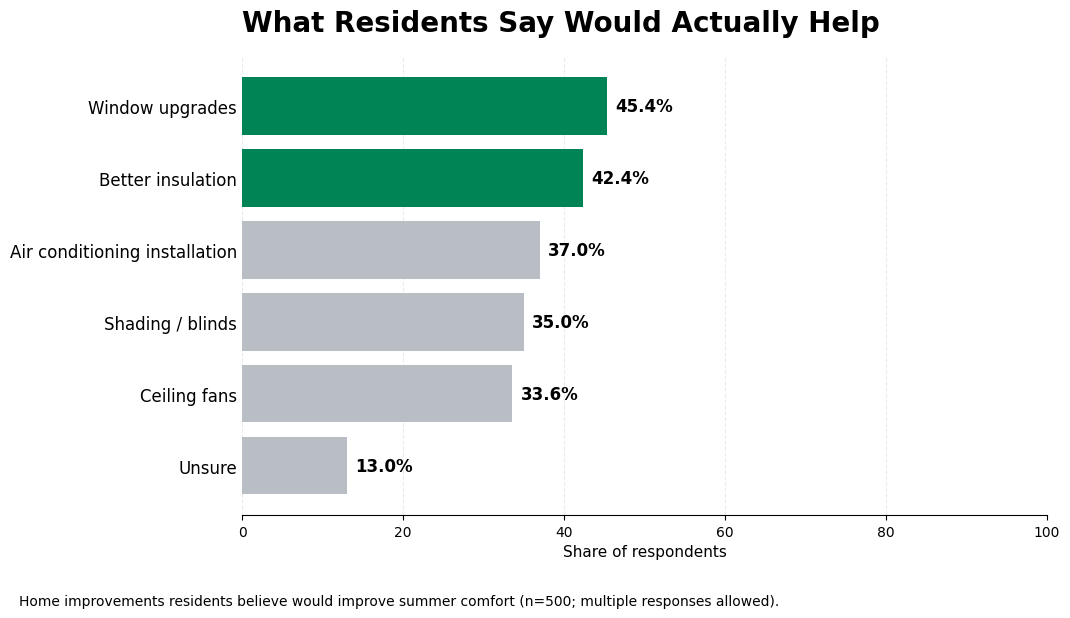
Your neighbors already sense where the fix lives. Asked what would help most, residents ranked better insulation (42%) and window upgrades (45%) ahead of installing more air conditioning (37%). Your first move costs nothing: measure your attic depth, photograph the rooms that bake, and schedule an Energize CT Home Energy Solutions audit to get a plan and the rebate paperwork in one visit.
Whether to air seal or add insulation first
The bottom line for Connecticut homeowners
The survey's message is simple. Connecticut homes overheat because of how they are built, and air conditioning only masks it. 500 of your neighbors are living the same hot, expensive summer, and most of them already suspect the walls and the windows are the real problem.
If your upstairs is a sauna and your bill keeps climbing, the answer is the envelope, not a bigger air conditioner. Seal the leaks, bring the attic up to target, and you cut the heat and the cost at the same time.
👉 Contact Nealon Insulation today. If your home is overheating this summer, we will help you find the leaks and fix them for good. Want to see the full survey data behind this post? Just ask and we will send it over.
Frequent Questions About Summer Home Overheating
How much does it cost to fix a Connecticut home that overheats in summer?
Fixing a Connecticut home that overheats in summer costs $2,000 to $8,000 for most air sealing and attic insulation projects, depending on home size and access. Attic insulation runs $1.50 to $3.00 per square foot installed. Energize CT rebates cover up to $2.00 per square foot or 75% of the project, capped at $10,000, which lowers your out-of-pocket cost. Get a Home Energy Solutions audit first to size the work, qualify for rebates, and avoid paying for insulation you do not need.
Will adding attic insulation actually make my upstairs cooler?
Attic insulation makes an upstairs cooler by blocking radiant heat from a roof that can pass 130 degrees Fahrenheit in summer. A properly insulated and air-sealed attic can drop a hot upstairs by several degrees and shorten AC run times. Bring the attic to R-49 to R-60 for the full effect. Seal the attic floor at every penetration before insulating to reduce heat gain, even out room temperatures, and lower cooling bills.
How long does an insulation and air sealing project take?
Most insulation and air sealing projects in Connecticut take 1 to 2 days to complete. Attic insulation and air sealing on an average home finish in a single day. Dense-packing walls or adding basement and crawl space work can push the job to 2 days. Schedule the work in spring or early summer to have the home ready before peak heat, improve comfort, and cut peak-season cooling costs.
Do I need an energy audit before insulation work in Connecticut?
A Home Energy Solutions audit is required before Energize CT insulation rebates in Connecticut. The audit costs a $40 copay as of April 1, 2026, and the rebate application is issued during the visit. The audit also pinpoints the specific leaks and gaps driving your summer heat gain. Book the Home Energy Solutions audit first to target the work, unlock rebates, and skip upgrades you do not need.
Is insulation worth it if I already have central air?
Insulation is worth it even with central air because air conditioning cools the air while insulation keeps the heat out. Central air in a leaky, under-insulated home runs longer, wears out faster, and still leaves hot rooms. A sealed and insulated envelope lets a right-sized AC hold temperature with far less run time. Seal and insulate the envelope to cut cooling costs, even out room temperatures, and take the strain off your air conditioner.
Related Articles
Let's Work Together
Ready to transform your home into an energy-efficient haven? Schedule your free energy assessment today and experience the Nealon difference for yourself.