
Should You Vent Your Crawl Space? A CT Contractor's Answer
It's July, your AC is running, and the first floor still feels sticky. There's a musty smell that shows up after rain and never fully leaves. If your house sits over a vented crawl space, there's a good chance the problem isn't upstairs at all. It's coming from underneath, through vents that were supposed to be protecting your home.
Here on the Connecticut shoreline, I get asked some version of this question every summer: should I vent my crawl space, or seal it up? The old-school answer was always "vent it." The honest answer for Connecticut homes is usually the opposite, and in this post I'll walk through why, how to check whether your crawl space vents are hurting you, and what sealing actually involves (including real costs).
The Short Answer: In Connecticut, Usually No
In Connecticut's climate, sealing a crawl space beats venting it in almost every case. The U.S. Department of Energy's foundation research reached the same conclusion: unvented, conditioned crawl spaces are generally preferred except where flood risk is exceptionally high, such as coastal zones subject to hurricane flooding. That flood exception matters for a handful of shoreline properties, and I'll come back to it. For everyone else, the vents are working against you.
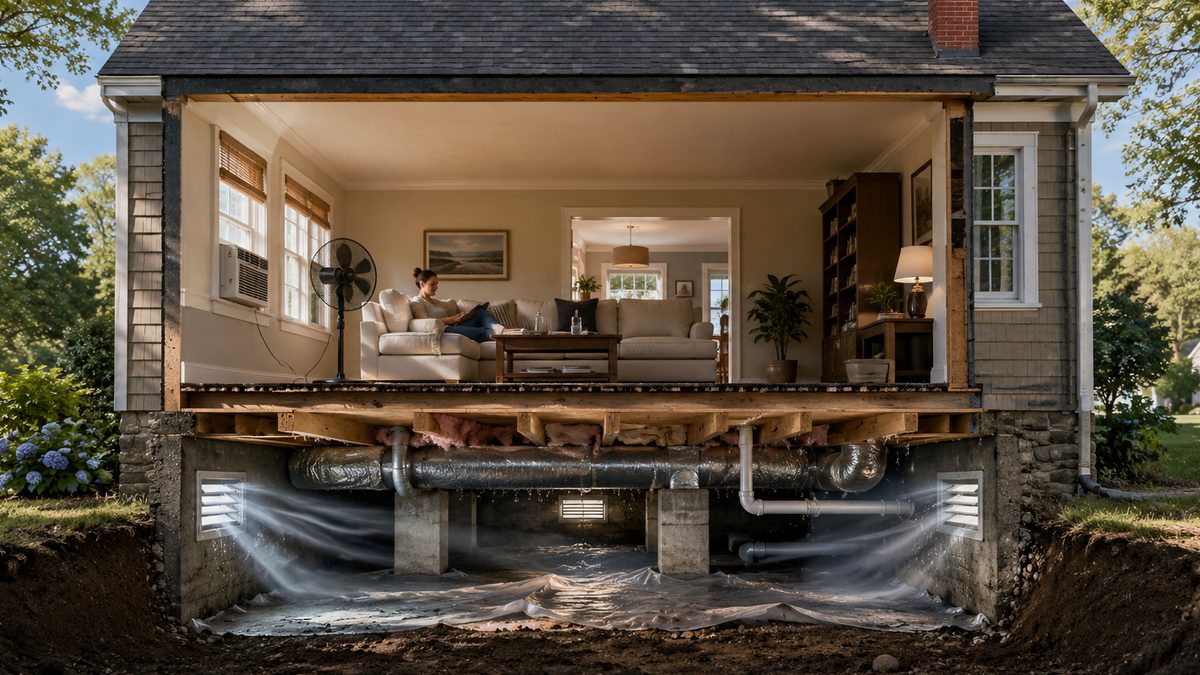
Here's the physics, kitchen-table version. On a humid July day, outside air might be 85 degrees and loaded with moisture. Your crawl space, shaded and below grade, sits around 60 to 65 degrees. When that warm, wet air flows in through the vents and touches cool framing, ductwork, and pipes, it does exactly what a cold drink glass does on the porch: it sweats. Except the "glass" is your floor joists, and they sweat all summer long.
What crawl space encapsulation involves from start to finish
Why Vented Crawl Spaces Were the Standard
Crawl space vents became standard because building codes assumed airflow would dry the space out. The theory dates back decades: let outside air pass through, and it carries dampness away with it. Builders followed the code, the code followed the theory, and for a long time nobody checked whether the theory held up.
What the Old Theory Got Wrong
The theory assumed the incoming air is drier than the crawl space. In Connecticut summers, the incoming air is wetter. Instead of drying the space, the vents deliver a steady supply of moisture to condense on every cool surface. Building science research over the past 25 years has confirmed sealed crawl spaces hold more consistent humidity and temperature than vented ones.
The One Real Exception: Flood-Prone Lots
Venting still makes sense for homes in genuine flood zones. If your crawl space takes on standing water during coastal storms, vents give that water somewhere to drain and the space a way to dry out afterward. Some low-lying properties in shoreline towns fall into this category. If that's your situation, fix the water entry and drainage first. Sealing a crawl space that floods just traps the problem inside.
What Open Vents Do to Your Crawl Space in a CT Summer
Open crawl space vents feed a moisture cycle that damages the house from the bottom up. Over a humid Connecticut summer, here's what that looks like
- Condensation on framing, ducts, and pipes. Wood that stays damp invites mold and, over years, rot in the floor joists.
- Wet, sagging insulation. Fiberglass between the floor joists soaks up moisture, gets heavy, and falls out of the bays. Wet fiberglass insulates about as well as a wet sweater warms you.
- Your crawl space air becomes your living room air. Warm air rising through the house pulls crawl space air up through gaps in the floor. That's how the stack effect moves air through your whole house, and it's why a musty crawl space means a musty first floor.
- Pest access. Vents are an open invitation for mice and insects, especially in older screens that have rusted or torn.
Winter flips the problem instead of solving it. Cold air pouring through the vents chills your floors, makes your heating system work harder, and puts any plumbing in the crawl space at risk of freezing.
How the wrong insulation choices create moisture problems
How to Tell If Your Vented Crawl Space Is Hurting Your Home
You can diagnose most of this yourself in 20 minutes with a flashlight. Check for these signs:
- A musty smell on the first floor, strongest after rain or in humid weather
- Condensation or water droplets on ducts, pipes, or the underside of the subfloor in summer
- Insulation sagging or falling out of the floor joist bays
- White fuzz, dark staining, or visible mold on joists
- Hardwood floors cupping or feeling damp underfoot
- Cold first-floor rooms in winter despite the thermostat setting
Then run the one test that settles it: put a $10 to $15 hygrometer (a small humidity gauge, hardware store item) in the crawl space and check it over a week. Sustained readings above 60% relative humidity mean your vents are adding moisture faster than they remove it. Mold growth accelerates above that line. A healthy crawl space stays between 30% and 55%.
What to do when insulation gets wet and when replacement is necessary
The Better Approach: Seal, Insulate, and Control Moisture
The fix is to move the crawl space inside your home's envelope instead of leaving it outside. That's what crawl space encapsulation means, and it's more than stuffing foam board into the vent openings. Done right, it includes:
- Sealing the vents and air leaks so outside air stays outside
- A heavy ground vapor barrier sealed across the floor and up the walls, since vapor barrier installation is what takes ground moisture out of play
- Insulating the foundation walls (typically R-10 or better rigid foam or closed-cell spray foam) instead of the floor above
- Air sealing the rim joist, the leakiest wood in most houses, which is why spray foam works so well for rim joists
- Managing moisture with proper drainage and, in many homes, a small dehumidifier
What Crawl Space Encapsulation Costs in Connecticut
Crawl space encapsulation in Connecticut typically runs $6,000 to $18,000. The variables that move the number: square footage, whether the space needs cleanup or mold remediation first, drainage work (sump pump, grading), insulation type, and whether a dehumidifier is included. A small, dry, accessible crawl space lands at the low end. A wet space needing remediation and drainage lands at the high end. Working with experienced crawl space encapsulation contractors gets you an exact number, but anyone quoting one price over the phone without looking is guessing.
What You Can Do Yourself vs. When to Call a Pro
DIY territory: buy the hygrometer and track humidity, lay a basic 6-mil poly vapor barrier over exposed dirt (a real improvement even unsealed), redirect downspouts and grade soil away from the foundation, and photograph any condensation, mold, or sagging insulation you find.
Pro territory: full encapsulation with sealed seams, rim joist spray foam, mold remediation, drainage systems, and any work involving wiring, plumbing, or structural repairs. The sealing details are where DIY encapsulations fail; a vapor barrier that isn't sealed at the seams and walls is a tarp, not a system.
Why crawl space encapsulation is the upgrade your home doesn't know it needs
For most Connecticut homes, the crawl space vents that were supposed to protect the house are the thing quietly damaging it. Humid summer air condensing on cool framing causes the mold, the musty smells, the wet insulation, and a good share of the comfort complaints upstairs. Sealing the space, insulating the walls, and controlling moisture solves the problem at the source instead of ventilating it in.
Here's your next step, and it costs less than lunch: put a hygrometer in the crawl space this weekend. If it holds above 60% relative humidity, take photos of what you see down there and you'll have everything you need for an informed conversation, whether that's with us or anyone else.
👉 Contact Nealon Insulation — if your crawl space is holding moisture, we'll tell you straight whether it needs sealing, drainage, or nothing at all.
Frequent Questions About Crawl Space Ventilation
Can I close my crawl space vents without full encapsulation?
Closing crawl space vents without sealing the ground traps soil moisture inside and makes humidity worse. A crawl space needs a sealed vapor barrier over the dirt floor before the vents are closed. Lay and seal a ground vapor barrier first, then close the vents, to lower humidity instead of concentrating it.
How long does crawl space encapsulation take?
Crawl space encapsulation takes 1 to 3 days for most Connecticut homes. Small, dry, accessible crawl spaces finish in 1 day. Crawl spaces needing mold remediation, insulation removal, or drainage work extend the job to 3 or more days.
Do I need a dehumidifier in a sealed crawl space?
Most sealed crawl spaces in Connecticut need a small dehumidifier to hold humidity below 55% through July and August. A crawl space dehumidifier costs $800 to $1,500 installed and runs only when humidity rises. Homes with dry soil and conditioned air reaching the crawl space sometimes skip the unit after a monitoring period.
Does crawl space work qualify for Energize CT rebates?
Energize CT rebates cover rim joist and basement ceiling insulation at up to $2.00 per square foot or 75% of project cost, capped at $10,000 per home. The rebate requires a Home Energy Solutions audit first, with a $40 copay. Schedule the audit before signing any contract to lock in rebate eligibility and reduce your out-of-pocket cost.
Does closing crawl space vents violate Connecticut building code?
Connecticut building code allows unvented crawl spaces when the space has a sealed Class I vapor retarder and a conditioning method such as a dehumidifier or supply air. Code compliance requires sealing the vapor barrier joints to the walls, not just laying plastic on the ground. Hire a contractor familiar with the unvented crawl space code path to pass inspection on the first visit.
Related Articles


Let's Work Together
Ready to transform your home into an energy-efficient haven? Schedule your free energy assessment today and experience the Nealon difference for yourself.