
What Is Crawl Space Encapsulation?
Your crawl space probably isn't something you think about until something forces you to. A musty smell that won't go away. Floors that feel cold no matter how high you set the thermostat. A home inspector flagging moisture damage on the framing. That's usually when homeowners start asking what crawl space encapsulation actually is — and whether it's worth doing.
In Connecticut, crawl spaces take a beating. The combination of cold winters, humid summers, and older housing stock built with vented foundations creates conditions where moisture problems are almost inevitable. Encapsulation is the most complete way to address that — but it helps to understand what it actually involves before you decide if it's the right move for your home.
What Crawl Space Encapsulation Actually Is
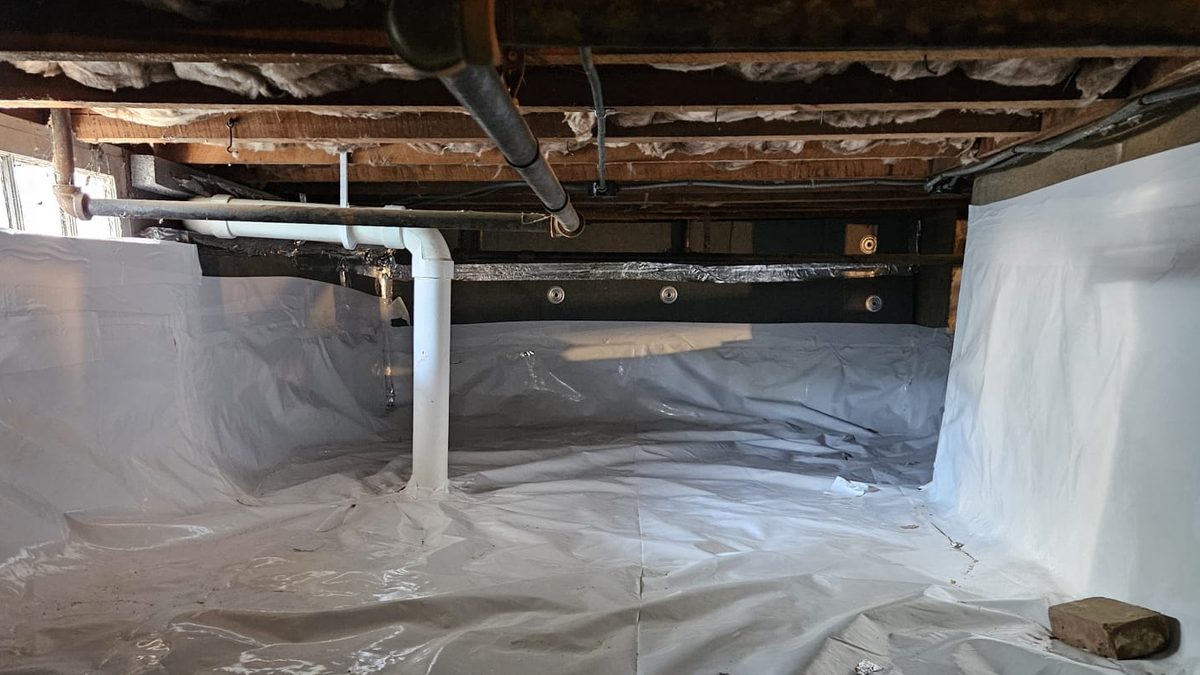
Crawl space encapsulation is the process of sealing your crawl space completely from ground moisture and outside air. A heavy-duty liner gets installed across the floor and up the walls, foundation vents get sealed, and the whole space is treated as a controlled environment rather than an open one. The goal is to stop moisture at the source — before it ever makes it into your living space.
This is different from just throwing down a sheet of plastic. That approach (common in older homes) does almost nothing to stop vapor migration. True encapsulation is a system, and every component has a job.
The Components of a Full Encapsulation System
A properly installed encapsulation system includes:
- Heavy-duty polyethylene liner — typically 20-mil, covering the floor and running up the foundation walls and piers
- Sealed foundation vents — closing off the openings that allow humid outside air in
- Wall and pier coverage — so there are no gaps where moisture can sneak through
- Insulation — usually rigid foam board insulation installation on the foundation walls, keeping temperatures stable
- Drainage and sump pump — if the crawl space has any active water intrusion
- Dehumidifier — to maintain low humidity levels year-round in the sealed space
Not every crawl space needs every component. Some homes only need liner and vent sealing. Others need the full setup with drainage and a dehumidifier. A proper inspection tells you what you're actually dealing with.
What does crawl space insulation actually cover — and how is it different from encapsulation? What Is the Best Crawl Space Insulation Material?
What's Inside a Crawl Space?
Why Connecticut Crawl Spaces Are Especially Vulnerable
Connecticut's climate is hard on crawl spaces. Cold, dry winters are followed by warm, humid summers — and that seasonal swing creates exactly the conditions where moisture problems take hold. When humid summer air flows into a vented crawl space and hits the cooler surfaces inside, it condenses. That condensation soaks into wood framing, sits on the ground, and creates a breeding ground for mold.
Shoreline towns get it worse. Madison, Guilford, Clinton, Old Saybrook — homes along the coast deal with elevated ambient humidity for a good chunk of the year. A crawl space that might stay dry in Torrington can turn into a mold factory in Westbrook.
The other factor is age. Most of Connecticut's housing stock was built before modern building science caught up with how crawl spaces actually behave. Homes built before 1990 almost always have vented crawl spaces — that was the standard at the time. The thinking was that ventilation would carry moisture out. In dry climates, it sometimes works. In Connecticut, it usually does the opposite. You're pulling humid outdoor air directly into the space you're trying to keep dry.
The result is a crawl space that works against you nine months out of the year — and a home above it that pays the price in musty odors, soft floors, high energy bills, and eventually, structural damage.
How does the wrong insulation choice make moisture problems worse? How the Wrong Insulation Can Lead to Moisture Problems
What Problems Does Crawl Space Encapsulation Solve
A wet, uncontrolled crawl space doesn't stay in the crawl space. Whatever is happening down there works its way up into your home — through the subfloor, through gaps around pipes and wiring, through the air your family breathes. Encapsulation stops that cycle.
Here's what it actually addresses:
- Mold and mildew growth — moisture control eliminates the conditions mold needs to grow on wood framing and insulation
- Wood rot on floor joists — chronic dampness softens floor joists over time; encapsulation stops the moisture source before structural damage sets in
- Pest and rodent entry — sealing vents and liner gaps removes the easy access points mice, insects, and other pests rely on; pest and rodent barriers can add another layer of protection where needed
- High indoor humidity and musty odors — that "old house smell" often originates in the crawl space; seal it off and the odor goes with it
- Cold floors in winter — an uninsulated, vented crawl space lets cold air sit directly under your living space; encapsulation with wall insulation fixes that
- High heating and cooling costs — conditioned air escapes through an uncontrolled crawl space; sealing it tightens the building envelope and reduces energy loss
Some of these show up fast after encapsulation — the musty smell, the cold floors, the humidity readings. Others, like avoiding wood rot and pest damage, are the kind of problems you're preventing rather than fixing. Either way, you're ahead.
Can blown-in insulation be used in a crawl space — or is that the wrong material for the job? Can You Use Blown-In Insulation in a Crawl Space?
Other Ways to Address Crawl Space Problems
Encapsulation is the most complete solution, but it's not the only option. Depending on what's actually going on in your crawl space, there are a few other approaches worth understanding — and knowing where each one falls short helps you make a smarter decision.
Crawl Space Venting
Venting was the standard approach for decades, and plenty of older Connecticut homes still rely on it. The idea was simple: let outside air flow through and carry moisture out. The problem is that in a humid climate like Connecticut's, you're often pulling more moisture in than you're pushing out. Venting works reasonably well in dry climates. In New England, it tends to make things worse.
Vapor Barrier Only
A basic vapor barrier — typically a thin sheet of polyethylene laid on the ground — is better than bare dirt, but it's not encapsulation. It slows moisture migration from the ground but does nothing about humid air coming in through vents or gaps in the foundation. If your crawl space has active humidity problems, a vapor barrier alone won't solve them.
Crawl Space Insulation Without Encapsulation
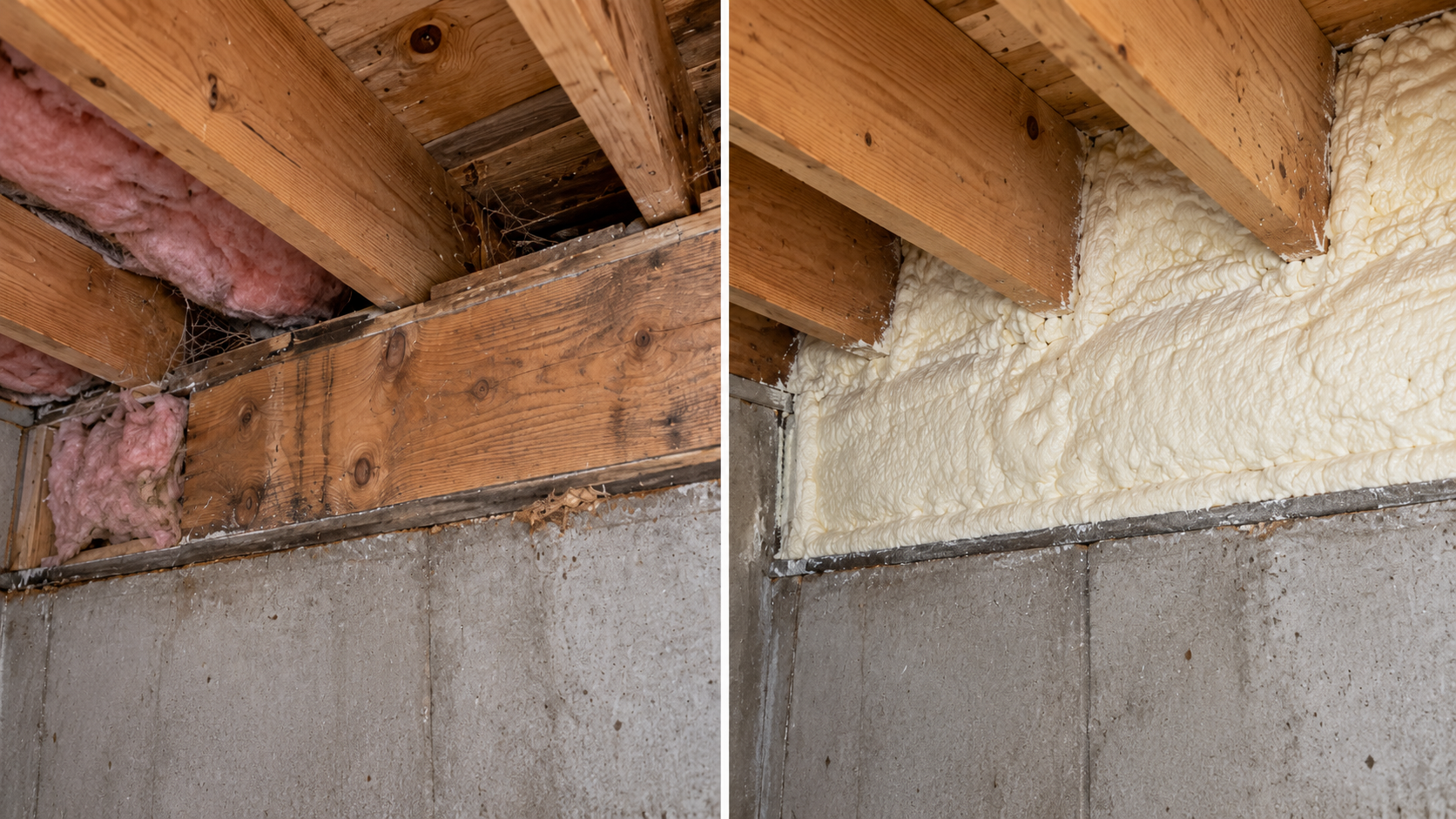
Insulating the crawl space floor or walls reduces heat loss and can help with cold floors, but insulation without moisture control is a gamble. Fiberglass batts stapled between floor joists in a damp crawl space absorb moisture, lose R-value, and eventually become a mold habitat. If mold takes hold before the moisture source is addressed, you'll need a crawl space encapsulation service before anything else can be done. Insulation should follow moisture control, not replace it.
Drainage and Sump Pump Only
If your crawl space has standing water or active seepage, a drainage system and sump pump are often part of the solution. But they handle liquid water — not vapor. A crawl space that drains well can still have chronic humidity problems. Drainage is frequently one component of a full encapsulation system, not a standalone fix.
Doing Nothing
It's worth being honest about this one. A lot of homeowners ignore the crawl space because it's out of sight. The cost of that is gradual: mold spreads into framing, joists soften, pests find their way in, and energy bills creep up. By the time the problem is visible from inside the house — a soft spot in the floor, a persistent smell, a spike in humidity — the repair bill is usually a lot higher than encapsulation would have been.
Encapsulated vs. Vented Crawl Space
The shift from vented to encapsulated crawl spaces is one of the bigger changes in residential building science over the last 30 years. For most of the 20th century, vented crawl spaces were code-compliant and considered best practice. That guidance has largely been reversed — and for good reason.
Here's how the two approaches compare:
The vented crawl space isn't inherently bad engineering — it just doesn't work well in Connecticut's climate. Encapsulation brings the crawl space inside the building envelope, where it can be controlled. That's the core difference.
What the Installation Process Looks Like
Crawl space encapsulation isn't a one-size-fits-all job. What happens on your project depends on what we find when we get in there. That said, most installations follow the same sequence.
1. Inspection and Assessment
Before any material goes in, the crawl space gets a thorough inspection. We're looking at the current moisture levels, the condition of the framing and insulation, whether there's any mold or rot, how water moves through the space, and where the pest entry points are. This determines the scope of the project — and whether any remediation needs to happen before encapsulation begins.
2. Debris Removal and Prep Work
Old insulation, debris, and any existing plastic sheeting come out. If there's mold on the framing or rim joists, that gets treated before anything gets sealed in. This is a step a lot of contractors skip or rush — and it's one of the most important ones. Encapsulating over an active mold problem just traps it.
If there's any structural work needed — damaged joists, rotted blocking, deteriorated rim joists — that gets handled before the liner goes in. This is where having a carpentry team matters. Older Connecticut homes, especially pre-1980 construction, often turn up surprises once you get into the crawl space. We handle that in-house rather than stopping the project to bring in another contractor.
3. Liner Installation
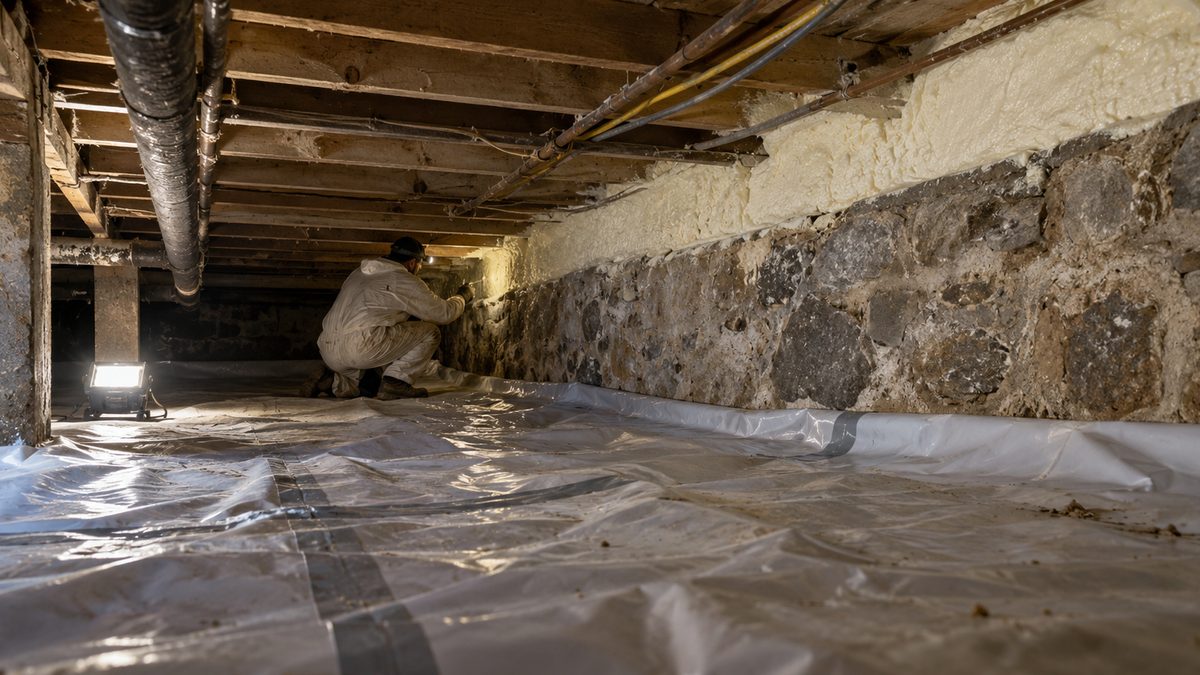
The heavy-duty polyethylene liner goes down on the ground first, then gets run up the foundation walls and secured. Seams are overlapped and taped. Piers get wrapped. The goal is continuous coverage with no gaps — any break in the liner is a path for moisture.
4. Vent Sealing and Insulation
Foundation vents get sealed with rigid foam inserts and spray foam around the edges. Insulation goes on the foundation walls — rigid foam board is common here — bringing the crawl space inside the thermal envelope of the home.
5. Dehumidifier Installation
If the crawl space needs active moisture management, a crawl space-rated dehumidifier gets installed and wired in. This is different from a standard basement dehumidifier — it's designed to handle the temperature and humidity range of a sealed crawl space and typically drains automatically so you're not emptying a bucket.
6. Final Inspection and Walkthrough
Once everything is in, we walk the homeowner through what was done, show them how the dehumidifier works if one was installed, and go over what to watch for. A good encapsulation job should be largely out of sight and out of mind — but you should know what you have.
How Much Does Crawl Space Encapsulation Cost in Connecticut?
Crawl space encapsulation in Connecticut typically runs between $3,000 and $15,000 for most residential projects. That's a wide range, and it's wide for a reason — the condition of your crawl space has a bigger impact on price than the square footage does.
What Affects the Cost
- Size of the crawl space — more square footage means more liner, more insulation, and more labor
- Current condition — a clean, dry crawl space costs less to encapsulate than one with mold, rot, or old insulation that needs to come out first
- Mold remediation — if there's active mold on the framing or joists, that gets treated before encapsulation; it adds cost but it's not optional
- Structural repairs — damaged joists, rotted rim joists, or deteriorated blocking need to be addressed before the liner goes in
- Dehumidifier — a crawl space-rated dehumidifier adds $800 to $1,500 depending on the unit, but it's often necessary for long-term moisture control
- Drainage system — if the crawl space has active water intrusion, a French drain or sump pump may be part of the scope
Energize CT Rebates
Connecticut homeowners may be eligible for insulation rebates through the Energize CT Insulation Installers Network, which Nealon Insulation is a part of. The rebate covers insulation work — including crawl space wall insulation installed as part of an encapsulation project — at up to $2.00 per square foot, up to a maximum of $10,000 or 75% of project cost. A Home Energy Solutions audit ($40 copay) is required before rebate-eligible work begins.
That rebate can meaningfully offset the cost of a full encapsulation project, particularly on larger crawl spaces where insulation is a significant line item.
Is It Worth It?
Short answer: yes. Longer answer: it depends on whether you like saving money, breathing clean air, and keeping your house standing.
Encapsulation isn’t flashy, but it’s effective:
- Cuts down on energy waste.
- Keeps mold and mildew out of your home (and lungs).
- Extends the life of your foundation and flooring.
- Makes your house more comfortable year-round.
If you plan on living in your home for years, the ROI is a no-brainer. Even if you’re selling, buyers love to see an encapsulated crawl space—it screams “this house has been taken care of.”
What Connecticut homeowners need to know about the Energize CT rebate process before scheduling work. Connecticut Insulation Rebates: How to Save Big on Home Upgrades in 2026
Frequent Questions About Crawl Space Encapsulation
How long does crawl space encapsulation last?
A properly installed crawl space encapsulation system lasts 20 years or more with minimal maintenance. The liner itself is durable — 20-mil polyethylene holds up well under normal conditions. The main maintenance task is an annual check on the dehumidifier and a periodic inspection to confirm the liner hasn't shifted or been disturbed.
Does crawl space encapsulation require a permit in Connecticut?
Crawl space encapsulation does not require a building permit in most Connecticut towns. If the project includes electrical work — wiring a dehumidifier, for example — that portion may require an electrical permit depending on your town's requirements. Your contractor should confirm local requirements before work begins.
Can I encapsulate a crawl space myself?
A homeowner can install a basic vapor barrier, but full encapsulation is not a practical DIY project for most people. Sealing vents, running liner up walls, taping seams correctly, and addressing any mold or structural issues before sealing requires both experience and equipment. Mistakes in a crawl space are expensive to fix after the fact.
Will crawl space encapsulation help with allergies or air quality inside my home?
Crawl space encapsulation reduces the amount of mold spores, dust, and humid air that migrate from the crawl space into your living areas. The stack effect pulls air from the lowest part of the house upward — so whatever is in your crawl space eventually ends up in the air you breathe. Sealing the crawl space cuts off that pathway.
Does an encapsulated crawl space still need insulation?
An encapsulated crawl space still needs insulation on the foundation walls to control heat loss. The liner controls moisture; insulation controls temperature. Rigid foam board on the foundation walls is the standard approach — it keeps the crawl space within the home's thermal envelope and prevents cold floors in winter.
Conclusion
Crawl space encapsulation seals off one of the most overlooked sources of moisture, energy loss, and structural damage in a Connecticut home. It's not the most glamorous upgrade, but the impact shows up in lower energy bills, better air quality, warmer floors, and a crawl space that stops working against you. For homes with vented foundations — which is most of Connecticut's older housing stock — it's one of the higher-value projects you can do.
If you're dealing with musty smells, cold floors, or you just had a home inspection that flagged the crawl space, that's your signal. The longer a moisture problem sits, the more it costs to fix.
👉 Contact Nealon Insulation — if your crawl space is overdue for an honest look, we'll tell you exactly what it needs.
Related Articles
Let's Work Together
Ready to transform your home into an energy-efficient haven? Schedule your free energy assessment today and experience the Nealon difference for yourself.