
Spray Foam vs Fiberglass Insulation: Which Is Right for Your Connecticut Home?
Getting two insulation quotes and wondering why one recommends spray foam and the other recommends fiberglass — and why the prices are thousands of dollars apart — is one of the most common and frustrating experiences Connecticut homeowners have when they start researching this stuff. Both contractors sound confident. Both materials sound reasonable. And you're left standing in your kitchen trying to figure out who's actually right.
Here's the honest answer: they might both be right. Or neither of them might be giving you the full picture.
Spray foam and fiberglass are genuinely different tools designed for different situations. One isn't categorically better than the other. The right choice depends on where you're insulating, what problem you're trying to solve, and what your specific house is doing with heat, air, and moisture. In Connecticut — where winters are cold, summers are humid, heating costs are among the highest in the country, and a huge percentage of homes predate modern insulation standards — getting that call right matters more than it does in a lot of other places.
This post breaks down exactly how to think about the decision. We'll cover what each material actually does, where each one belongs, what the real cost difference looks like, and why moisture is a factor that shoreline homeowners especially can't afford to ignore. By the end, you'll have a clear enough framework to know what questions to ask — and how to tell whether the contractor in front of you actually knows what they're talking about.
What You're Actually Comparing
Most insulation conversations start with the wrong question. Homeowners ask "which is better?" when they should be asking "which is right for this specific spot in my house?" Spray foam and fiberglass aren't competing products so much as different tools. A hammer and a screwdriver are both useful — just not interchangeable.
Here's what you're actually working with:
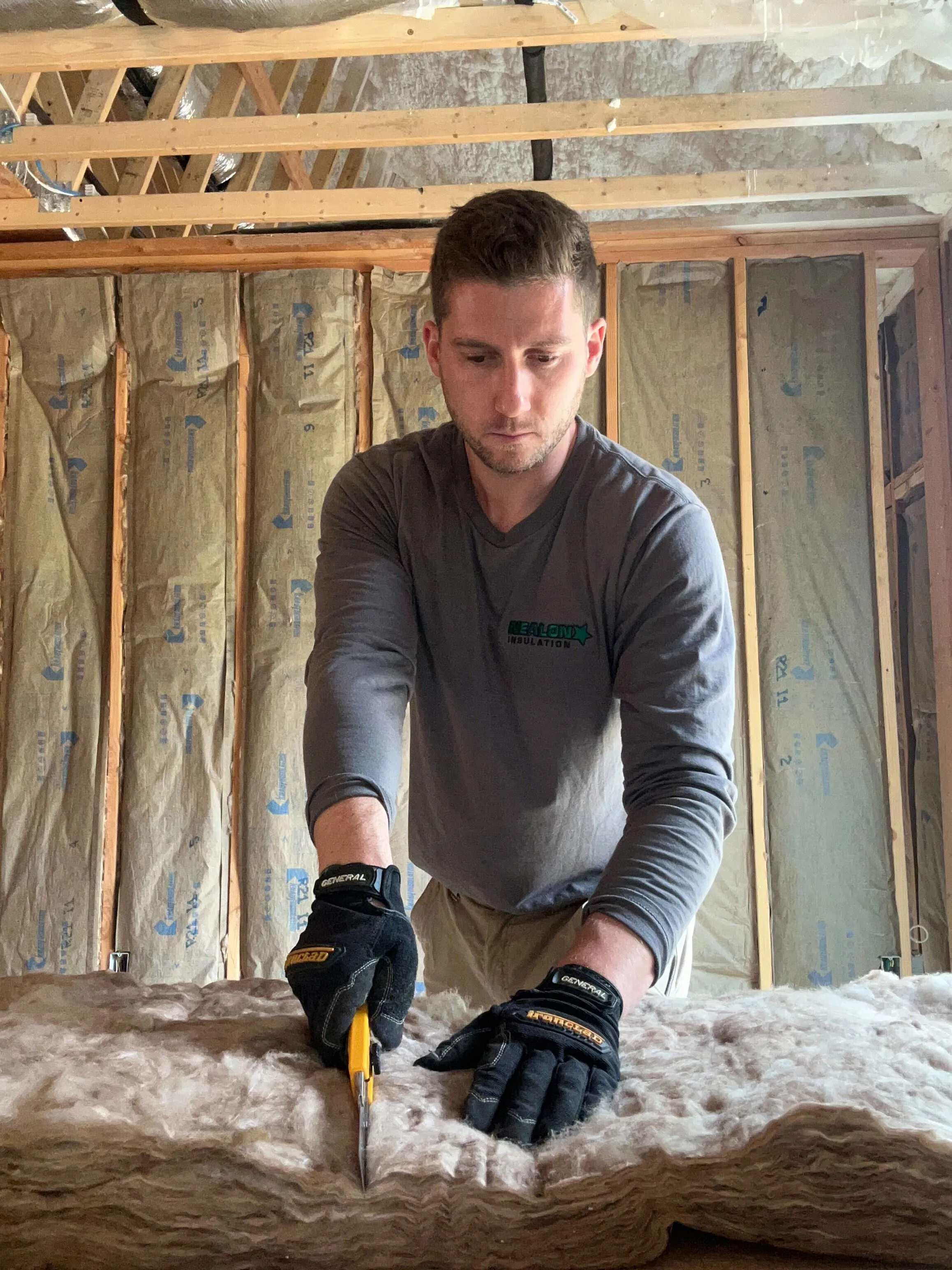
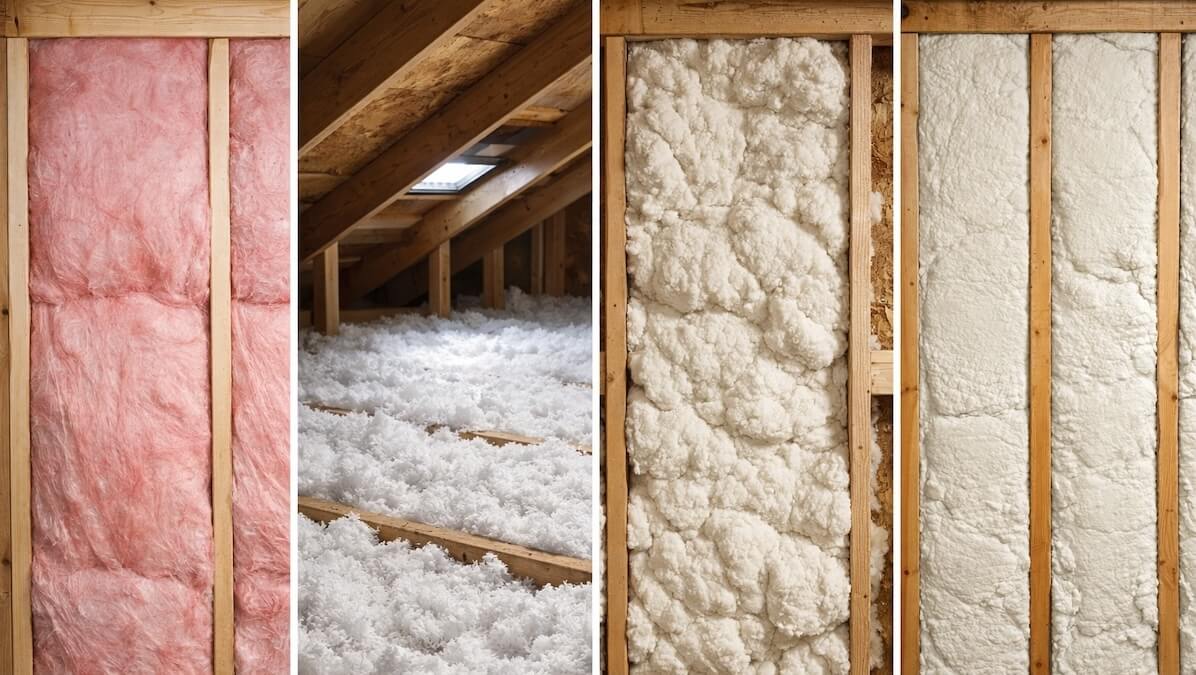
Fiberglass comes in two forms. Batts are the pre-cut blankets you've probably seen stapled between studs or joists. Blown-in fiberglass is the loose-fill version, typically used in attic floors where it gets dense-packed or loosely blown to hit a target depth. Both are solid thermal insulators. Neither does much to stop air movement on its own.
Spray foam also comes in two forms, and the difference matters:
- Open-cell spray foam is softer, expands aggressively, and is vapor-permeable. It's lower cost than closed-cell and works well for interior applications where you want some drying potential.
- Closed-cell spray foam is dense, rigid, and acts as both an air barrier and a vapor retarder. It has a higher R-value per inch (around R-6 to R-7) and is the go-to for tight spaces, rim joists, and anywhere moisture is a real concern.
The single biggest difference between the two materials isn't R-value — it's air sealing. Fiberglass insulates. Spray foam insulates and air seals. In an older Connecticut home where drafts are doing as much damage to your heating bill as missing insulation, that distinction is everything.
Want to understand the full difference between open-cell and closed-cell spray foam before you decide? Read: Open-Cell vs Closed-Cell Spray Foam
Where Each One Works Best
The material matters less than the location. A contractor who tells you spray foam is always the answer — or always overkill — isn't giving you the full picture. Here's how to think about it application by application.
Attic floors are the most common insulation project in Connecticut, and blown-in fiberglass or cellulose is usually the right call here. You're not trying to condition the attic — you're just keeping heat from escaping through the ceiling below. Depth is your friend. Connecticut code guidance puts attic insulation targets at R-49 to R-60, and blown-in gets you there efficiently and affordably.
Attic rooflines (cathedral ceilings and unvented roof assemblies) are a different story. If you're converting an attic to living space or dealing with a cathedral ceiling, closed-cell spray foam applied directly to the underside of the roof deck is often the right move. It eliminates the venting requirements, controls moisture, and handles the thermal and air barrier in one shot.
Rim joists are where spray foam earns its keep in almost every situation. These are the short vertical boards that sit on top of your foundation wall, and they're one of the biggest sources of heat loss and cold air infiltration in older homes. Closed-cell foam cut-and-cobble or spray-applied seals them tightly in a way fiberglass simply can't.
Walls in new construction can go either way depending on budget and performance targets. Fiberglass batts are standard and code-compliant. Closed-cell spray foam on the exterior sheathing or cavity fill gives you a better air barrier but at a significantly higher cost.
Existing walls are trickier. If you're not opening the walls, dense-pack fiberglass or cellulose blown in through small holes is typically the most practical approach. Spray foam in an existing closed wall cavity is rarely the right answer.
Basements and crawl spaces along the Connecticut shoreline deserve extra attention. Moisture moves aggressively in these spaces, especially in homes within a few miles of the water. Closed-cell spray foam on foundation walls and crawl space ceilings controls both temperature and vapor — two problems fiberglass alone won't solve.
Not sure what insulation is right for each part of your house? Here's a room-by-room breakdown. Read: What Insulation Is Best for Each Part of the House
The R-Value Conversation (And Why It's Not the Whole Story)
R-value gets all the attention. It's the number on the bag, the spec on the quote, the metric everyone leads with. And it matters — but it's only half the picture, and in older Connecticut homes, it might not even be the more important half.
R-value measures how well a material resists heat flow through conduction. Higher is better.
Closed-cell spray foam wins on R-value per inch, which is why it's the go-to in tight spaces where you can't add much depth. But in an attic floor where you have 12–16 inches to work with, fiberglass blown-in gets you to R-49 without breaking the bank.
Here's the part that changes the conversation: air leakage accounts for 25–40% of heating and cooling loss in a typical home. Fiberglass, even perfectly installed, does nothing to stop air movement. It slows conduction. It doesn't stop infiltration.
Think of it this way. If you only insulate your attic but ignore air sealing, you're basically wearing a winter coat with the zipper open. The coat is doing its job. The gap is undoing it.
In a pre-1980 Connecticut home — which describes a huge portion of the shoreline housing stock — air leakage is often the primary energy problem. Gaps around recessed lights, plumbing penetrations, chimney chases, and attic hatches can add up to the equivalent of leaving a window open all winter. Spray foam addresses both issues simultaneously. Fiberglass addresses one.
That doesn't mean spray foam always wins. It means air sealing needs to be part of the conversation regardless of which material you choose. A good contractor will address both. If yours isn't mentioning air sealing, ask why.
What Spray Foam Actually Costs — And When It's Worth It
Let's be straight about this: spray foam costs more than fiberglass. Sometimes a little more, sometimes a lot more, depending on the application. The question isn't whether it's expensive — it's whether the cost is justified for what you're trying to accomplish.
These are ballpark figures. Actual costs vary based on project size, accessibility, existing conditions, and what prep work is involved. A full attic insulation job with blown-in fiberglass on a 1,500 square foot Cape might run $2,000–$3,500. The same attic done with closed-cell spray foam could easily be $8,000–$12,000 or more. That's a real difference.
So when does spray foam justify the premium?
- When air sealing is the primary problem and the space doesn't allow for separate air sealing work
- Rim joists, where a small amount of closed-cell foam delivers outsized energy returns
- Unvented roof assemblies where spray foam is often the only code-compliant solution
- Basements and crawl spaces with active moisture challenges
- Tight spaces where you need maximum R-value per inch
When it probably doesn't justify the premium:
- Open attic floors where blown-in fiberglass can hit R-49 cost-effectively
- Large open wall cavities in new construction where batts perform well
- Any situation where the budget is better spent covering more surface area with fiberglass than a smaller area with foam
Energize CT rebates can offset some of the cost, particularly for air sealing work done alongside insulation upgrades. The program offers rebates for qualifying improvements in Connecticut homes, and a good contractor will walk you through what's eligible before you commit to anything. It won't close the entire gap between fiberglass and spray foam pricing, but it's money on the table worth claiming.
The honest frame for this decision: spray foam is a precision tool. It earns its cost in specific applications. Treating it as a whole-house solution for every surface is how projects get expensive without delivering proportional returns.
When Fiberglass Is the Right Call
Spray foam gets a lot of the marketing attention, and there's a version of this conversation where every contractor pushes it as the premium upgrade on every job. That's not honest advice. Fiberglass is genuinely the better choice in a number of common situations, and pretending otherwise doesn't serve the homeowner.
Here's where fiberglass earns its place:
Attic floors on a budget. If your attic floor is under-insulated — which it probably is if your home was built before 1980 — blown-in fiberglass is one of the most cost-effective improvements you can make. You're not fighting moisture up there, you have plenty of depth to work with, and the thermal performance is solid. Adding 12–16 inches of blown-in fiberglass to hit R-49 is a straightforward project that pays back quickly in heating savings.
Large wall cavities in new construction. When a builder is insulating hundreds of linear feet of exterior wall, fiberglass batts installed correctly — with proper air sealing at penetrations and framing gaps — perform well and keep costs manageable. The key phrase there is "installed correctly." Batts that are compressed, cut sloppily, or missing at corners and edges lose significant R-value. Installation quality matters more than most homeowners realize.
Budget-constrained retrofits. Not every homeowner has the budget for spray foam, and that's a real constraint that deserves a real answer. In many cases, dense-pack fiberglass blown into existing wall cavities through small holes is a practical, affordable improvement that makes a noticeable difference in comfort and energy bills — without requiring a full renovation.
Conditioned attic spaces where vapor permeability matters. In certain assembly configurations, you actually want the insulation to allow some drying. Open-cell spray foam handles this, but so does fiberglass — at a fraction of the cost. A building science-informed contractor will tell you when vapor permeability is an asset rather than a liability.
The bottom line: fiberglass isn't the cheap, inferior option. It's the right option in a lot of situations. The contractors worth hiring know the difference.
The Moisture Factor for Connecticut Shoreline Homes
If you live within a few miles of the water — Branford, Guilford, Madison, Old Saybrook, Westbrook, Clinton — moisture isn't an abstract concern. It's a year-round variable that affects every insulation decision you make. Get it wrong and you're not just uncomfortable. You're looking at rot, mold, and structural damage that no amount of R-value fixes.
Here's the core problem. Connecticut sits in Climate Zone 5A, which means cold, dry winters and warm, humid summers. That seasonal swing creates vapor drive — moisture moving through your building assembly in different directions depending on the time of year. In winter, warm interior air pushes moisture outward toward the cold exterior. In summer, hot humid air pushes inward. Shoreline homes deal with elevated ambient humidity on top of that seasonal pattern.
Fiberglass, on its own, does nothing to manage vapor. It's vapor-permeable, which means moisture passes right through it. In the right assembly — with a proper vapor retarder on the correct side — that's manageable. In the wrong assembly, you end up with moisture accumulating inside the wall or ceiling cavity, which eventually leads to the kind of problems that show up as stained ceilings, soft framing, and musty basements.
Closed-cell spray foam changes this equation. At two inches or more, it acts as a Class II vapor retarder, meaning it significantly slows vapor movement through the assembly. For basement walls, crawl space ceilings, and rim joists in shoreline homes, that vapor control function is often just as valuable as the thermal performance.
A few scenarios where moisture should drive the material decision:
- Unvented crawl spaces — Closed-cell spray foam on the walls and floor perimeter is the standard of care. Fiberglass batts stapled to crawl space ceiling joists in a humid environment is a recipe for mold.
- Basement walls — Fiberglass against a concrete foundation wall traps moisture between the insulation and the concrete. Closed-cell foam applied directly to the concrete face eliminates that cavity entirely.
- Roof assemblies near the water — Unvented roof decks in coastal homes need vapor control built into the assembly. Closed-cell spray foam on the underside of the roof deck handles both the thermal and moisture requirements simultaneously.
This is also where the "just add more insulation" instinct can backfire. Piling more fiberglass into a poorly detailed assembly in a humid coastal environment doesn't solve the moisture problem — it can make it worse by keeping surfaces colder and more prone to condensation.
If your home is on or near the shoreline, moisture management isn't a secondary consideration. It belongs at the center of the insulation conversation from the start.
Curious how blown-in fiberglass and spray foam actually compare when moisture is the main concern? Read: How Does Blown-In Fiberglass Compare to Spray Foam in Moisture Resistance?
The Right Material in the Right Place
Spray foam vs fiberglass isn't really a competition. It's a context question. The answer depends on where you're insulating, what problem you're trying to solve, and what your house is actually doing with heat and moisture.
For most Connecticut homeowners, the answer isn't one or the other — it's both, applied where each makes the most sense. Blown-in fiberglass on the attic floor. Closed-cell spray foam on the rim joists and basement walls. Dense-pack in the existing walls if you're retrofitting. The material follows the application, not the other way around.
What matters most is that the contractor you hire understands building science well enough to make that call correctly. Not the one pushing spray foam on every surface because the margins are better. Not the one defaulting to fiberglass everywhere because it's what they've always done. The one who looks at your house, asks the right questions, and gives you a straight answer about what will actually perform.
If your home was built before 1980 — and a lot of homes along the Connecticut shoreline were — there's a good chance you have undersized insulation, air leakage you can't see, and moisture details that were never addressed. That's not a criticism of the people who built your house. It's just a different era of construction. The fix is usually straightforward once someone takes an honest look.
👉 Contact Nealon Insulation to find out which insulation solution is right for your home.
Frequent Questions About Spray Foam vs Fiberglass Insulation
Can I add spray foam on top of existing fiberglass insulation?
It depends on where and what you're trying to accomplish. In an attic, adding spray foam on top of existing fiberglass is generally not recommended — and usually not necessary. If your existing fiberglass is in decent condition, the better move is to air seal the attic floor first and then add blown-in insulation on top to hit your target R-value. Spray foam applied over existing fiberglass batts in a wall or floor assembly can also trap moisture if the vapor dynamics aren't carefully considered. The short answer: don't layer materials without understanding why. A proper assessment will tell you whether what you have is worth building on or whether it needs to come out first.
How long does spray foam insulation last compared to fiberglass?
Both materials are designed to last the life of the building when properly installed, but they age differently. Closed-cell spray foam is rigid and dimensionally stable — it doesn't settle, sag, or shift over time. Fiberglass batts, particularly in walls and floors, can settle or compress over decades, which gradually reduces their effective R-value. Blown-in fiberglass in an attic floor holds up reasonably well but can settle slightly over time, which is why installers typically overshoot the target depth to account for it. If you're insulating a space you don't want to revisit for 20–30 years, closed-cell foam has a durability edge. That said, fiberglass installed correctly in the right application will perform reliably for decades without issue.
Will spray foam insulation cause moisture problems in my walls?
It can — if it's specified or installed incorrectly. Closed-cell spray foam is a vapor retarder, which means it slows moisture movement. In most Connecticut wall assemblies, that's an asset. But if closed-cell foam is applied to only one side of a wall cavity without accounting for the vapor profile of the full assembly, you can end up with a wall that can't dry in either direction. This is a building science problem, not a materials problem. Open-cell spray foam is vapor-permeable and carries less risk of trapping moisture, but it also provides less vapor control in humid environments like Connecticut shoreline homes. The takeaway: spray foam in walls needs to be specified by someone who understands how your particular wall assembly manages moisture, not just someone who owns a spray rig.
Is spray foam insulation worth it for an older Connecticut home?
For targeted applications, yes — often significantly. Rim joists and basement walls in older homes are almost always good candidates for closed-cell spray foam. These areas combine high heat loss, high air infiltration, and real moisture exposure, and spray foam addresses all three at once. For the attic floor, blown-in fiberglass or cellulose is usually the more cost-effective path. Where spray foam really earns its keep in older homes is in the details — the places where air is moving freely and no other material seals as effectively. If someone is quoting you spray foam for your entire attic floor in an older home, ask them to justify why blown-in insulation won't accomplish the same result at a fraction of the cost.
Does spray foam insulation qualify for Energize CT rebates?
Air sealing work — which spray foam inherently performs — can qualify for Energize CT rebates when done as part of a qualifying energy upgrade. The rebate structure is tied to the overall project and the energy improvements achieved, not just the material used. Fiberglass insulation projects can also qualify depending on the scope and location. The best way to navigate this is to work with a contractor who is familiar with the current Energize CT program requirements and can document the work correctly. Rebates won't eliminate the cost premium of spray foam, but in the right project they can meaningfully reduce the out-of-pocket number. Before you sign anything, ask your contractor specifically which line items qualify and what the documentation process looks like.
Related Articles

Let's Work Together
Ready to transform your home into an energy-efficient haven? Schedule your free energy assessment today and experience the Nealon difference for yourself.