
Mold in Your Crawl Space: Causes, Dangers, and What to Do About It
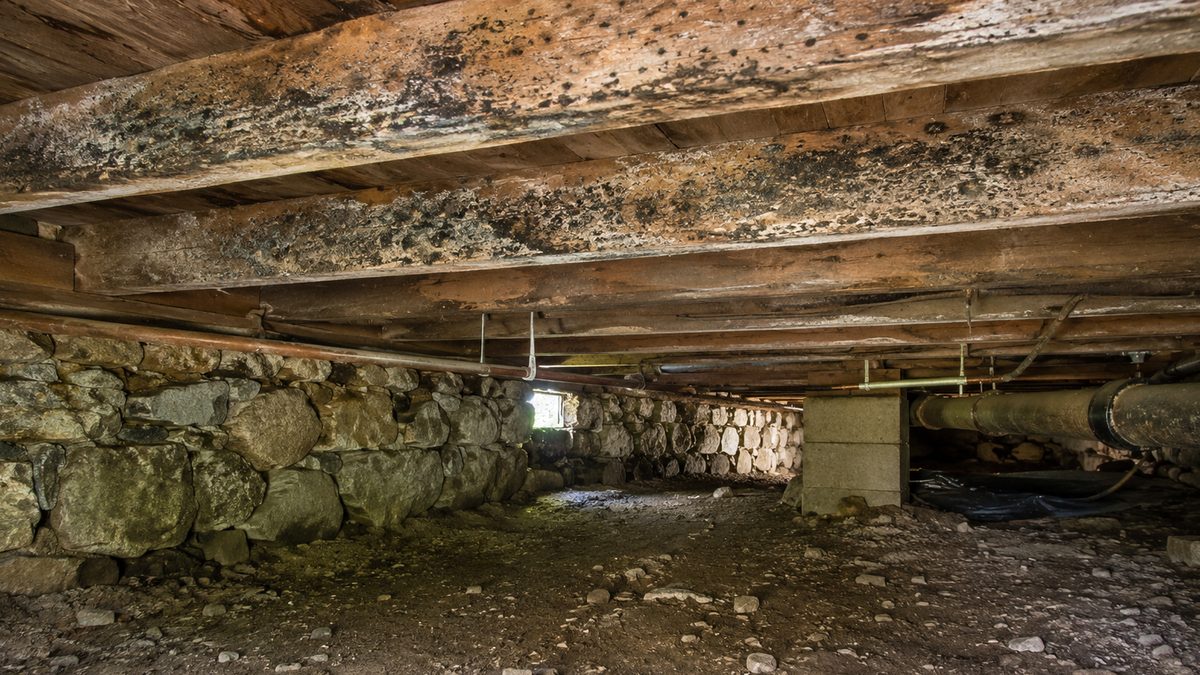
You catch a musty smell every time the heat kicks on, or your allergies flare up worse inside the house than they do out in the yard. Then someone with a flashlight pokes around under the house and finds gray fuzz spreading across the floor joists. Mold in the crawl space is one of those problems homeowners almost never see coming, because nobody spends time down there until something has already gone wrong.
In Connecticut, this shows up more than most people expect, and summer is prime season for it. Our humid shoreline air and older housing stock give crawl space mold everything it needs to take hold. The good news is that crawl space mold plays by predictable rules. Once you understand why it grows, you can spot it early, sort out what you can handle yourself, and know when it is time to call a pro.
Why Crawl Spaces Grow Mold (Especially in Connecticut)
Crawl space mold grows for one reason: moisture. Mold needs three things to get going, which are something to eat, the right temperature, and water. In a crawl space, the first two are always present. Wood joists and subflooring are food, and the temperature under your house sits in the comfortable range mold loves for most of the year. Water is the only variable you actually control, which is why every real fix comes back to keeping the space dry.
The Dew Point Problem
The biggest source of crawl space moisture in Connecticut is the summer air itself. A crawl space stays cool year round because it sits against the ground, which holds a steady temperature in the 50s and low 60s. When warm, humid July air gets into that cool space, it behaves the same way a glass of iced tea does on the porch. The moisture in the air condenses onto the coolest surfaces it can find, which are your floor joists, ductwork, and pipes. That water sits on the wood and feeds the mold.
Why Vented Crawl Spaces Backfire Here
Crawl space vents were supposed to solve moisture, but in a humid climate they often make it worse. For decades, builders cut vents into crawl space foundation walls on the theory that outdoor air would carry moisture away. That logic holds up in a dry climate. It falls apart in Connecticut. The building scientists who study crawl space moisture have documented that in a humid climate, the outdoor air you pull in through those vents usually carries a higher dew point than the surfaces inside the crawl space. Instead of drying things out, the vents invite wet air in to condense on cool wood all summer long.
Beyond the summer air, a handful of other moisture sources feed crawl space mold:
- Bare dirt floors with no ground cover, which let ground moisture evaporate straight up into the space. A properly installed vapor barrier is the first line of defense here.
- Gutters and grading that steer rainwater toward the foundation instead of away from it.
- Plumbing leaks and sweating cold-water pipes running through the crawl space.
- Groundwater seeping through foundation walls after heavy rain.
Wondering whether the vents in your foundation are helping or quietly making things worse?
Warning Signs You Have Mold in Your Crawl Space
You can catch crawl space mold early by watching for a short list of signs, most of which show up inside your living space before you ever crawl under the house:
- A musty, earthy smell that gets stronger when the HVAC runs
- Visible fuzzy or stained growth on floor joists, subflooring, or insulation, in white, gray, green, or black
- Hardwood floors above the crawl space that cup, warp, or feel springy
- Allergy or asthma symptoms that ease when you leave the house
- A humidity reading above 60 percent inside the crawl space
- Damp soil, standing water, or rusty metal connectors down there
- Pest activity, since the same damp conditions that grow mold attract insects and rodents
The humidity reading is your most useful tool. The EPA points to 60 percent relative humidity as the line where mold starts to take hold, and you can check yours with a humidity meter that costs $10 to $50 at any hardware store. Set one in the crawl space, give it an hour, and read it. Anything consistently above 60 percent means you have a moisture problem to solve, whether or not you can see mold yet.
Already found the insulation down there wet or matted down?
Are the Dangers Real? Health and Structural Risks
Crawl space mold is a real problem, though not for the reasons the scariest internet headlines suggest. You do not need exotic toxic black mold for it to matter, and you do not need to panic if you find a patch. What you need to understand is where the damage actually happens.
What It Does to Your Health
Crawl space mold affects your health mainly by putting spores and moisture into the air you breathe. Ordinary mold raises indoor allergens, triggers asthma and allergy symptoms, and makes a house feel stuffy and stale. The reason a problem under the house becomes a whole-house problem is airflow. Warm air rises through a home and pulls replacement air up from the bottom, so the stack effect draws crawl space air up into your living space through gaps in the floor. A good share of the air you breathe on the first floor started in the crawl space, which means whatever is growing down there does not stay down there.
What It Does to Your House
Crawl space mold threatens your home's structure by keeping the wood framing wet enough to rot. Mold itself does not eat wood, but the moisture that feeds it does. Sustained dampness invites wood-decay fungi, which weaken joists, girders, and subflooring over time. That is how you end up with soft, bouncy floors and, in bad cases, framing that needs replacing. Catching the moisture early is the difference between running a dehumidifier and paying for structural repairs.
Want to see how a real mold cleanup works from start to finish?
What to Do About Crawl Space Mold
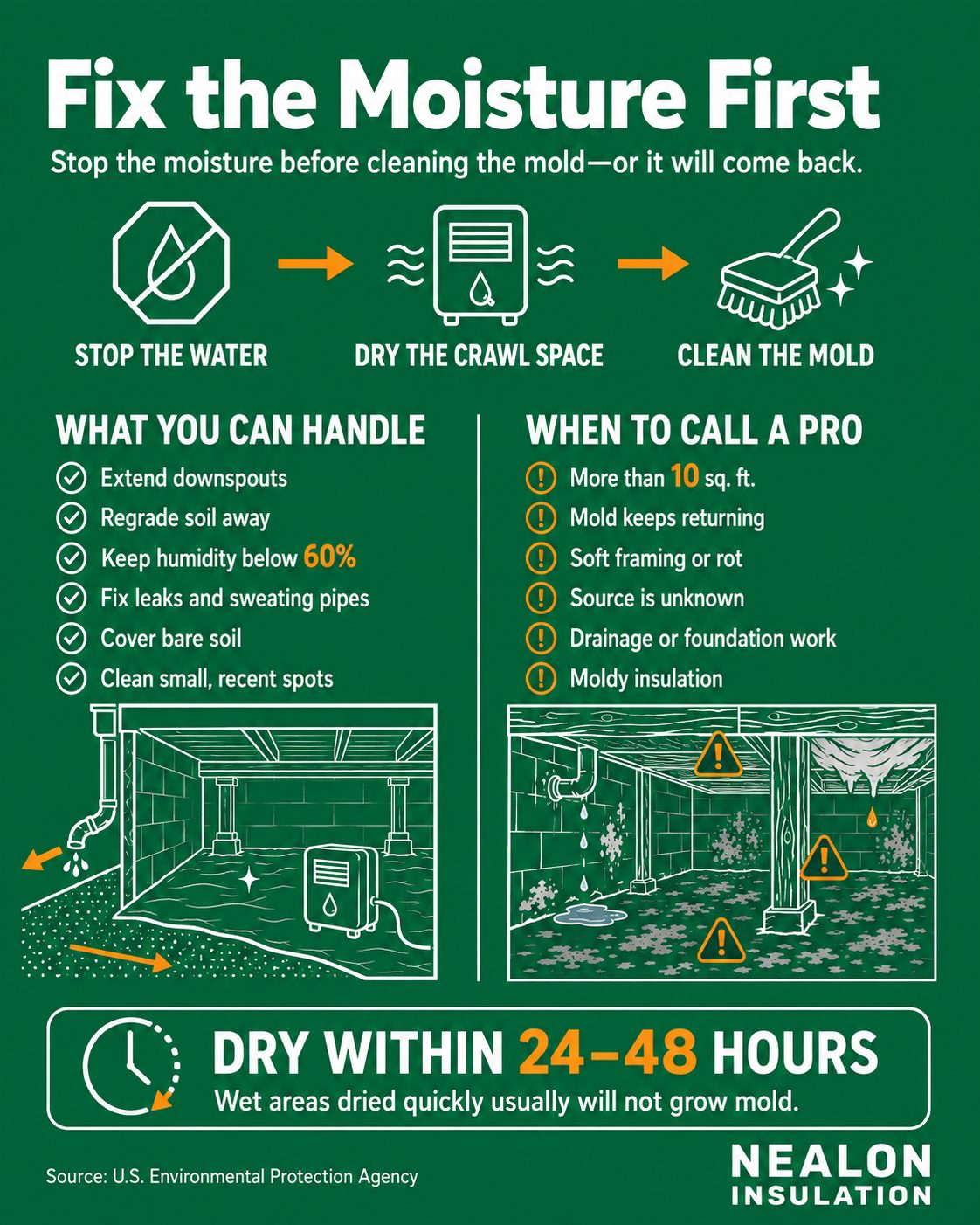
Fixing crawl space mold means solving the moisture first, then cleaning up what the moisture grew. Skip the first part and you will be back down there next summer looking at the same fuzz. Here is how the work splits between what you can do and what needs a pro.
What You Can Handle Yourself
You can handle the moisture-control basics yourself before spending a dollar on remediation:
- Clean and extend your gutters and downspouts so roof water drains at least a few feet from the foundation.
- Regrade soil that slopes toward the house so it slopes away.
- Run a dehumidifier in the crawl space and hold humidity under 60 percent.
- Fix obvious plumbing leaks and insulate sweating cold-water pipes.
- Lay or repair a plastic ground cover over bare dirt to cut evaporation.
- Clean small patches of surface mold off non-structural surfaces with detergent and water, then dry the area fast.
The EPA's rule of thumb is that a wet area dried within 24 to 48 hours usually will not grow mold. For a small, recent spot on a joist, a scrub and a dehumidifier may be all you need.
Where a Pro Is Genuinely Needed
Call a professional when the mold is widespread, the wood is affected, or you cannot find where the water is coming from. Some jobs are not worth doing yourself, and pretending otherwise is how people get hurt or waste money. Bring in a pro when:
- Mold covers more than about 10 square feet or keeps coming back after you clean it
- Framing feels soft, looks stained deep into the grain, or shows signs of rot
- You cannot locate the water source, or the fix involves grading, foundation, or drainage work
- The crawl space needs fresh crawl space insulation after old, moldy material is removed
A contractor can also trace the moisture path you cannot see, which is usually the real reason the mold came back last time.
The Permanent Fix: Seal, Don't Vent
The lasting fix for a chronically damp Connecticut crawl space is to seal it, not vent it. Instead of inviting humid outdoor air in through vents, you close the vents, seal the crawl space off from the ground and outside air, and bring it inside your home's conditioned envelope. That approach, called encapsulation, wraps the floor and walls in a heavy vapor barrier and controls humidity so mold has nothing to work with. It helps to understand what crawl space encapsulation involves before you collect quotes, because it is a bigger job than laying down a sheet of plastic.
Full crawl space encapsulation in Connecticut typically runs $6,000 to $18,000, depending on the size of the space, how much water management it needs, and whether a dehumidifier and drainage system get added. Mold cleanup on top of that varies with the extent of growth. It is not cheap, but neither is replacing rotted floor framing, and a sealed crawl space also trims your heating and cooling bills by cutting off a major source of drafts and humidity. If you want a professional set of eyes first, an Energize CT Home Energy Solutions audit runs a $40 copay and includes a look at moisture problems.
Want the full picture on what encapsulation includes and why it pays off?
Conclusion
Crawl space mold is a moisture problem wearing a scary costume. It grows because warm, humid Connecticut air condenses on the cool wood under your house, and it spreads its effects upstairs through the air you breathe. Watch for the musty smell, the humidity reading over 60 percent, and any fuzzy growth on the joists, and you will catch it long before it turns into rotted framing.
The single takeaway is this: chasing the mold without fixing the water is a waste of time. Dry the space out, hold it under 60 percent humidity, and in a chronically damp crawl space, seal it instead of venting it. Do that, and the mold loses the one thing it cannot live without.
👉 Contact Nealon Insulation — if your crawl space is damp, musty, or already growing mold, we will find the water source and seal the space for good.
Frequent Questions About Crawl Space Mold
How much does it cost to remove mold from a crawl space?
Crawl space mold removal in Connecticut costs $500 to $4,000 for cleanup alone, depending on how far the growth has spread. Widespread mold or affected structural wood pushes the number higher. Most homeowners pair remediation with encapsulation, which runs $6,000 to $18,000, because cleaning mold without fixing the moisture invites it right back. Get a written scope that separates cleanup cost from moisture-control cost so you know what you are paying for.
Can I stay in my house during crawl space mold remediation?
You can stay in your home during most crawl space mold remediation. Crews seal off the work area and use containment and negative air pressure to keep spores from spreading upstairs. Larger jobs that stir up heavy spore loads may call for a day or 2 away, especially for anyone with asthma or a mold allergy. Ask your contractor about containment before work starts so you know what to expect.
Does homeowners insurance cover crawl space mold?
Homeowners insurance covers crawl space mold only when it results from a sudden, covered event such as a burst pipe. Insurers deny mold claims caused by long-term humidity, poor drainage, or deferred maintenance, which is how most crawl space mold actually starts. Review your policy's mold sublimit, since many cap mold coverage at $1,000 to $10,000 even when a claim qualifies. Document the water source with photos before cleanup if you plan to file.
How long does crawl space encapsulation take?
Crawl space encapsulation takes 1 to 3 days for a typical Connecticut home. Space size, the amount of debris and old insulation to remove, and add-ons like a dehumidifier or drainage system move the timeline. Homes with active water intrusion need that fixed first, which can add time. Ask for a scheduled sequence so you know which days cover cleanup, sealing, and equipment installation.
Will sealing my crawl space lower my energy bills?
Sealing your crawl space lowers energy bills by cutting off a major source of drafts, humidity, and heat loss through the floor. A vented crawl space lets outside air wash under your home year round, which makes your heating and cooling system work harder. Connecticut homeowners who encapsulate often see steadier floor temperatures and a drop in summer humidity. Combine encapsulation with crawl space insulation in the R-19 to R-30 range recommended for Connecticut floors to get the full comfort and efficiency benefit.
Related Articles
Let's Work Together
Ready to transform your home into an energy-efficient haven? Schedule your free energy assessment today and experience the Nealon difference for yourself.