
What Uses the Most Energy in a Home? CT Energy Hogs

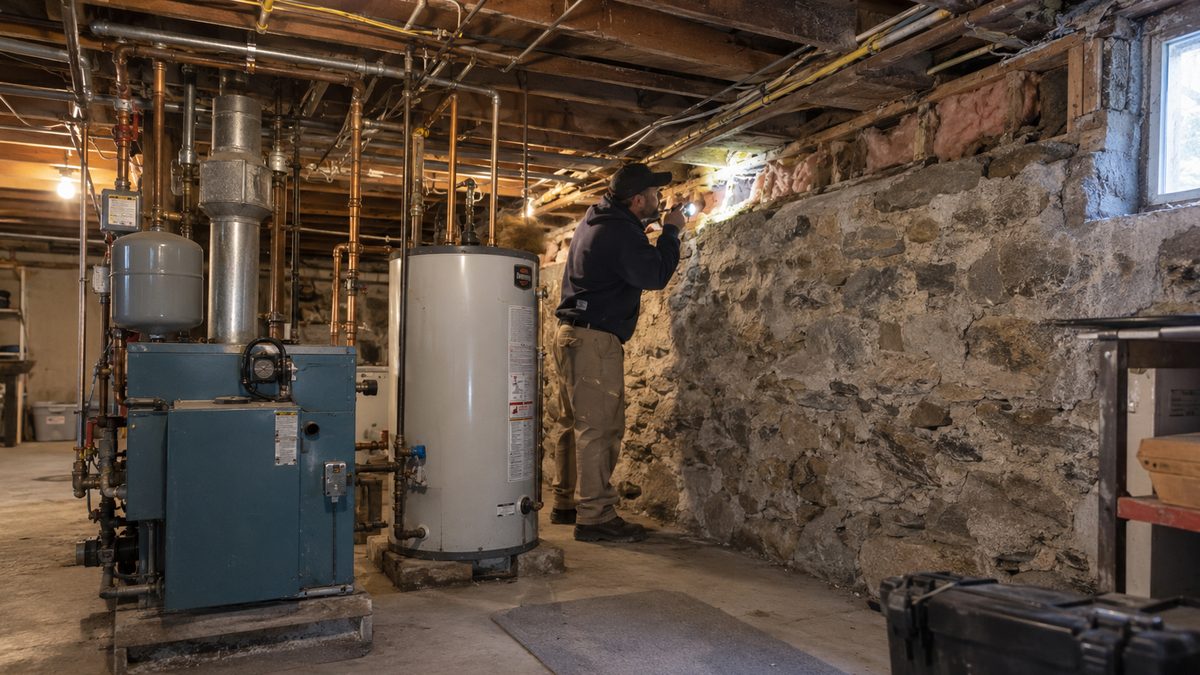
Your energy bill climbs every winter and you can't point to why. The thermostat is where it always is, nobody's running the dryer around the clock, and yet the number keeps going up. Somewhere in your house, a handful of systems are quietly eating most of the energy, and they're usually not the ones people blame.
In Connecticut, that problem has teeth. We heat through long, cold winters, we pay some of the highest energy costs in the country, and a lot of our homes went up before anyone thought hard about insulation. Figure out which energy hogs are actually driving your bill and you can stop guessing and start cutting the ones that matter. Here's what they are, ranked by what they really cost you, and what to do about each.
What Counts as an Energy Hog
An energy hog is any system or appliance that eats a big share of your home's total energy, and in most houses it is not the phone charger you keep unplugging. The U.S. Energy Information Administration tracks exactly where home energy goes, and the ranking barely moves year to year. Here's the national breakdown from the most recent full survey:
Notice the pattern. The biggest hogs are the systems that move heat and water: heating, cooling, and hot water. Within that top group, space heating alone is 42%, the single largest end use in the country. The gadgets get all the guilt, but they sit down in that bottom 23% with everything else.
See what area of the home your energy savings actually come from
The Biggest Hog by Far: Heating
Space heating is the single largest energy user in almost every Connecticut home, at 42% of the national average and higher here because our winters run longer and colder. The dollars back it up. The average U.S. home spent $519 on heat in 2020, but homes that heat with oil, and a large share of Connecticut still does, averaged $1,164 that same year. That's more than double, and it's the difference between a fuel we lean on and a climate that runs the furnace five months a year.
Here's the part people miss: your furnace isn't the hog. The heat loss is. A furnace only works that hard because heat is pouring out through an under-insulated attic, gaps at the rim joist, and leaks you never see. Understanding how your home loses and gains heat is the whole game, because you can't out-furnace a leaky envelope.
What you can do about it:
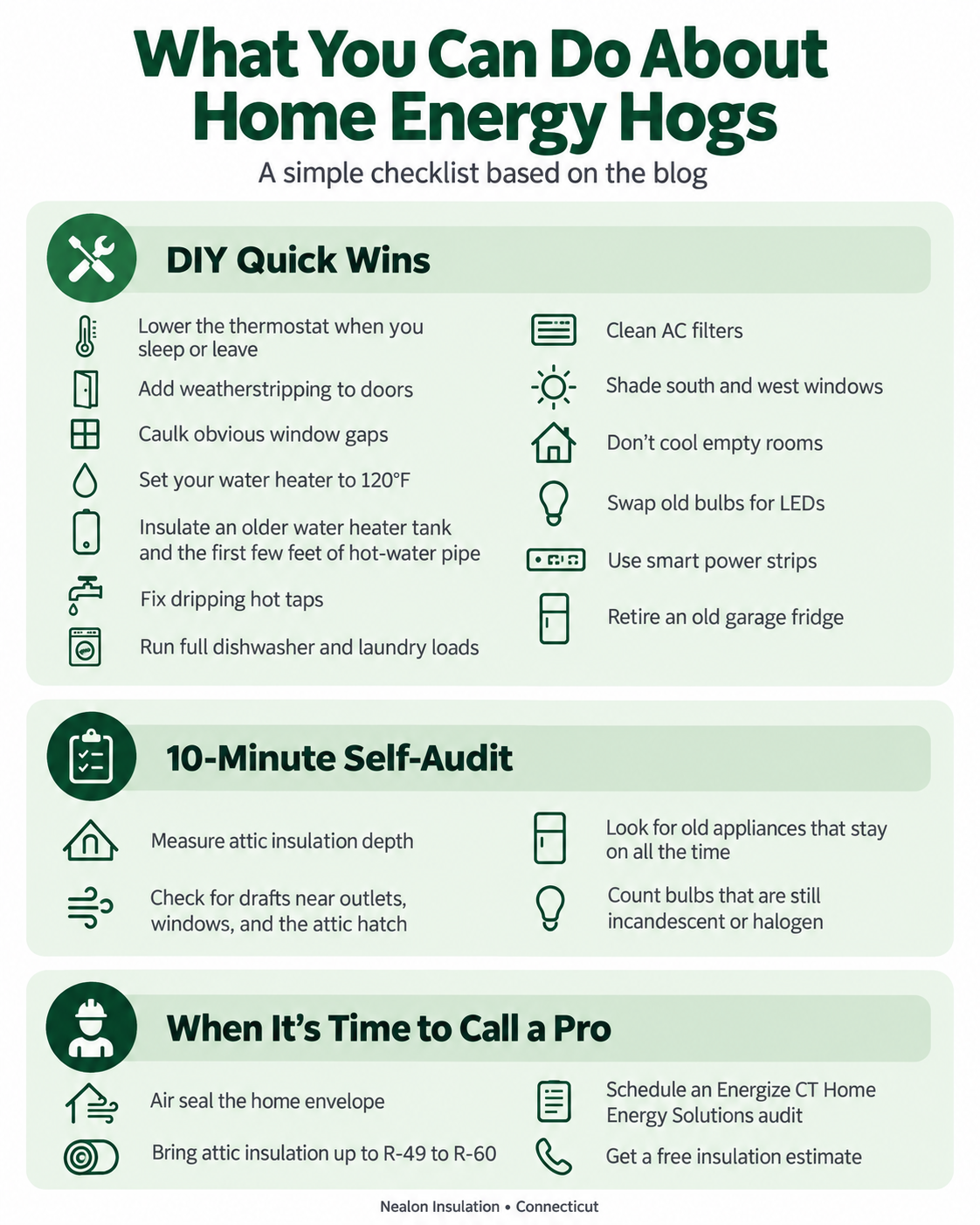
- DIY: Drop the thermostat a few degrees while you sleep or you're out. A programmable or smart thermostat handles it for you.
- DIY: Add weatherstripping to doors and caulk the obvious gaps around windows.
- Pro territory: Getting the attic up to the R-49 to R-60 target and air sealing the envelope is where the real heating savings live. That's measurement and access work, not a weekend caulk job.
Compare Connecticut heating costs for oil, gas, electric, and heat pumps
Water Heating: The Quiet Hog That Runs All Year
Water heating is one of the top energy users in a home because it runs every day of the year, not just in winter. Heating and cooling get a season off. Your water heater never does. It reheats a full tank around the clock whether you're home or not, which is why it lands in that 25% tier alongside lighting and the fridge.
The good news: this is the most DIY-friendly hog on the list.
- Set the water heater to 120°F. Many ship set to 140°F, which wastes energy and scalds.
- Wrap an older tank and the first few feet of hot-water pipe with insulation.
- Fix dripping hot taps, and run full loads in the dishwasher and washing machine.
None of that needs a contractor. It needs an afternoon and a screwdriver.
The Summer Spike: Air Conditioning
Air conditioning is the hog that wakes up in July, and in Connecticut's humid summers it can spike a bill fast. Cooling rounds out that top 52% with heating. Half of Northeast homes run individual window or room units instead of central air, which means a lot of us cool room by room and pay for it. The fix is the same envelope that helps in winter: a well-insulated, sealed attic keeps heat out in summer just like it keeps heat in during winter. If you've wondered whether attic insulation still earns its keep in summer, it does, and it's the same upgrade doing double duty.
Quick wins: keep the AC filters clean, shade south and west windows, and don't cool empty rooms.
The Small Hogs That Add Up
The small energy hogs, appliances and electronics, sit in the bottom 23% individually but stack up together. This is the "everything else" bucket: TVs, computers, game consoles, the second fridge in the garage, the clothes dryer, and phantom loads from devices that sip power while "off." No single one is a monster, but a 2005 garage fridge and a rack of always-on electronics quietly pad the bill.
Cheap fixes that work:
- Swap any remaining incandescent or halogen bulbs for LEDs. Most homes already run mostly LED, which is why lighting keeps shrinking as a share.
- Put entertainment centers and computer setups on smart power strips to kill phantom loads.
- Retire the beer fridge in the garage if you crack it open twice a year.
Run a 10-Minute Energy-Hog Self-Audit
You can find your home's worst energy hogs in about 10 minutes with no tools beyond a tape measure and your own eyes. Walk the house this weekend and check:
- Attic depth. Less than 6 inches of insulation means you're likely under R-19, well below the R-49 to R-60 target, and your number-one hog is running wild.
- Water heater temperature. If the dial reads above 120°F, turn it down.
- Drafts. On a windy day, hold a hand near outlets, window frames, and the attic hatch. Air movement means leaks.
- The garage fridge and old electronics. Note anything that's always on and rarely used.
- Bulbs. Count how many are still incandescent or halogen.
Prefer to tick them off as you go? Run the same five checks in the interactive energy-hog self-audit below.
Whatever you find, the next step is cheap and simple: measure the attic, photograph the trouble spots, and schedule an Energize CT Home Energy Solutions audit. The audit runs a $40 copay, and it's the official first step that also opens up the insulation rebate.
Here's how to get a Connecticut home energy audit through Energize CT
Where the Real Savings Are in Connecticut
The biggest savings come from attacking the biggest hog, which means insulating and air sealing the parts of your home that bleed heat. Since heating is 42% of the bill and heat loss is what drives it that high, the highest-leverage move is a tight, well-insulated envelope. A typical Connecticut attic floor insulated to R-49 with blown-in cellulose runs about $3.00 to $3.50 per square foot installed. Pairing that with air sealing services, which run roughly $0.30 to $1.00 per square foot, stops the leaks the insulation can't. For a 1,000 square foot attic, the insulation piece lands around $3,000 to $3,500 before rebates.
And the rebates are real. Energize CT covers up to $2.00 per square foot or 75% of the project cost, whichever is less, capped at $10,000 per home, on qualifying insulation done through a network contractor. That can knock a serious chunk off the number. The exact figure for your house comes from a free, no-obligation estimate, and hiring attic insulation contractors who know Connecticut homes means the work actually hits the target R-value instead of leaving gaps.
Here's how much money you'll really save by upgrading your insulation
The Bottom Line on Home Energy Hogs
The energy hogs in your home aren't a mystery, and they aren't the gadgets. Heating leads by a mile, cooling and hot water follow, and the pile of small stuff brings up the rear. In a cold, oil-heavy state like Connecticut, the heating hog is even bigger and pricier than the national average, which is exactly why the envelope matters so much here.
Start with the biggest hog and work down. Run the 10-minute self-audit, turn the water heater down, and get eyes on your attic. If heat loss is your problem, sealing and insulating the envelope is the one move that pays back the most.
👉 Start with an Energize CT energy audit — the $40 Home Energy Solutions audit is step one to pinpointing your home's energy hogs and unlocking the rebate that pays for the fix.
Frequent Questions About Home Energy Hogs
What uses the most energy in a Connecticut home?
Space heating uses the most energy in a Connecticut home, accounting for 42% of the average U.S. household's energy use and a larger share in Connecticut's cold climate. Homes that heat with oil averaged $1,164 on heat in 2020, more than double the $519 national average across all fuels. Insulate the attic to R-49 to R-60 and air seal the envelope to cut heat loss and lower heating demand.
How can I tell which appliance is driving up my electric bill?
Identify the appliance driving up your electric bill by checking always-on, high-heat, and old equipment first: electric water heaters, a second refrigerator, electric dryers, and space heaters. A refrigerator uses about 7% of a home's electricity, and an old garage fridge running 24/7 often uses far more than a modern unit. Unplug rarely used appliances and put electronics on smart power strips to cut phantom loads and lower monthly electricity use.
Is it worth upgrading insulation just to lower my energy bills?
Upgrading insulation lowers energy bills by cutting heat loss through the biggest energy hog, space heating. A Connecticut attic floor insulated to R-49 with blown-in cellulose runs $3.00 to $3.50 per square foot installed, and Energize CT rebates cover up to $2.00 per square foot or 75% of the project cost, capped at $10,000. Schedule a free estimate and an Energize CT audit to see the exact savings and rebate for your home.
What temperature should I set my water heater to?
Set your water heater to 120°F to cut standby energy loss and prevent scalding. Many water heaters ship set to 140°F, which wastes energy reheating water hotter than most households need. Lower the setpoint to 120°F and wrap an older tank and the first few feet of hot-water pipe to reduce year-round water heating costs.
Do I need a professional to reduce my home's energy use?
Reducing home energy use involves both DIY steps and professional work, depending on the hog. Homeowners handle thermostat setbacks, water heater settings, LED bulbs, and smart power strips without help. Attic insulation to R-49 to R-60 and whole-home air sealing require a contractor for proper access, coverage, and rebate eligibility, so schedule a free estimate for those larger jobs.
Related Articles
Let's Work Together
Ready to transform your home into an energy-efficient haven? Schedule your free energy assessment today and experience the Nealon difference for yourself.