
Comfort or Savings: Which Rooms Actually Lower Your Heating Bill
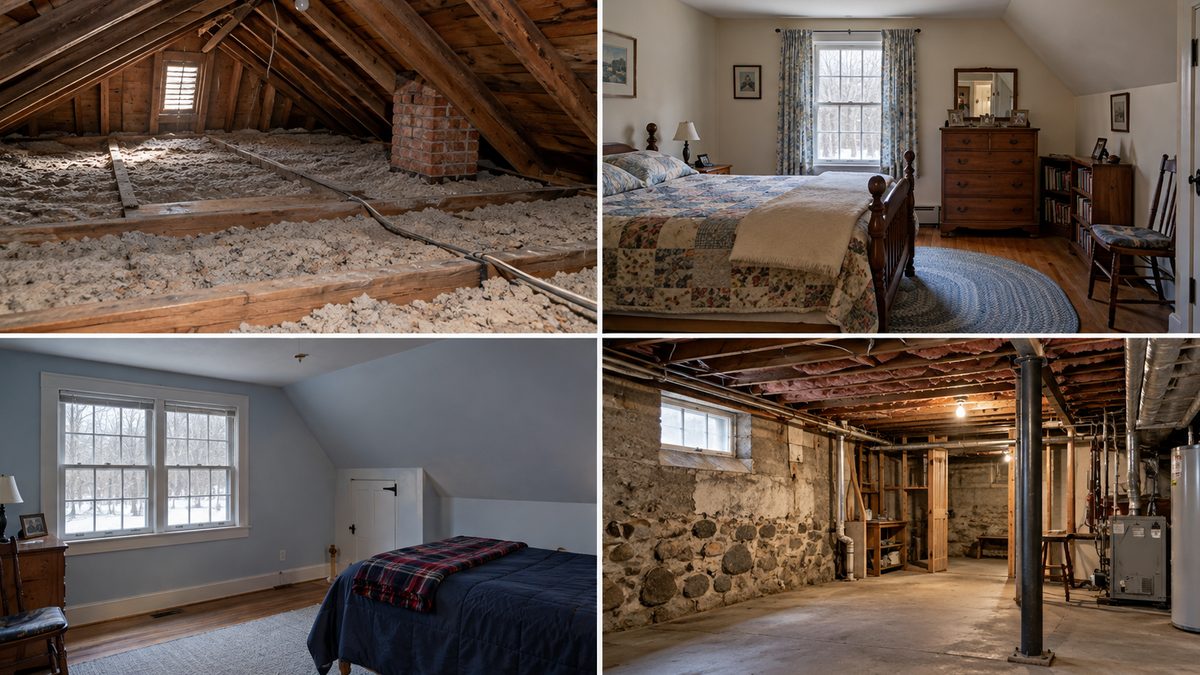
You've got one room nobody sits in because it's freezing, and a heating bill that makes you flinch every January. Most Connecticut homeowners assume those two problems are the same problem, so they chase the cold room with space heaters and thicker curtains and wait for the bill to drop. It never does. The bonus room stays cold and the oil delivery still hurts.
That's because comfort and the heating bill are two different problems, and the rooms that fix each one are not the same. In a Climate Zone 5A state with some of the highest heating costs in the country and a lot of pre-1980 housing stock, that distinction is worth real money. This post sorts the rooms in your house into two piles: the ones that actually move your heating bill, and the ones that are really about comfort. A few sit in both piles, and those are the ones to start with.
Comfort and Energy Are Two Different Problems
Comfort is local and felt in one spot; the heating bill is the whole house leaking heat at once. When you stand in a cold room, you're feeling one place where heat is leaving faster than your furnace can replace it. The heating bill, on the other hand, is the sum of every square foot of your home's shell losing heat all winter. Fix a drafty bonus room and you'll feel better in that room, but you've barely touched the total. Fix the attic and you lower the whole bill and warm up the top floor at the same time.
Here's the honest part most articles skip: "rooms" is how homeowners think, but heat loss doesn't really happen by room. It happens through the envelope, the outer shell of insulation and air barrier wrapping your living space. A cold bedroom is almost always a symptom of a weak spot in the envelope near that room: the attic above it, an exterior wall beside it, or an uninsulated floor beneath it. So when we talk about the rooms that matter, we're really talking about where the envelope is doing the least work. Knowing which problem you're solving keeps you from spending attic money on a comfort headache, or comfort money on the bill. It also lines up with where your energy savings actually come from once you start prioritizing.
Why are some rooms in your house so much colder than others?
The Rooms That Actually Lower Your Heating Bill
The biggest bill-movers are the top and bottom of your house, not the rooms you live in. Warm air rises, finds the gaps at the top of your home, and escapes, which pulls cold air in low to replace it. That constant upward current is why the attic and the basement do more to your heating bill than the living room ever will, even though nobody thinks of them as rooms worth heating.
The Attic Is the Number One Bill-Mover
The attic is the single most valuable target for lowering your heating bill in Connecticut. It sits at the top of that upward current, so an under-insulated attic bleeds heat around the clock all winter. Connecticut's target is R-49 to R-60, which is roughly 14 to 18 inches of blown-in cellulose on the attic floor. Plenty of older homes are sitting at R-19 or less and losing heat the whole season without the owner knowing. Getting to the target is exactly how much attic insulation Connecticut homes need to stop that loss.
The attic is also the one target that pays off in both piles: it lowers the whole bill and it fixes the top-floor comfort, because those upstairs bedrooms sit right under the leak. A typical attic floor insulated to R-49 with blown-in cellulose runs about $3.00 to $3.50 per square foot installed. For a 1,000 square foot attic, that's roughly $3,000 to $3,500 before rebates, and Energize CT rebates can offset a large share of qualifying work. The exact number comes from a free on-site assessment, not a formula.
The Basement and Rim Joists Are the Bottom of the Leak
The basement is the bottom of that same upward current, which makes it the second-biggest bill target. Cold air gets pulled in low to replace the warm air escaping up top, and the rim joist, the band of framing where your foundation meets the wooden structure, is one of the leakiest spots in the whole house. Insulating and sealing there stops the cold-air intake that feeds the whole cycle, and it warms up the floors on the level above. Basement insulation runs about $2.15 to $2.75 per square foot for fiberglass, with rim joist work in a similar range, before rebates.
Air Leaks Tie the Whole Thing Together
Air sealing does more per dollar for your heating bill than almost anything else, because it stops the leak the insulation can't. Insulation slows heat moving through a surface; it does nothing about air pouring through a gap around a chimney chase, a top plate, or a set of recessed lights. That's why proper air sealing services come before or alongside the insulation, not after. It's cheap by comparison, roughly $0.30 to $1.00 per square foot, and it's the difference between insulation that works and insulation that just sits there. If you only insulate and ignore air sealing, you're wearing a winter coat with the zipper open.
What is the stack effect, and why does it drive your winter heating bill?
The Rooms That Are Really About Comfort
The rooms homeowners obsess over are usually comfort problems, not big bill-movers. They're worth fixing, and fixing them can be life-changing for how a house feels, but they won't show up as a dramatic drop on your heating bill. Knowing that up front keeps your expectations honest and your money in the right place.
The Room Over the Garage
The room over the garage is the single most common "one cold room" call we get, and it's almost always a comfort fix. The reason is simple once you see it: that room's floor sits over an unconditioned garage, so it's losing heat downward into cold space, while its walls are often exposed to the weather on two or three sides. The fix is insulating the garage ceiling, which is the floor of the room above, and it's a genuine comfort upgrade. Proper garage insulation installation for that ceiling runs about $2.15 to $2.75 per square foot for fiberglass. Your bill won't plummet, but that room becomes usable in January, which is the whole point.
The Bonus Room and the Room Over a Porch
Any room built over unconditioned space has the same comfort problem as the room over the garage. A bonus room over a porch, a converted space over a breezeway, an addition on a slab: they all lose heat through a floor that has cold air underneath instead of a warm basement. These are comfort projects. The floor and the knee walls are the targets, and the payoff is a room that finally holds temperature, not a smaller oil bill.
The Sunroom or Addition
A sunroom is a comfort money pit, not a place to look for whole-house savings. Most were built with minimal insulation and a lot of glass, so they lose heat fast no matter what your furnace does. You can make one more comfortable with better glazing and insulation where there's framing to work with, but it will never be an efficiency win. Heat it when you use it, close it off when you don't, and don't expect it to move your bill.
Why does air sealing fix comfort problems that insulation alone can't?
Where Comfort and Energy Overlap
The best projects fix both at once, and the attic tops that list. When a target lowers your bill and fixes a comfort complaint in the same job, that's where your first dollars should go. Our own customers typically see around a 30% reduction in energy costs after a proper job, roughly $840 a year on average, and the work that gets them there almost always starts at the top of the house.
Here's the DIY versus pro line. You can handle the small comfort tweaks yourself: weatherstrip a drafty door, add gaskets behind outlets on exterior walls, caulk an obvious gap, throw an insulated cover over a leaky attic hatch. Those help a specific room feel better. The bill-moving work is a pro job, and not because we're precious about it. Getting an attic evenly to R-49 to R-60, sealing the attic plane and rim joists in the right sequence, and doing it without burying can lights or blocking soffit ventilation is a process, not a Saturday project. It's also what keeps the work eligible for Energize CT rebates, which require an Energize CT Network contractor.
What to Check in Your Own House This Weekend
You can figure out which pile your house falls into without spending a dollar. Run this quick self-check:
- Measure your attic depth. Push a tape measure into the insulation on the attic floor. Under 6 inches means you're likely below R-19 and well short of the R-49 to R-60 target. That's a bill problem.
- Stand in the room over the garage. Cold floor, cold walls, a room you avoid in winter? That's a comfort problem, and the fix is below your feet.
- Hunt for drafts. On a windy day, hold the back of your hand near outlets, baseboards, and window trim on exterior walls. Air movement means air sealing, which helps both piles.
- Notice which rooms you avoid. The rooms you've quietly stopped using are your comfort list. The rooms that feel fine but come with a brutal bill point you to the envelope.
Once you've done that, the next step costs $40. Photograph the shallow attic and the cold room, then book an Energize CT Home Energy Solutions audit. The audit finds the leaks you can't see, tells you which rooms are costing you money versus just feeling cold, and it's the required first step that starts your insulation rebate.
How do you get an Energize CT home energy audit in Connecticut?
Conclusion
The rooms that lower your heating bill and the rooms that just feel cold are usually not the same rooms, and sorting them out is the whole game. The bill lives at the top and bottom of your house: the attic, the air leaks, and the basement, in that order. Comfort lives in the specific rooms you avoid, like the one over the garage. When a fix lands in both piles, like the attic, that's where you start.
So before you buy another space heater for the bonus room, measure the attic. The cheapest, warmest, lowest-bill version of your house almost always starts over your head, not in the room that's bugging you.
👉 Start with an Energize CT energy audit — the $40 Home Energy Solutions audit shows you which rooms are draining your heating bill and which are just cold, and it starts your rebate.
Frequent Questions About Lowering Your Heating Bill by Room
Should I insulate my attic or my basement first to lower my heating bill?
Insulate your attic first, then the basement, because warm air escapes upward and the attic sits at the top of that leak. A typical R-49 attic floor runs $3.00 to $3.50 per square foot for blown-in cellulose, and it lowers the whole bill while warming the top floor. The basement comes second: it stops the cold-air intake feeding the cycle and runs about $2.15 to $2.75 per square foot for fiberglass. Do the attic first, then the basement, to cut heat loss where it's largest and warm the floors above.
Will insulating one cold room lower my whole heating bill?
Insulating one cold room improves that room's comfort but rarely lowers your whole heating bill much. A single cold room is a local envelope weak spot, while the bill is the sum of heat leaving the entire house. The room over the garage is a good example: insulating its floor makes the room usable in winter, but the savings are modest because it's one small area. Treat a single-room fix as a comfort project, and treat the attic and air sealing as the bill project.
How do I know if my heating problem is comfort or energy?
Determine whether your problem is comfort or energy by asking which bothers you: a specific room, or the total bill. A room you avoid points to a local comfort fix at that spot. A bill higher than similar homes points to the whole envelope, usually the attic and air leaks. An Energize CT Home Energy Solutions audit, a $40 copay as of 2026, measures both and tells you exactly where your heat is going before you spend on the wrong fix.
Is air sealing or adding insulation more important for my heating bill?
Air sealing and insulation do different jobs, and air sealing usually delivers more savings per dollar. Air sealing stops air pouring through gaps around chimneys, top plates, and recessed lights, while insulation slows heat moving through a surface. Insulation alone can't stop a draft, which is why air sealing comes first or alongside it. Air sealing runs about $0.30 to $1.00 per square foot, so sealing the envelope before adding insulation gives you the biggest return.
How much can I save on heating by insulating the right rooms in Connecticut?
Connecticut homeowners who insulate the right areas, mainly the attic and air leaks, commonly see around a 30% reduction in energy costs, roughly $840 a year in Nealon's own customer results. The savings concentrate at the top and bottom of the house because that's where heat loss is largest. Energize CT rebates can offset up to $2.00 per square foot on qualifying work, capped at $10,000 per home. Book a free on-site estimate to get a real number for your house rather than a rough average.
Related Articles

Let's Work Together
Ready to transform your home into an energy-efficient haven? Schedule your free energy assessment today and experience the Nealon difference for yourself.