
Should You Close Your Gable Vents? A CT Contractor's Answer
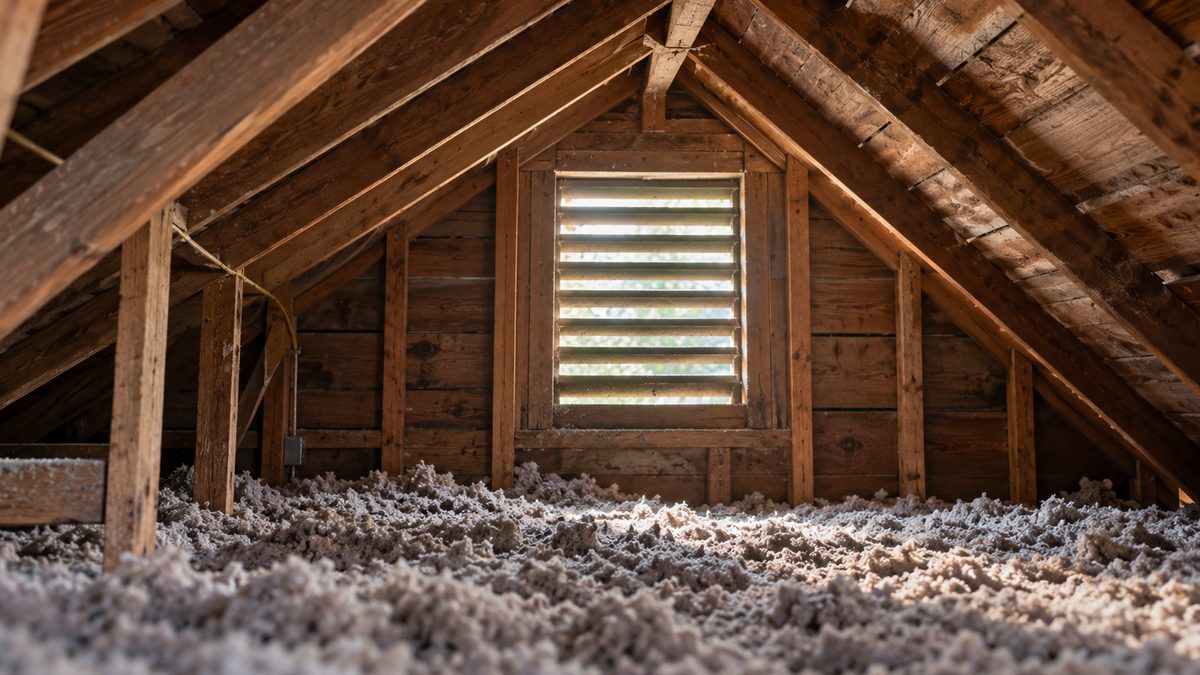
You replaced your roof, the crew added a ridge vent, and somebody told you to go close off your gable vents. Maybe it was the roofer, maybe your neighbor, maybe a guy in a forum. Then somebody else told you not to bother. Now you have two vents staring at each other across your attic and no real idea whether they are helping or fighting.
This is one of the most common attic questions we get in Connecticut, and the honest answer is not "always close them" or "always leave them." It depends on what else is venting your attic, and on a rule most homeowners have never heard of. Here in Climate Zone 5A, where humid summers and freezing winters both drive moisture into your attic, getting this right matters for ice dams, mold, and how long your roof lasts. Here is how to decide.
The short answer depends on what else is venting your attic
Whether you should close your gable vents comes down to one thing: whether you already have working soffit vents feeding a ridge vent. If your attic pulls cool air in low at the soffits, under the eaves, and pushes hot air out high at the ridge, your gable vents are the odd man out. If you have no soffit vents, your gable vents might be the only thing moving air up there, and closing them blindly would be a mistake. Before you touch anything, it helps to understand how attic ventilation actually works so the rest of this makes sense.
Most homes land in one of three situations:
- Ridge vent plus good soffit vents: close the gable vents.
- Gable vents only, no ridge vent, no soffits: keep them open.
- Gable vents plus a ridge vent but no soffits: fix the intake first.
We will get to how you tell which one you are in.
What gable vents actually do (and where they fall short)
Gable vents move air by cross-ventilation, letting a breeze enter one gable end and push attic air out the other.
How gable vents move air
Gable vents work in opposing pairs, one on each end of the attic, so wind can blow straight through. When the wind cooperates, they do a decent job of clearing hot, moist air. The whole thing hinges on that phrase, "when the wind cooperates."
Why wind dependence is a problem in Connecticut
Gable vents depend entirely on wind direction and speed, which makes them unreliable in Connecticut weather. On a still, muggy August afternoon, or during a calm cold snap in January, they barely move air at all. And on exposed shoreline and hilltop homes, I have opened up attics where the gable vents were doing the opposite of their job, pulling wind-driven rain and snow inside, where it melted onto the insulation and soaked it. Wet insulation loses R-value and starts growing mold, which is the exact problem you were trying to avoid.
Worried about condensation and damp sheathing up there? Here's how to prevent attic moisture in a Connecticut home.
The "short-circuit" debate, settled
Adding a ridge vent to a house that already has soffit vents changes what your gable vents are doing, and not for the better. A balanced attic ventilation system wants air to enter low at the soffits and leave high at the ridge, a steady loop driven by heat rising. Open gable vents sit in the middle of that loop and can become intake for the ridge vent instead of the soffits, short-circuiting the flow so the lower attic never really gets swept. That is the "short-circuit" everyone argues about online. It is real, but the fix is simpler than the arguments make it sound.
The 1:150 rule, explained
Connecticut's building code follows a simple ventilation target called the 1:150 rule. It says you need 1 square foot of "net free area," the actual open space air can pass through after screens and louvers, for every 150 square feet of attic floor. Half of that should be intake down low at the soffits, and half exhaust up high at the ridge.
That target drops to 1:300, roughly half the venting, if you have a good vapor retarder and a properly balanced system, under the International Residential Code that Connecticut's building code is based on. Here is the point for you: what matters is balanced intake and exhaust, not how many holes you have. Piling a third type of exhaust, your gable vents, on top of a ridge vent does not add ventilation. It unbalances it. Getting that balance right is where attic ventilation done properly earns its keep. And here is the part the online arguments miss: once your attic floor is air-sealed and insulated properly, the whole venting debate cools off, because far less warm, moist air is leaking up into the attic to begin with.
Curious why sealing the attic floor beats chasing vents? Here's why air sealing is the secret ingredient to a comfortable, efficient home.
So should you close them? Here's how to decide
Whether to close your gable vents comes down to three common situations. Find yours:
- You have a ridge vent and working soffit vents. Close the gable vents. They unbalance a system that already works, and they can let weather in. Board them over from the inside.
- You have gable vents only, with no ridge vent and no soffits. Leave them open. They are the only thing venting your attic right now. If your eaves allow it, adding soffit vents is a better long-term fix.
- You have gable vents and a ridge vent but no soffit vents. Do not just close things off. Add soffit intake first so the ridge vent has somewhere to pull air from, then close the gable vents.
Where is the line between DIY and calling a pro? Boarding off a gable vent from inside the attic is a genuine weekend job: a piece of rigid foam or plywood and some sealant, and the exterior louver stays on for looks. Figuring out whether your intake and exhaust are actually balanced, cutting in new soffit vents, or air-sealing the attic floor is where it is worth bringing in a contractor.
How to test it yourself before you commit
You can test whether your gable vents are helping or hurting before you commit to closing them. The simplest check is the cardboard test:
- On a hot day, put a thermometer in the middle of your attic and note the temperature.
- Cover the gable vents with cardboard or a trash bag from the inside.
- Wait a few days, then check the attic temperature again and notice how the upstairs rooms feel.
- Cooler or about the same? Leave them closed. Noticeably hotter or stuffier? Open them back up.
Two more checks worth doing while you are up there:
- Check your soffits. Insulation that has crept over the eaves and plugged the soffit vents is the single most common reason an attic "won't vent." Attic baffles keep insulation off the soffits so air can actually get in.
- Do a winter frost check. On a cold morning, look at the underside of the roof near the center of the attic. Frost or damp sheathing there means air is not reaching the middle, no matter how many vents you have.
Not sure your attic has enough insulation to begin with? See how much insulation you need in Connecticut, with R-values explained.
What to do next
Start with a tape measure and a flashlight this weekend, before you call anyone. Measure your attic insulation depth; less than 6 inches usually means you are under R-19, well below Connecticut's R-49 to R-60 target. Check whether your soffits are clear, and run the cardboard test. If you are chasing moisture, ice dams, or a room that never gets comfortable, the real fix is usually not the gable vents at all. It is air sealing the attic floor and getting your insulation up to depth, with balanced ventilation on top.
For a professional read on all of it at once, schedule an Energize CT Home Energy Solutions audit. The copay is $40 as of 2026, and it is the required first step to unlock Connecticut's insulation rebates. An auditor will tell you whether your attic is actually venting, sealing, and insulating the way it should, instead of leaving you to guess from a forum thread.
Seeing icicles along your eaves every winter? Here's why ice dams form on your roof and what you can do about it.
Conclusion
Closing your gable vents is cheap and easy, but it is only the right move when you already have a balanced soffit-to-ridge system that they are interfering with. If you do, board them off. If you do not, adding soffit intake matters far more than closing anything, and if you have no ridge vent at all, your gable vents are still earning their keep.
The bigger truth is that ventilation is only one leg of the stool. Seal and insulate your attic floor first, aim for that 1:150 balance, and the gable-vent question mostly answers itself.
👉 Start with an Energize CT energy audit — the $40 Home Energy Solutions audit is the fastest way to find out whether your attic is really venting, sealing, and insulating the way a Connecticut winter demands.
Frequent Questions About Gable Vents
Do I need soffit vents if I have gable vents?
Soffit vents give a Connecticut attic reliable low intake that gable vents cannot provide on their own. Gable vents depend on wind direction, while soffit vents feed a steady flow of air from the eaves up to the ridge. A soffit-to-ridge system controls attic heat and moisture more consistently than gable vents alone. Add soffit intake whenever your eave depth allows it to protect your insulation and roof deck.
Will closing my gable vents cause attic moisture problems?
Closing gable vents causes attic moisture problems only when the attic loses its intake and exhaust in the process. An attic with balanced soffit and ridge venting stays dry after the gable vents are closed. An attic with no other venting traps humid air once the gable vents are sealed, which leads to condensation and mold. Confirm you have working soffit and ridge vents before closing gable vents, or add intake first to keep the attic dry.
Should I close my gable vents before adding attic insulation?
Close gable vents before adding attic insulation only when a soffit-to-ridge system will handle the airflow afterward. Blown-in insulation can bury gable-level airflow anyway, so intake at the soffits matters more than the gable vents. Install baffles at the eaves to keep insulation off the soffit vents, confirm your ridge vent has intake, then close the gable vents. Plan the ventilation and the insulation together, aiming for R-49 to R-60, so nothing gets sealed in wrong.
Do gable attic fans work better than passive gable vents?
Gable attic fans move more air than passive gable vents but often pull conditioned air out of the living space below. A powered gable fan can depressurize the attic and draw heated or cooled air up through ceiling gaps, which raises energy bills. A balanced passive system of soffit and ridge vents ventilates the attic reliably and costs nothing to run. Seal the attic floor and balance passive venting before you add any powered fan.
Does closing my gable vents void my roof warranty?
Closing gable vents does not void a roof warranty as long as the attic keeps adequate, balanced ventilation. Shingle manufacturers require proper ventilation to honor their warranty, so removing exhaust without replacing it elsewhere can jeopardize coverage. Keep a working soffit-to-ridge system in place when you close gable vents. Confirm the ventilation terms with your roofer and keep documentation before sealing any vents.
Related Articles
Let's Work Together
Ready to transform your home into an energy-efficient haven? Schedule your free energy assessment today and experience the Nealon difference for yourself.