
Case Study: Insulating a Shoreline Home on Stilts in Connecticut
We’ve insulated a lot of homes along the Connecticut shoreline, and they all have one thing in common: they play by different rules than inland houses.
This Old Saybrook project is a perfect example.
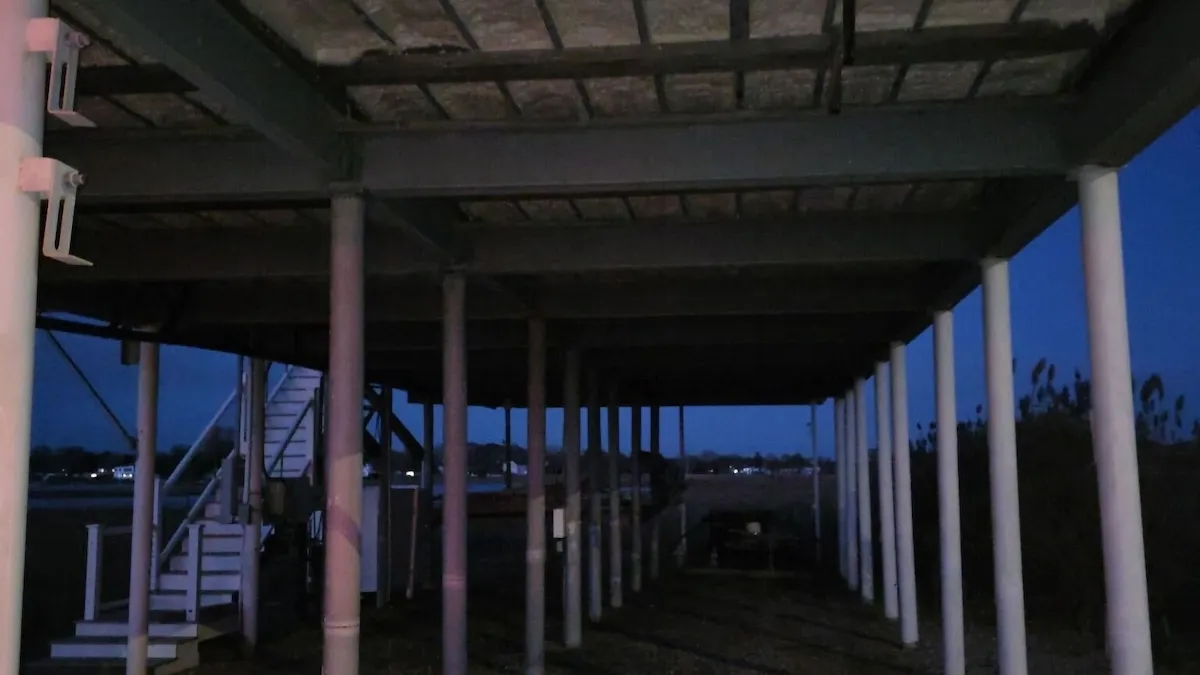
The home sits on stilts directly over the water. No basement. No crawl space. Just open air underneath—fully exposed to wind, moisture, salt air, and big seasonal temperature swings. On a calm summer day, it’s postcard material. In the winter, that same exposure can turn into a comfort and energy nightmare if the house isn’t insulated and air-sealed the right way.
This wasn’t a job where you chase a single R-value and call it a day. It required a bottom-to-top strategy designed specifically for shoreline home insulation.
Energy Code Compliance: Performance Path vs. Prescriptive Path
The Homeowner’s Problem
Because the underside of the house was completely exposed, cold coastal winds were blowing straight through the floor system. This kind of “wind washing” doesn’t just make floors cold—it pressurizes the house from below and forces drafts up into the living space, constantly stripping heat out of the home.
Moisture was the other major concern.
Being built directly over the water means:
- Constant humidity
- Salt-laden air
- Seasonal condensation risks
If you use the wrong materials, or trap moisture in the wrong place, you’re setting the house up for rot, mold, and long-term structural damage. Along the shoreline, durability matters just as much as insulation value.
Inside the house, the walls and attic weren’t helping either. Insulation levels were low, air leakage was high, and the building envelope wasn’t working as a system. Comfort suffered, energy bills stayed high, and the home simply wasn’t built to stand up to real Connecticut coastal conditions.
The homeowners wanted real improvement—but without tearing the house apart.
What We Found
Once we got into the details, the weak points were exactly where you’d expect them to be in an elevated coastal home.
Under the house
- No air barrier under the floor
- Wind blowing freely through the joist bays
- Heat being stripped out of the floor all winter long
In the walls
- Older, underperforming insulation
- Significant air movement driven by shoreline wind pressure
- Drafts and uneven temperatures throughout the home
In the attic
- Air leakage at the ceiling plane
- Insufficient insulation depth
- Ventilation that wasn’t managing moisture effectively
The core issue wasn’t one single failure, it was a disconnected building envelope. The underside of the floor, the walls, and the attic weren’t working together. In a shoreline home, even one weak link is enough for wind and moisture to take control.
The Solution: Control Air First, Then Protect It
For coastal homes like this, order matters. You start at the bottom, lock it down, and build upward. Air control comes first. Everything else depends on it.
Why Air Sealing Is the Secret Ingredient to a Comfortable, Efficient Home
Sealing and insulating the underside of the floor
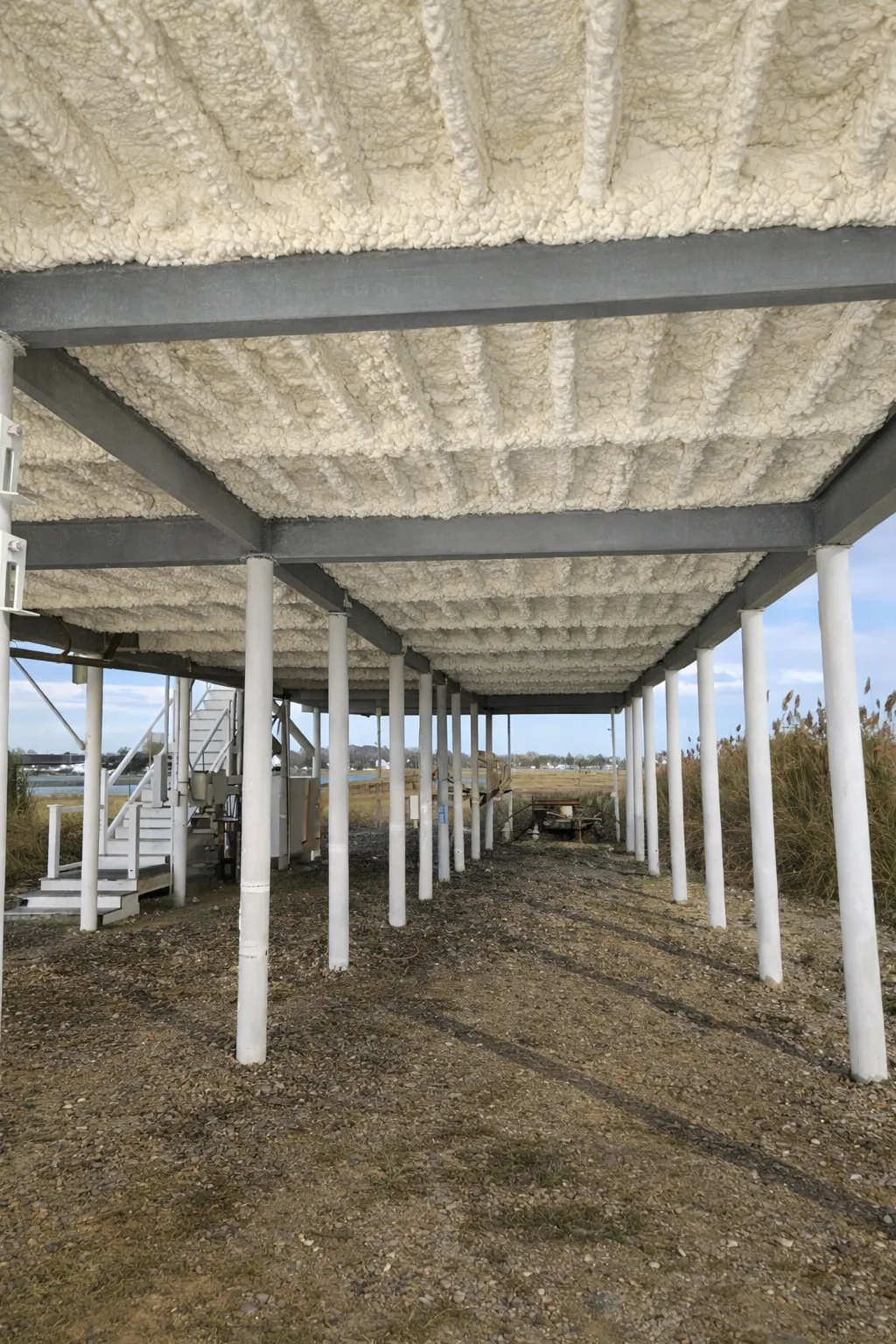
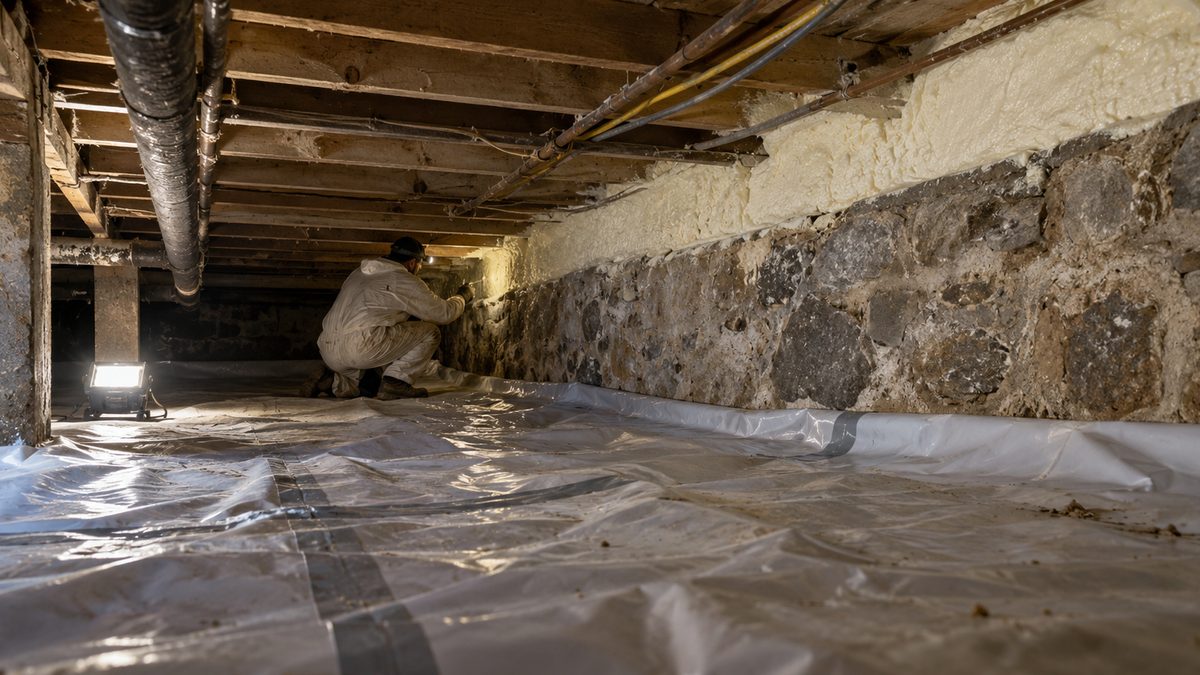
We spray foamed the underside of the floor between the joists. The goal wasn’t just higher R-value, it was creating a continuous air and thermal barrier so wind couldn’t get into the floor system in the first place.
Spray foam allowed us to seal:
- Cracks
- Seams
- Penetrations
That air seal is critical in elevated shoreline homes. Without it, winter winds off the water will always find a way in.
Protecting the insulation from coastal conditions
Foam alone isn’t enough when it’s exposed to open shoreline conditions. Wind-driven moisture, salt air, pests, and UV exposure all take their toll over time.
To protect the insulation, we installed plywood beneath the foam. This added a durable shield under the house, protecting both the insulation and the structure from the harsh environment below. In coastal Connecticut, that extra layer of protection matters.
Dense-packing the walls—without gutting the house
The homeowners didn’t want to disturb finished interiors, so we dense-packed the wall cavities with cellulose from the exterior.
This allowed us to:
- Fully fill the wall cavities
- Reduce air movement inside the walls
- Add meaningful insulation value
Dense-pack cellulose works especially well in shoreline homes, where wind pressure constantly pushes air through any available path.
What is the best insulation for walls?
Attic air sealing, insulation, and ventilation
At the top of the house, we focused on air sealing and moisture control first—then insulation. We:
- Sealed the ceiling plane
- Installed a proper vapor barrier
- Added roughly 14 inches of cellulose insulation
Just as important, we installed attic baffles to ensure clear airflow from the soffits up through the attic and out at the ridge. That controlled ventilation allows moisture to dry out while blocking uncontrolled air leakage.
A Continuous Building Envelope: Bottom to Top
When you step back and look at the project as a whole, everything ties together.
The underside of the floor, the walls, and the attic were all addressed as part of one connected system. That’s how shoreline home insulation actually works. If even one section is left exposed, wind and moisture will find it.
By tightening the home from the bottom up, we eliminated weak points and turned this house into something far more resilient—a shoreline home built to handle real coastal conditions, not just calm days.
The Result
The improvement was immediate.
- Floors were noticeably warmer
- Drafts disappeared
- Temperatures stayed more even throughout the house
Beyond comfort, the home is now far better protected against moisture, salt air, and long-term wear from its shoreline location. The building envelope works as a system—blocking uncontrolled air while allowing moisture to dry where it needs to.
For the homeowners, it means a house that finally feels comfortable and solid year-round. For us, it’s a textbook example of what Connecticut shoreline insulation should look like when it’s done right.
Not shortcuts. Not one-off upgrades. Just a clear understanding of what these homes are up against—and solutions built to last.
👉 If you own a shoreline or coastal home in Connecticut, contact Nealon Insulation.
Related Articles
Let's Work Together
Ready to transform your home into an energy-efficient haven? Schedule your free energy assessment today and experience the Nealon difference for yourself.