
The 3 Repairs Rule: What to Fix Before You Replace Your A/C

Every summer, some Connecticut homeowners get a quote for a new A/C system somewhere between $8,000 and $15,000. Before you sign anything, there's a question worth asking: is the equipment actually the problem?
Most A/C systems that struggle are fighting a losing battle with the house around them — leaky attic bypasses, missing insulation, gaps that let August humidity walk right in. A new unit installed in that same house will hit the same wall. The 3 Repairs Rule is simple: fix air sealing, then insulation, then look at your HVAC. Do them in order and you'll know exactly what your equipment actually needs to do.
Fix the house first. Then look at the equipment.
Repair 1: Air Seal First
Air sealing is the first repair because it changes what your A/C is actually fighting.
Every gap, crack, and penetration in your building envelope is an entry point for hot, humid Connecticut summer air. Around recessed lights, plumbing chases, attic hatches, electrical outlets on exterior walls, rim joists in the basement — outside air is finding its way in constantly, and your A/C is running to compensate. It's not a comfort problem. It's a load problem. The system is doing extra work every hour of every hot day just to offset the infiltration.
Where Air Is Escaping in Your Home
The biggest offenders are rarely the ones homeowners think to check. Windows and doors get all the attention, but they're usually not where the volume is. The real leakage happens at:
- Attic bypasses — gaps where interior walls, plumbing stacks, and wiring runs pass through the top plate into the attic
- Rim joists — the framing at the top of your foundation wall, often completely open to outside air
- Recessed light canisters — older can lights are essentially holes in your ceiling connected directly to the attic
- Plumbing and electrical penetrations — pipes and wires pass through framing with gaps that are rarely sealed at installation
- Attic hatches and pull-down stairs — almost always uninsulated and unsealed
In an older Connecticut home, the total area of all those gaps combined can add up to the equivalent of leaving a window open all summer.
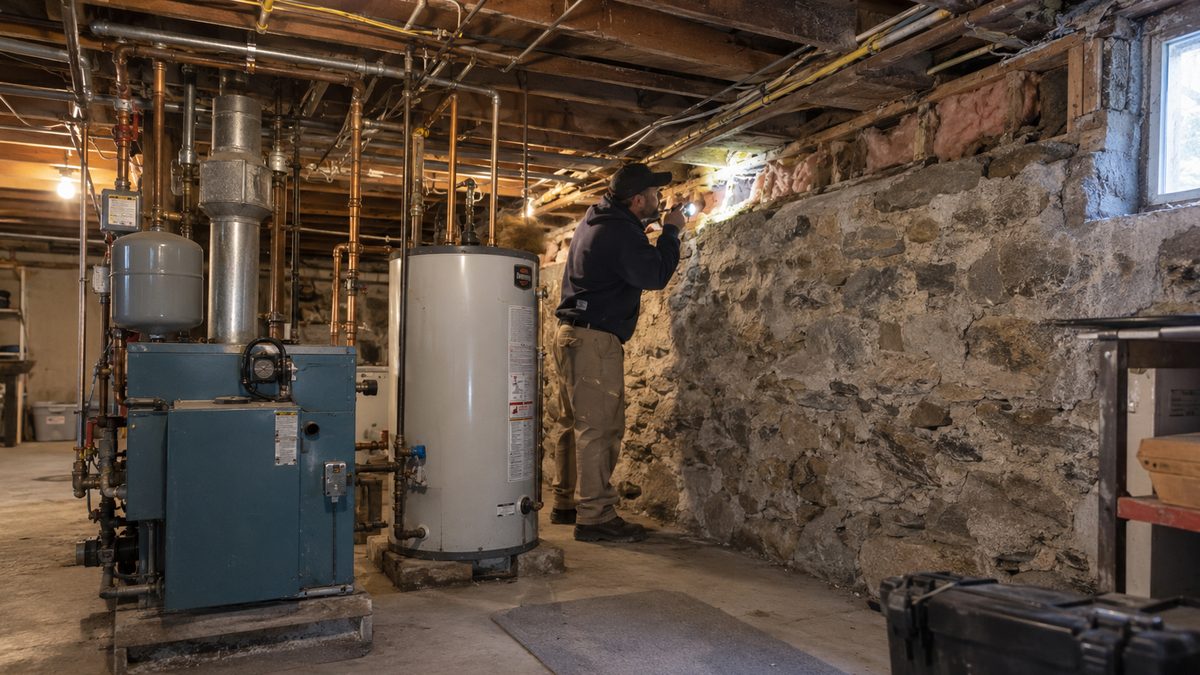
How air moves through an older Connecticut home — and what it's costing you on every summer cooling bill.
What Air Sealing Does for Your A/C
Air sealing reduces the volume of hot, humid air your system has to condition. That's it — but the effect on runtime is significant. Less infiltration means the A/C reaches setpoint faster, cycles off sooner, and runs fewer total hours per day. In humid climates like Connecticut's, it also helps the system manage moisture more effectively, because it's not constantly trying to dehumidify a fresh stream of 85°F outdoor air.
The cost to air seal a house in CT typically runs $1,500 to $4,000 depending on scope — a fraction of an HVAC replacement. Energize CT rebates can offset a meaningful portion of that through the Home Energy Solutions program, which covers both air sealing and insulation work done together.
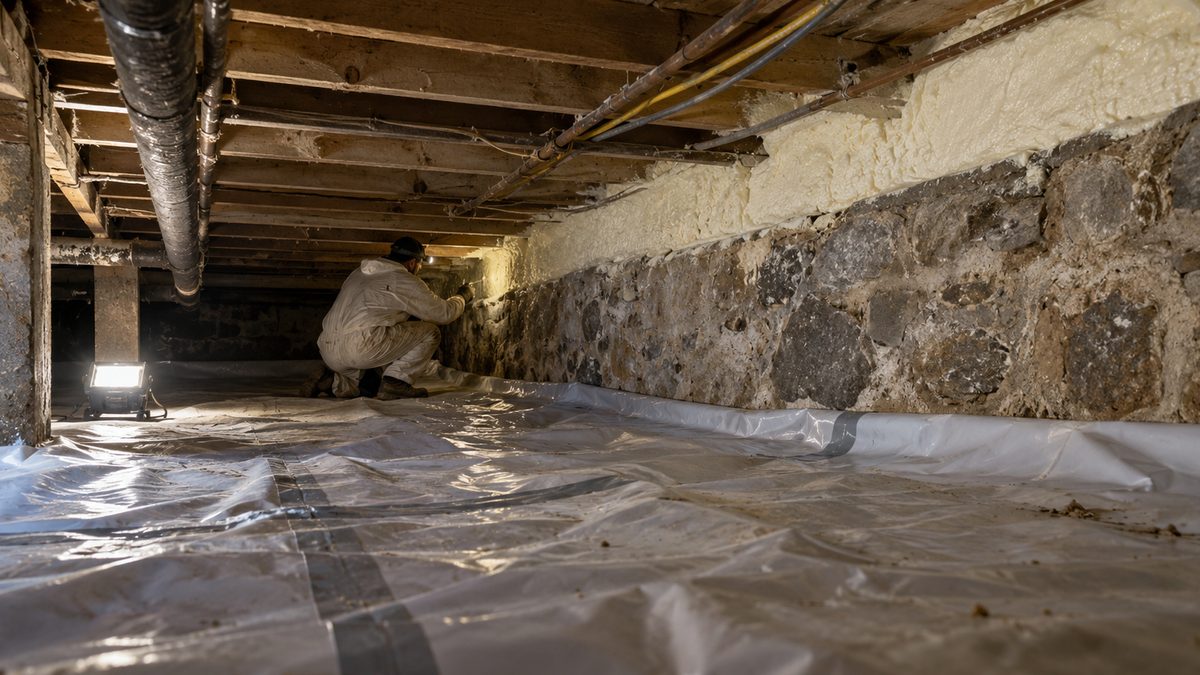
What air sealing is important for — and why most homeowners underestimate it.
Repair 2: Add Insulation
Air sealing stops the infiltration. Insulation handles what gets through everything else — radiant heat, conducted heat, and the slow thermal bleed that happens when your building envelope can't hold a temperature.
In summer, insulation is doing the same job it does in winter, just in reverse. Instead of keeping heat inside, it's keeping heat outside. An attic with R-11 of settled fiberglass batts — which is what you'll find in a lot of Connecticut homes built before 1980 — offers almost no resistance to the heat load radiating down from a roof that's been baking in the sun all day. That heat moves into the living space, your A/C kicks on, and it runs and runs trying to catch up with something the building itself is generating.
Where Insulation Gaps Hurt Your Cooling the Most
The attic is the highest priority, and it's not close. Roof surfaces in a Connecticut summer regularly hit 150°F or higher on a clear day. Without adequate insulation between that surface and your living space, that heat load transfers directly into the rooms below. Connecticut's standard guidance puts attic R-value targets at R-49 to R-60 — most older homes are sitting at R-11 to R-19 at best, and often less after decades of settling.
After the attic, the next biggest gaps are typically:
- Rim joists — already mentioned for air sealing, but they need insulation too; spray foam handles both in one application
- Basement ceiling or walls — an uninsulated basement ceiling lets cold floors drain heat from the living space above and adds to the overall load
- Knee walls in cape-style homes — a common Connecticut housing type where the thermal boundary is often completely undefined
What Happens to Your A/C When the Attic Isn't Insulated
An under-insulated attic doesn't just make the upstairs uncomfortable. It makes your A/C run longer cycles, struggle to reach setpoint on peak days, and operate at a higher average load throughout the entire cooling season. Over time, that extra runtime translates directly to wear — compressor hours, refrigerant stress, fan motor fatigue. The system ages faster because it's working harder than it should have to.
Bring the attic up to R-49 or better with the help of attic insulation contractors, and the cooling load your equipment faces drops substantially. In some cases, homeowners who've done both air sealing and attic insulation find the existing system — the one they were ready to replace — handles summer comfortably without issue. That's not always the result, but it happens often enough that it's worth finding out before you spend $10,000 on new equipment.
Energize CT offers rebates of up to $2.00 per square foot for insulation work, up to a maximum of $10,000, when the project is completed by a certified contractor through the Home Energy Solutions program. For most Connecticut attics, that covers a significant portion of the job.
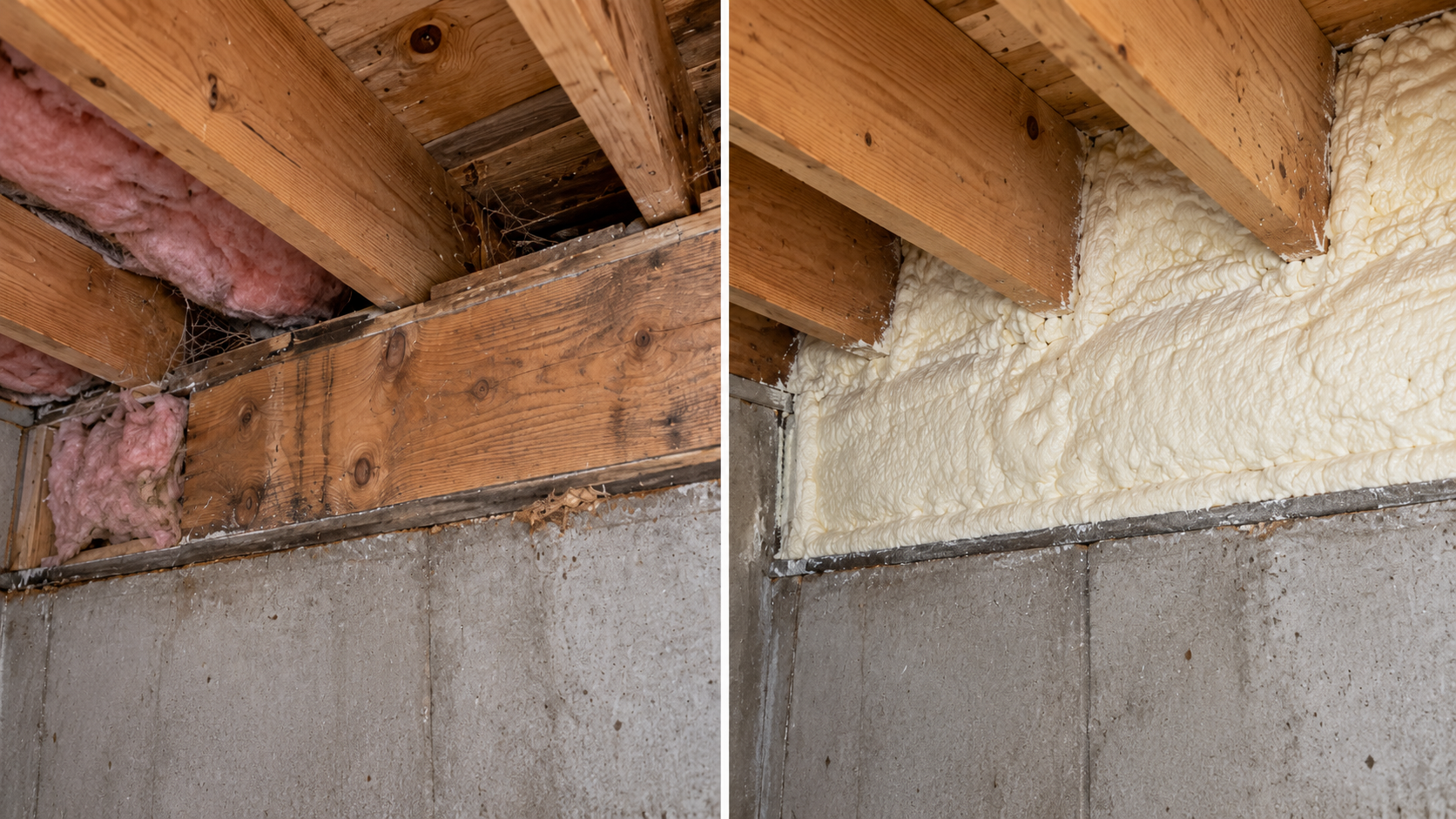
How Connecticut insulation rebates are calculated — and what the Energize CT program covers.
Repair 3: Then Look at Your HVAC
Once the house is tighter and better insulated, you have a much clearer picture of what your cooling system actually needs to do.
This is the point where the HVAC conversation becomes honest. Before air sealing and insulation, any load calculation an HVAC contractor runs is based on a house that's working against itself. The numbers are inflated, the recommended equipment is sized for worst-case conditions that may no longer apply, and you end up buying more capacity than you need. After the envelope work, the load is lower, the peaks are shorter, and the equipment decision looks completely different.
As we've written before, there are good reasons to understand why you should insulate before buying a new HVAC unit — the sequencing affects both cost and performance.
Signs the System Itself Needs Attention
Not every A/C that struggles needs to be replaced. Some systems just need service — a refrigerant check, a coil cleaning, a capacitor swap. Others have a legitimate end-of-life case. The signs that point toward replacement rather than repair include:
- The system is over 15 years old and has a history of recurring repairs
- Refrigerant type is R-22 (phased out — recharging is expensive and supply is limited)
- The compressor has failed or is failing
- The system runs continuously on moderate-temperature days even after envelope improvements
- Efficiency ratings are well below current SEER2 standards and energy costs reflect it
If none of those apply, the system may have years of useful life left — it just needed the house around it to stop making its job impossible.
Right-Sizing: Why Bigger Isn't Always Better
One of the most common mistakes in HVAC replacement is oversizing. A contractor who sizes equipment based on a leaky, under-insulated house will recommend a unit with more capacity than the improved house actually needs. Oversized A/C units cool the air temperature quickly but don't run long enough to pull humidity out effectively — which in Connecticut's summers is a real comfort problem. You end up with a house that feels clammy even when the thermostat reads 72°F.
When you do the envelope work first, the load calculation that follows produces a smaller, more accurate equipment spec. That often means a less expensive unit, lower operating costs, and better dehumidification because the system runs longer, steadier cycles. Right-sizing isn't a compromise — it's the correct answer.
The Cost Argument for Doing It in Order
The math on sequencing these repairs correctly is straightforward, and it favors the envelope work every time.
A full A/C replacement in Connecticut — equipment, labor, disposal — runs somewhere between $8,000 and $15,000 depending on system type, tonnage, and whether ductwork needs attention. That's the number HVAC companies are quoting right now. Air sealing a typical Connecticut home runs $1,500 to $4,000. Attic insulation brought up to R-49 in an average-sized home runs $2,000 to $5,000 before rebates. Do both, apply the Energize CT rebate, and you're looking at a total out-of-pocket somewhere in the $2,000 to $6,000 range for work that permanently reduces the load your cooling system carries every single summer going forward.
If that work reveals the existing system can handle the improved house — which happens more often than most homeowners expect — you've just avoided a five-figure replacement entirely. If it reveals the system genuinely does need replacement, you now have a smaller, more accurate load calculation that may reduce the equipment cost, and a house that will get full value out of whatever you install.
There's also a rebate angle worth noting. Energize CT's Home Energy Solutions program covers air sealing and insulation together, with rebates up to $2.00 per square foot on insulation and a maximum of $10,000 per project. The program requires a home energy audit to qualify — a $40 copay gets you a certified energy auditor who will identify exactly where your house is losing the battle. That audit often becomes the roadmap for the entire project. You can learn more about Connecticut insulation rebates and how to apply before you schedule any work.
The sequence isn't just logical. It's the version of this problem where you spend the least and get the most.
How to Know Where to Start
The honest answer is that most homeowners don't need to figure this out on their own — they need the right first call.
That first call should not be to an HVAC company. HVAC contractors are good at what they do, but their job is equipment. They're not going to walk your attic, probe your rim joists, or tell you that the reason your second floor won't cool down is a 40-year-old attic hatch with zero insulation and a gap around the frame you could fit your hand through. That's not a knock on them — it's just not their scope.
What a Connecticut home energy audit covers — and how to get one through Energize CT.
Start with an Energy Audit
A home energy audit through Energize CT's Home Energy Solutions program is the right starting point. For a $40 copay, a certified energy auditor will do a blower door test — which depressurizes the house and measures exactly how much air is leaking and from where — plus a full thermal assessment of your insulation levels. You walk away with a specific list of what needs to be addressed, ranked by impact.
That audit report is your roadmap. It tells you where to seal, where to insulate, and how much improvement to expect. It also qualifies you for the rebate program, so the $40 you spend on the audit unlocks access to up to $10,000 in project rebates.
What to Look For Before the Audit
If you want a preliminary read before scheduling an audit, a few signs point clearly toward envelope problems rather than equipment failure:
- The upstairs is consistently warmer than the downstairs, even with the A/C running
- The system runs almost continuously on hot days without reaching setpoint
- Humidity feels high indoors even when the thermostat is satisfied
- Energy bills have crept up year over year without a clear explanation
- The attic has less than 10 inches of insulation, or insulation that's visibly settled and compressed
Any one of those is reason enough to look at the building before looking at the equipment.
Conclusion
The 3 Repairs Rule isn't about delaying a decision — it's about making the right one. Air sealing stops the infiltration load. Insulation cuts the radiant and conducted heat gain. Then, and only then, do you have a clear picture of what your cooling equipment actually needs to handle. That sequence protects you from replacing a $10,000 system when a $3,000 envelope fix was the real answer — and it protects you from undersizing or oversizing whatever you do eventually install.
Connecticut homes, especially older ones, almost always have meaningful air sealing and insulation work available to them. That work pays back every summer, not just the one you do it in. If your A/C is struggling this season, start with the house. The equipment conversation will still be there when you're ready for it — and it'll be a better one.
Frequent Questions About Fixing Your Home Before Replacing Your A/C
Will air sealing alone make a noticeable difference in how my A/C performs?
Air sealing reduces the volume of hot, humid outdoor air your A/C has to condition on every cycle. In Connecticut homes with significant infiltration — which describes most pre-1980 construction — that reduction in load translates to shorter runtimes, better dehumidification, and less strain on the compressor. The difference is most noticeable on high-humidity days when the system was previously running continuously without reaching setpoint.
How do I know if my home has enough insulation without hiring someone?
The quickest check is your attic. Pull back the hatch and measure what's there — if you can see the tops of the floor joists, you're under-insulated. Connecticut's standard guidance targets R-49 to R-60, which requires roughly 15 to 20 inches of blown-in insulation. Anything under 10 inches is almost certainly costing you on cooling bills and making your A/C work harder than it needs to.
My A/C is 12 years old — is it worth doing envelope work if I'll probably replace it soon anyway?
Envelope work pays back regardless of what equipment is running. Air sealing and insulation reduce the load every cooling season, so the investment isn't tied to the lifespan of a specific system. More practically, the work you do now will inform the right equipment size when you do replace — meaning you may need less capacity than you think, which reduces the replacement cost.
Can I do the air sealing and insulation myself, or does it need to be a contractor?
Some air sealing is DIY-accessible — caulking around window frames, weatherstripping doors, adding foam gaskets behind outlet covers. The high-impact work is not. Attic bypasses, rim joists, and plumbing chases require either spray foam or specific sealing techniques that need proper equipment and safety protocols. Doing that work yourself also forfeits eligibility for Energize CT rebates, which require a certified contractor and a qualifying Home Energy Solutions audit.
Does Energize CT cover both air sealing and insulation, or just one?
Energize CT's Home Energy Solutions program covers both air sealing and insulation when completed together by a certified contractor. The rebate for insulation runs up to $2.00 per square foot with a maximum of $10,000 per project. Air sealing is included as part of the program scope. The entry point is a home energy audit with a $40 homeowner copay, which also qualifies you for the rebate.
Related Articles
Let's Work Together
Ready to transform your home into an energy-efficient haven? Schedule your free energy assessment today and experience the Nealon difference for yourself.