
How Are Homes Heated In Connecticut?

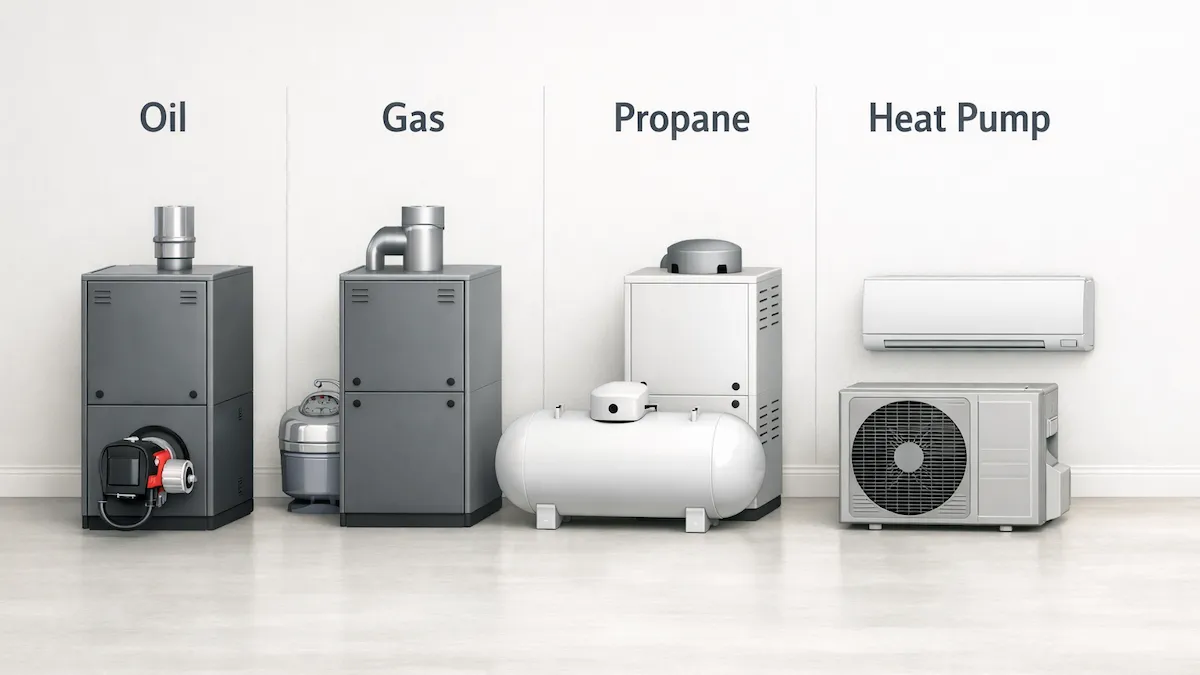
Heating a home in Connecticut is not a one-size-fits-all situation. The state sits squarely in a cold-climate zone, with long winters, frequent temperature swings, and a heating season that can stretch from October into April. As a result, the way homes are heated here has been shaped by climate, housing age, fuel availability, and decades of regional building practices.
IECC defines climate zones. Connecticut is 5A.
Unlike parts of the country where one heating system dominates, Connecticut homes rely on a mix of oil, natural gas, propane, electricity, and increasingly, heat pumps. Older homes often use systems installed generations ago, while newer construction and renovated homes reflect changing fuel markets, efficiency standards, and utility infrastructure.
Understanding how homes are heated in Connecticut is helpful whether you are buying a house, upgrading equipment, comparing energy costs, or trying to make your home more comfortable. Before you can evaluate efficiency or improvements, it helps to know what systems are most common, why they exist, and how they perform in a New England climate.
Key Takeaways for Connecticut Homeowners
- Connecticut homes use a wide mix of heating systems
- Heating choices are shaped by climate, age, and infrastructure
- No system performs well without good insulation
- Comfort and efficiency depend on the house as much as the equipment
Understanding how homes are heated in Connecticut helps homeowners make smarter decisions about comfort and long-term energy use.
Compare oil vs gas vs electric heating.
The Most Common Heating Systems Used in Connecticut Homes
Connecticut does not rely on a single dominant heating system. Instead, most homes fall into a handful of common categories shaped by when the house was built, where it is located, and what fuel sources are available nearby.
Most Connecticut homes are heated using:
- Oil-fired boilers or furnaces
- Natural gas furnaces or boilers
- Propane heating systems
- Electric heat, including baseboards
- Heat pumps, often paired with backup heat
In addition to fuel type, homes are typically heated using either boiler-based systems or forced hot air systems. Boilers distribute heat through radiators or baseboards, while forced hot air systems use ductwork to move warm air throughout the home.
The sections below break down these systems in more detail and explain why they remain common across the state.
Oil Heat: Why It’s Still Common in Connecticut
Oil heat has deep roots in Connecticut and remains one of the most common heating systems in the state. Many homes built before widespread natural gas expansion were designed specifically around oil-fired boilers or furnaces, and those systems often remain in place today.
Oil heat became popular because it delivered strong, reliable heat during long New England winters, even in areas without utility infrastructure. Rural and suburban parts of Connecticut, in particular, relied on oil because fuel could be delivered anywhere without pipelines.
Today, oil heat is most often found in older homes, especially those using:
- Boilers with radiators or baseboard heat
- Older forced hot air systems
- Homes outside natural gas service areas
While fuel prices can fluctuate, modern oil equipment is more efficient than earlier generations. Many homeowners continue using oil simply because converting to another fuel requires significant changes to infrastructure and equipment.
Natural Gas Heating in Connecticut Homes
Natural gas heating is common in areas of Connecticut where utility infrastructure is available, particularly in cities, denser suburbs, and newer developments. Homes with access to gas lines often use gas-fired furnaces or boilers.
Natural gas systems are popular because they:
- Do not require on-site fuel storage
- Offer relatively stable pricing
- Work well in cold climates
- Support high-efficiency equipment
Gas heating systems appear in both forced hot air and boiler configurations. Forced hot air is more common in newer homes, while gas boilers are often installed when older oil systems are converted but the original heat distribution is retained.
Availability remains the biggest limitation. Not all Connecticut neighborhoods have gas service, and extending lines can be costly, making natural gas common but far from universal.
Propane Heating in Connecticut Homes
Propane heating is most often found in Connecticut homes that do not have access to natural gas but want an alternative to oil. Like oil, propane is delivered and stored on-site, making it suitable for rural areas, coastal homes, and neighborhoods beyond gas service lines.
Propane systems commonly include:
- Furnaces
- Boilers
- Combination systems for heat and hot water
Propane is frequently chosen during renovations or system replacements because it supports modern, efficient equipment and burns cleanly. It is also common in newer construction outside gas-served areas.
As with any delivered fuel, propane pricing can fluctuate, and tank placement must be considered. In Connecticut, propane fills an important gap between oil and natural gas.
Electric Heat and Baseboard Systems
Electric heat plays a smaller role in Connecticut but is still present in many homes, particularly apartments, smaller houses, and additions. Electric baseboard heat is the most common type.
Electric systems are simple and:
- Require no ductwork
- Allow room-by-room temperature control
- Are relatively inexpensive to install
The drawback is operating cost. In a cold climate like Connecticut, electric resistance heat can become expensive during long winters. As a result, electric heat is often used as a supplemental or secondary heat source rather than whole-home heating.
Why are Connecticut electricity bills so high?
Heat Pumps in Connecticut: Growing but Climate-Dependent
Heat pumps are becoming more common in Connecticut as technology improves and efficiency standards rise. Instead of generating heat, heat pumps move heat from outside to inside using electricity.
Cold-climate heat pumps can perform well during much of the heating season and often provide both heating and cooling. They are commonly installed in:
- Newer homes
- Major renovations
- Energy-efficiency upgrades
However, during the coldest winter days, many heat pumps require a backup heating source. In Connecticut, heat pumps tend to perform best in homes with strong insulation and air sealing.
Boilers vs Forced Hot Air: How Heat Is Delivered
Heating systems in Connecticut are defined not just by fuel, but by how heat is distributed throughout the home.
Boiler systems:
- Heat water or steam
- Use radiators, baseboards, or radiant floors
- Are common in older homes
- Provide steady, even heat
Forced hot air systems:
- Heat and circulate air through ducts
- Are common in newer homes
- Can support air conditioning and filtration
Neither system is inherently better. Comfort and efficiency depend on system design, maintenance, and the condition of the home.
How Home Age and Location Affect Heating Choices
Heating systems in Connecticut often reflect a home’s history more than homeowner preference.
- Older homes are more likely to use oil heat and boilers
- Newer homes often use gas, propane, or heat pumps
- Rural and coastal homes rely more on delivered fuels
Renovations and additions can result in homes with multiple heating systems. In Connecticut, heating choices are closely tied to when and where a home was built.
How to insulate a historic home.
Which Heating System Is Most Efficient for Connecticut’s Climate?
There is no single most efficient heating system for every Connecticut home. Efficiency depends on:
- Fuel type
- Outdoor temperatures
- System design
- How well the home retains heat
Natural gas and propane systems perform well in cold climates. Oil systems can still be efficient when properly maintained. Heat pumps are highly efficient during mild conditions but often require backup heat in winter. Electric resistance heat is typically the least efficient option for whole-home heating.
Across all systems, insulation and air sealing consistently have the greatest impact on performance.
Why Insulation and Air Sealing Matter More Than the Heating System
No heating system can perform well in a leaky or poorly insulated home. In many Connecticut houses, especially historic homes, heat loss through the attic, walls, and air leaks is the real problem.
Common issues include:
- Insufficient attic insulation
- Air leakage around penetrations and framing
- Poorly insulated walls
Addressing insulation and air sealing reduces heat loss, improves comfort, and allows any heating system to operate more efficiently.
Should I insulate or air seal first?
Ready to Improve Comfort in Your Connecticut Home?
Understanding how homes are heated is a starting point. Real improvements come from addressing how well your home holds heat.
👉 If you want to improve comfort, efficiency, and long-term performance, start with a professional evaluation of your insulation and air sealing. Contact Nealon Insulation
FAQ's about Heating in Connecticut
How do I know if my current heating system is oversized or undersized for my home?
An oversized heating system short-cycles, turning on and off frequently, causing uneven temperatures, higher wear, and wasted energy. An undersized system runs continuously and still fails to maintain comfort. Determine proper sizing through a professional heat load calculation that evaluates square footage, insulation, air leakage, layout, and window performance.
Should I upgrade my heating system before or after improving insulation?
Improve insulation and air sealing before upgrading a heating system. Reducing heat loss lowers heating demand, improves comfort, and prevents oversizing new equipment. In most Connecticut homes, this sequence allows the existing system to last longer and enables installation of a smaller, more efficient heating system later.
Is it worth converting my heating system if my home still feels drafty or cold?
Converting a heating system is not worthwhile if a home feels drafty or cold. Heat loss from air leaks, poor insulation, and cold exterior walls causes comfort problems. Fix the building envelope first to ensure any system conversion delivers real comfort improvements and expected energy savings.
How can I tell if high heating bills are caused by my system or by poor insulation?
High heating bills usually indicate poor insulation if heat escapes quickly, rooms near exterior walls feel cold, or fuel use stays high despite normal system operation. Mechanical problems show up as inconsistent performance or failure to reach set temperatures. A professional assessment identifies whether energy loss comes from the home or the equipment.
What should I evaluate before replacing or upgrading my heating system?
Evaluate home performance before replacing a heating system. Review insulation levels, air leakage, attic conditions, duct or pipe layout, and moisture control. Addressing these factors first prevents overspending on equipment and ensures any upgrade delivers expected comfort, efficiency, and reliability, often allowing for a smaller, lower-cost system.
Related Articles


Let's Work Together
Ready to transform your home into an energy-efficient haven? Schedule your free energy assessment today and experience the Nealon difference for yourself.