
Connecticut Housing Costs in 2026: What the New State Report Means for Homeowners

Connecticut housing costs have been rising for years, but the newly released 2025 State of Housing report makes one thing clear: this isn’t a short-term spike. It’s a structural problem and it affects homeowners just as much as renters.
While most conversations focus on home prices and rent, those numbers only tell part of the story. The real financial pressure shows up month after month, in the ongoing cost of living inside a Connecticut home.
Understanding where those costs come from, and which ones you can actually control, matters more now than ever.
Why Connecticut Housing Costs Keep Rising
If it feels like housing in Connecticut has gotten expensive fast, that’s because it has, and not for just one reason.
At a high level, the state simply doesn’t have enough homes. Connecticut has underbuilt for years while population, employment, and household formation continued to grow. When demand keeps showing up and supply doesn’t, prices rise. That pressure shows up everywhere: higher rents, higher home prices, and fewer affordable options.
But supply is only part of the picture.
Connecticut also has one of the oldest housing stocks in the country. Many homes were built decades before modern energy codes, insulation standards, or air sealing practices existed. These homes may be solidly built, but they’re often expensive to operate.
Then there’s the structure of housing costs themselves.
Some expenses are fixed or market-driven:
- Purchase price or rent
- Interest rates
- Property taxes
- Insurance
Others are ongoing and operational:
- Heating and cooling
- Utility bills
- Energy loss
- Comfort-related inefficiencies
Those ongoing costs don’t get as much attention, but they add up every single month.
That distinction matters. Some housing costs rise because of forces you can’t control. Others rise because of how a home performs. And that second category is where homeowners still have leverage.
How Much Connecticut Residents Actually Spend on Housing Each Month
When people talk about housing costs, they usually point to sale prices or rent listings. What really affects households, though, is total monthly cost.
For homeowners, that includes:
- Mortgage payments
- Property taxes
- Insurance
- Utilities
- Maintenance
For renters, it’s rent plus utilities, costs that are often underestimated when comparing listings.
On average, Connecticut residents spend $526 more per month in total housing costs per month than the national average, whether they rent or own. That gap isn’t just about home values. It reflects higher taxes, higher energy use, and homes that cost more to heat and cool.
Renters feel this pressure quickly as rents rise faster than wages. Homeowners feel it more quietly, as utility bills, fuel costs, and maintenance expenses creep upward year after year.
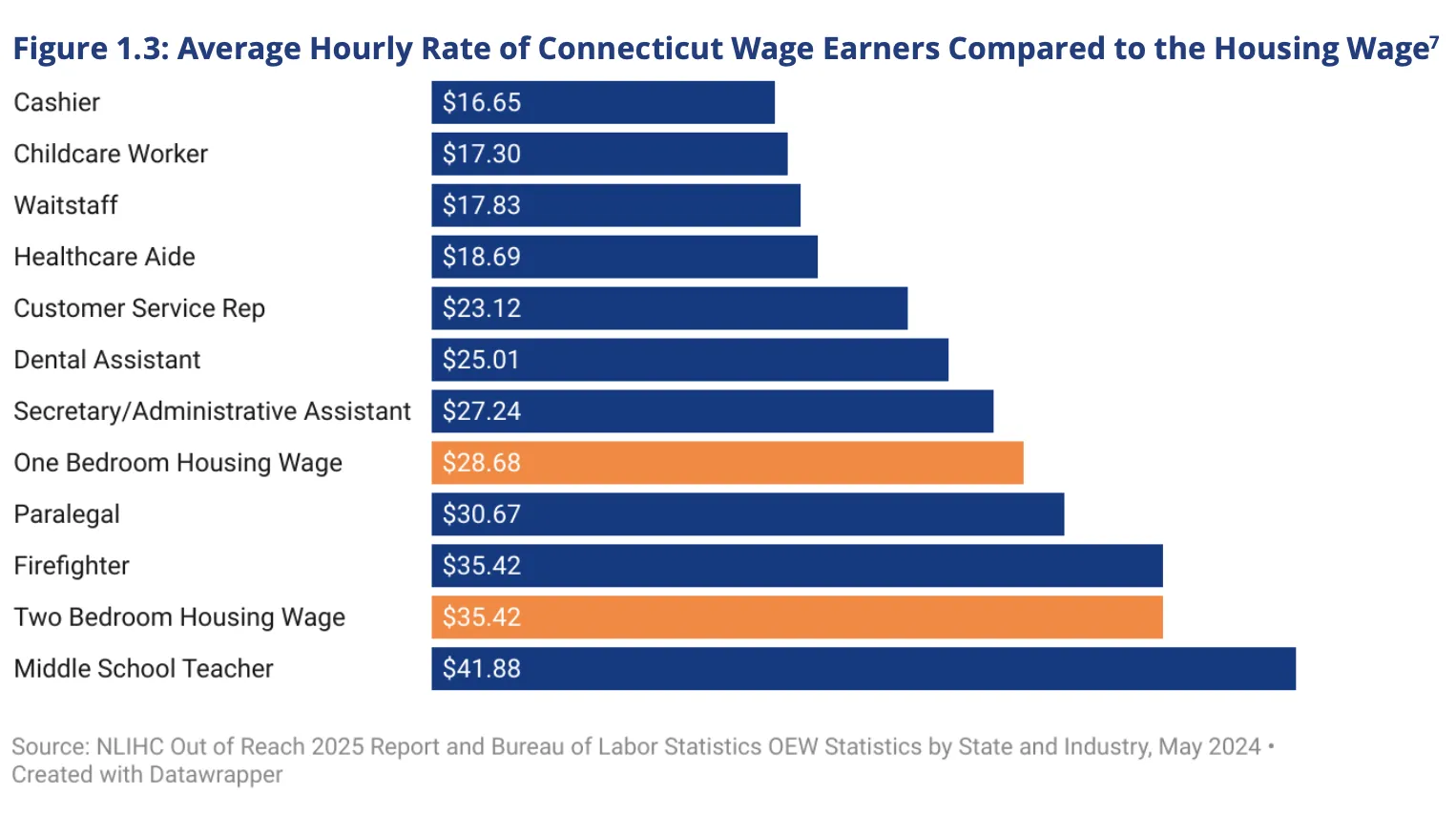
The key takeaway is this: Housing costs aren’t a single line item, they’re a system.
And in Connecticut, that system is heavily influenced by how much energy a home wastes.
Housing Affordability in Connecticut and the Cost Burden Problem
Housing affordability is often measured using a simple threshold:
- Cost-burdened: more than 30% of income goes to housing
- Severely cost-burdened: more than 50% of income goes to housing
By those standards, a large share of Connecticut households are stretched thin.
Renters are hit hardest, but homeowners aren’t immune. Even with a stable mortgage, rising utilities, insurance premiums, and maintenance costs can quietly push a household into cost-burden territory.
When housing takes up too much of a household’s income:
- Savings shrink
- Maintenance gets deferred
- Comfort gets sacrificed
- Small problems turn into expensive ones

Affordability stops being about price and becomes about resilience. In many cases, the difference between “manageable” and “stressful” housing costs comes down to how efficiently a home operates once the heat is on.
Renting vs. Owning in Connecticut: Which Costs More Long Term?
At first glance, renting often looks cheaper month to month. Ownership comes with a longer list of expenses and responsibilities. Renting in Connecticut is often cheaper upfront but far more volatile long term. About half of renter households are cost-burdened, while homeowners face higher but more stable monthly costs
Over time, however, the cost dynamics shift.
Rent is almost entirely market-driven. When demand rises, rents rise, and tenants have little control over that trajectory. Even when utilities are included, energy costs often get passed along through higher rents.
Homeownership introduces more responsibility, but it also introduces control.
While taxes and insurance can change, homeowners have influence over:
- Heating and cooling demand
- Energy efficiency
- Comfort and performance
In a state like Connecticut, where energy use is a major part of housing costs, that control matters. Two homes with similar mortgages can have very different monthly expenses based purely on insulation, air leakage, and overall efficiency.
In the long run, ownership offers the ability to manage and reduce operating costs, something renters rarely have.
The Hidden Driver of Connecticut Housing Costs: Monthly Operating Expenses
Housing prices get headlines. Operating expenses do not.
But utilities, heating fuel, and energy use quietly inflate the true cost of living in a Connecticut home. Long winters and older construction amplify those costs, especially when heat escapes through attics, walls, basements, and unsealed gaps.
What makes operating expenses especially important is that they compound:
- A drafty home costs more every winter
- Inefficiencies magnify fuel price changes
- Poor performance becomes more expensive over time
This is why two households with similar housing payments can have very different experiences. One lives in a home that holds heat. The other pays for energy that never stays inside.
Why Heating and Energy Costs Hit Connecticut Homes Especially Hard
Connecticut’s climate and housing stock work against efficiency.
Many homes were built when fuel was cheaper and insulation was minimal. As a result:
- Heating systems run longer
- Comfort varies room to room
- Fuel consumption increases
Fuel type doesn’t change the math. Whether a home uses oil, gas, propane, or electricity, inefficiencies magnify costs.
Compare oil energy types in Connecticut.
Coastal homes face additional challenges:
- Wind-driven heat loss
- Higher humidity
- Faster material wear
Without proper insulation and air control, these homes can be some of the most expensive to operate in the state.
How Home Efficiency Impacts Housing Costs Over Time
Home efficiency isn’t just about comfort—it’s about long-term affordability.
Efficient homes:
- Lose less heat
- Require less energy to stay comfortable
- Experience fewer seasonal bill spikes
Inefficient homes do the opposite. Systems work harder without delivering better comfort, and higher bills become the norm.
Efficiency also affects durability. Poor air and moisture control can lead to condensation, ice dams, and long-term damage—adding repair costs on top of energy costs.
Once efficiency improvements are done correctly, the benefits continue for the life of the home. In a high-cost housing market, that permanence matters.
What Connecticut Homeowners Can Actually Control
Homeowners can’t control housing markets—but they can control performance.
Key areas that make the biggest difference:
- Air leakage: gaps at attics, basements, and penetrations
- Insulation levels: especially in older attics and wall systems
- Ventilation and moisture control: keeping insulation effective
These are structural improvements, not cosmetic ones. They permanently change how a home behaves and how much it costs to live in.
Why Older and Coastal Connecticut Homes Feel the Cost Pressure More
Older homes often have:
- Minimal or uneven insulation
- Significant air leakage
- Complex framing details that leak heat
Coastal homes add:
- Wind exposure
- Moisture stress
- Accelerated material wear
The result is faster heat loss, longer system run times, and higher bills—even in homes that otherwise appear similar on paper.
The Bottom Line on Connecticut Housing Costs
Connecticut housing costs are shaped by forces most homeowners can’t change. Supply constraints, demand, and market conditions aren’t going away anytime soon.
What can change is how expensive it is to live in your home every month.
For many households, the real strain isn’t just the purchase price—it’s the ongoing cost of heating, energy use, and comfort problems that never get addressed. Improving how a home handles air and insulation creates stability, predictability, and long-term affordability.
In a high-cost housing market, that control matters.
What This Means for Connecticut Homeowners Right Now
You may not be able to control Connecticut housing prices—but you can control how much energy your home wastes.
For homeowners, especially in older or coastal homes, efficiency is no longer optional. It’s a financial strategy.
Understanding how your home performs—where heat escapes, how air moves, and whether insulation is doing its job—turns vague concerns into clear decisions.
👉 If you want to understand how much your home’s energy performance is contributing to your monthly housing costs, start with a professional estimate from Nealon Insulation.
Related Articles


Let's Work Together
Ready to transform your home into an energy-efficient haven? Schedule your free energy assessment today and experience the Nealon difference for yourself.