
How We Build an Insulation Estimate (Using the Home Alone House as an Example)
When most homeowners hear the word estimate, they picture a single number at the bottom of a page. Maybe it’s rounded. Maybe it’s suspiciously fast. And maybe it’s followed by the words, “That should cover it.”
That’s not how a real insulation estimate works.
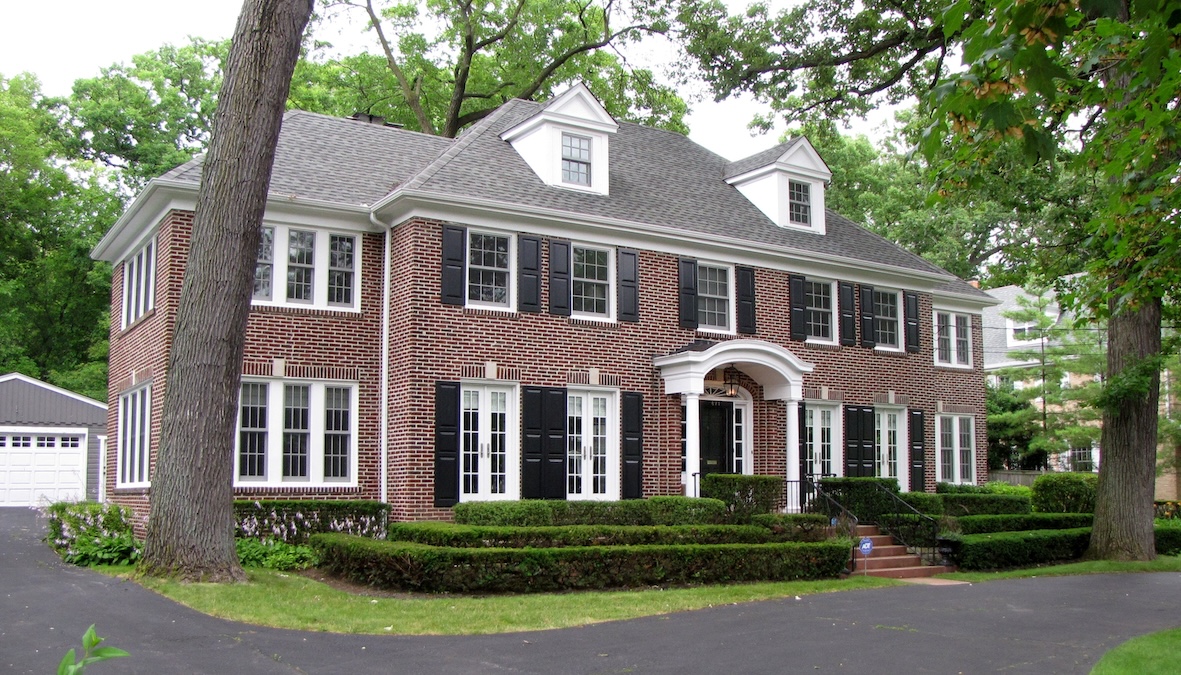
Below, we’ll walk you through exactly how we build an insulation estimate at Nealon Insulation, step by step—using the famous Home Alone house as a fun but very real-world example. The goal isn’t movie trivia. It’s transparency. By the end, you’ll know what should go into a professional insulation estimate and why shortcuts usually cost more in the long run.
Scroll to the bottom for the full insulation estimate of the Home Alone house.
What an Insulation Estimate Actually Is (and What It Is Not)
A proper insulation estimate is not a guess, a rule-of-thumb price per square foot, or a number pulled from a pricing app. It’s a scope-driven, assembly-by-assembly breakdown of what it actually takes to insulate a specific home correctly.
At Nealon Insulation, an estimate answers three fundamental questions:
- What areas of the home are being insulated?
- What materials and performance levels are required?
- What labor and access realities exist to do the work properly?
If any of those are missing, the estimate is incomplete—even if the price looks attractive.
It’s also important to separate two commonly confused terms:
- An estimate is an informed projection based on inspection, measurements, and defined assumptions
- A quote is a fixed price tied to a clearly defined scope of work
You can’t produce a reliable quote without first doing a real estimate. Anyone who skips that step is either oversimplifying the job or planning to adjust the price later.
Insulation isn’t cosmetic. It’s a building performance system. That’s why we always start with the house itself.
Step One: Understanding the Home Before We Talk Numbers
Every insulation estimate we build starts the same way: we slow down and study the house.
Before we talk pricing, we evaluate how the home is built and how it will behave once insulated. That context drives everything that follows.
We look at things like:
- Total square footage and layout
- Age of construction and framing methods
- Rooflines, ceiling types, and transitions
- Basement and foundation conditions
- Access points that affect labor and sequencing
How Step One Applies to the Home Alone House
If we were estimating the real Home Alone house, this first step would take real time—and for good reason.
At just over 9,100 square feet, this isn’t a simple box with a single attic and uniform walls. The house has multiple stories, intersecting rooflines, varying ceiling heights, and a large footprint. Each of those factors changes how heat moves through the structure and how insulation needs to be designed.
Because we’re assuming a full gut renovation, we’d approach this house very differently than a typical retrofit. With walls and ceilings open, we’d be evaluating:
- How many distinct roof and ceiling assemblies exist (not just “the attic”)
- Where framing depth varies from floor to floor
- How the basement and lower levels connect thermally to the rest of the house
- Which areas will be easiest to insulate during framing—and which ones require extra planning
In a house like this, missing one structural nuance early can ripple through the entire estimate. That’s why we don’t start with pricing. We start by understanding how the house is actually built—so the insulation plan is intentional, not reactive.
Step Two: Defining the Scope of Work (Room by Room, Not Guesswork)
“Insulate the house” sounds comprehensive, but it’s meaningless without specifics.
Homes don’t insulate as a single unit. They insulate as a collection of assemblies, each with different requirements and costs. That’s why we define scope area by area.
For a full gut renovation, the scope typically includes:
- Attic and roof assemblies
- Exterior wall cavities
- Rim joists and band boards
- Basement walls and ceilings
- Garage and transition areas
Each of these is treated as its own line of work. That prevents gaps, double-counting, and surprise change orders later.
How Scope Gets Defined in the Home Alone House
For a house like the Home Alone home, scope definition is where the estimate either becomes precise—or completely unreliable.
This is not a house with “one attic” and “standard walls.” There are multiple rooflines, finished and unfinished levels, and numerous transition points where assemblies meet. Each of those areas behaves differently and must be scoped separately.
In practice, we would break the home down into distinct insulation zones, such as:
- Multiple attic and roof sections with different ceiling geometries
- Thousands of square feet of exterior wall cavities across several floors
- Extensive rim joist areas due to the home’s large footprint
- Basement walls and ceilings depending on whether the space is conditioned
- Garage connections that create significant air leakage risk
Each of these would appear as its own scoped item in the estimate—not bundled, not assumed, and not glossed over. That level of detail is what prevents important areas from being missed and ensures the estimate reflects real work, not averages.
On large, complex homes, clear scope isn’t just about accuracy. It’s what keeps the project predictable once construction begins.
Step Three: Choosing Insulation Types for Each Area of the Home
There is no single insulation product that works best everywhere.
Each area of a home has different priorities—air control, thermal resistance, moisture management, and durability. A good estimate matches materials to assemblies, not the other way around.
For example:
- Rim joists often require high air sealing performance
- Exterior walls benefit from consistent cavity fill
- Attics may involve multiple strategies within the same home
- Basements and garages introduce durability and code considerations
Material selection directly affects:
- Material quantities and cost
- Installation time and sequencing
- Long-term performance
The three most common insulation materials are: cellulose, fiberglass and spray foam.
This isn’t a sales decision made after pricing. It’s a technical decision that drives the pricing.
How Insulation Materials Would Be Chosen in the Home Alone House
In a house the size and complexity of the Home Alone home, material selection is not a blanket decision—it’s a series of targeted ones.
With multiple stories, varied framing depths, and a mix of assemblies, we would be selecting insulation based on what each area needs to do, not on what’s easiest to install everywhere.
For example, in a full gut renovation like this, we would be looking closely at:
- Rim joists and band boards, where air leakage control is critical and space is limited
- Exterior walls, where consistent, full-depth cavity insulation matters more than raw R-value on paper
- Attic and roof sections, which may require different approaches depending on ceiling geometry and access
- Basement and garage-adjacent areas, where durability and moisture behavior become part of the insulation decision
Each of those choices affects the estimate in very real ways. Different materials carry different installation times, sequencing requirements, and coverage assumptions. In a house this large, even small shifts in material strategy can move the estimate significantly.
That’s why insulation type isn’t something we decide after pricing. It’s a core input that shapes the estimate from the ground up.
Step Four: Calculating R-Values, Depths, and Coverage
Once materials are selected, performance goals turn into math.
For each area, we calculate:
- Target R-values (code minimum vs best practice)
- Available cavity depth
- Installed thickness or density required
- Total square footage
Check out our R-Value calculator for a quick calculation of your home.
How R-Values and Coverage Would Be Calculated in the Home Alone House
In a house like the Home Alone home, this is where the estimate becomes truly concrete.
With walls and ceilings opened during a gut renovation, we would be able to measure framing depth, spacing, and transitions directly—eliminating guesswork that often skews insulation estimates in older homes.
Practically speaking, this step would involve:
- Identifying target R-values for each assembly based on performance goals, not just minimum code
- Verifying actual cavity depths, which can vary significantly across different parts of the house
- Calculating the installed thickness or density required to achieve those R-values in the real world
- Applying those numbers across thousands of square feet of walls, ceilings, and rooflines
In a home exceeding 9,000 square feet, precision matters. Being off by even a small margin—an inch here, a fraction of density there—adds up quickly when multiplied across multiple floors and assemblies.
By handling this step carefully, the estimate stops relying on assumptions and starts relying on measurable quantities. That’s what allows the insulation plan to be verified later, instead of simply hoped for.
Step Five: Labor, Access, and Job Complexity (The Part Most Estimates Skip)
Materials are only half the job. Labor is where many estimates fall apart.
Labor costs depend on:
- Access and working height
- Number of mobilizations or phases
- Prep and protection requirements
- Installation complexity
- Cleanup and quality control
Large homes amplify all of this. Work may need to be staged across multiple renovation phases. Crews may return several times. Each of those realities affects labor time and cost.
A professional insulation estimate accounts for this upfront instead of fixing it later with rushed work or change orders.
How Labor and Complexity Would Be Accounted for in the Home Alone House
In a house the size of the Home Alone home, labor planning is not a footnote—it’s a major driver of the estimate.
This is not a single-day, single-crew project. With multiple stories, high ceilings, and a full gut renovation assumed, labor would need to be planned around access, sequencing, and coordination with other trades.
Specifically, we would be accounting for:
- Working height and access, including areas that require lifts, scaffolding, or extended setup time
- Multiple mobilizations, as insulation work would likely occur in stages as framing and mechanicals progress
- Prep and protection, especially in areas that may be partially finished during later phases
- Installation complexity, caused by intersecting rooflines, irregular framing, and numerous transitions
- Cleanup and quality control, which scale with the size of the home and the number of work phases
In a project like this, underestimating labor doesn’t just affect cost—it affects scheduling, quality, and coordination across the entire renovation. That’s why a professional insulation estimate builds these realities in from the start, instead of trying to solve them later with change orders or rushed work.
Step Six: Line-Item Pricing and Why We Break It Out
Once scope, materials, performance, and labor are defined, pricing becomes clear.
We break estimates out by area and task because insulation work doesn’t happen all at once or all the same way. Line items create transparency and flexibility.
Line-item pricing:
- Shows where the money is going
- Allows scope adjustments without confusion
- Reduces misunderstandings and surprises
For large, complex homes, this isn’t overkill. It’s how pricing stays stable and projects stay coordinated.
How Line-Item Pricing Would Work in the Home Alone House
For a house as large and complex as the Home Alone home, line-item pricing isn’t just helpful—it’s essential.
With dozens of distinct insulation areas and multiple installation phases, bundling everything into a single number would make the estimate harder to understand and easier to misinterpret. Instead, each major area of work would be broken out clearly.
In practice, that would mean:
- Separate line items for different attic and roof assemblies, rather than one blanket “attic insulation” number
- Distinct pricing for exterior walls, rim joists, and basement areas, each with their own scope and assumptions
- Labor and material costs tied directly to specific tasks, not averaged across the entire house
This structure allows everyone involved—homeowner, builder, and contractor—to see exactly where the investment is going. It also makes it possible to adjust scope, phase work, or compare options without unraveling the entire estimate.
On a project of this scale, line-item pricing is what keeps the estimate stable as the renovation moves forward. It turns pricing into a tool for coordination, not a source of friction.
Step Seven: Reviewing the Estimate with the Homeowner
A good insulation estimate isn’t finished until the homeowner understands it.
We walk through:
- What’s included (and what isn’t)
- Why materials were chosen
- How performance targets were set
- Where complexity drives cost
This is also where options and alternates come into play. Instead of all-or-nothing decisions, homeowners can see how changes affect outcomes and cost.
The goal isn’t pressure. It’s clarity.
How We’d Review the Estimate (Once Kevin’s Parents Are Home)
Even the most detailed insulation estimate isn’t complete until it’s reviewed with the homeowner—and in the case of the Home Alone house, we’d wait until Kevin’s parents were actually home to do it.
Jokes aside, this step is where the estimate turns from a document into a shared understanding.
For a project of this size, the review would involve walking through:
- What’s included and what isn’t, so there are no assumptions later
- Why specific materials were chosen for different parts of the house
- How performance targets were set, and what meeting—or exceeding—those targets means
- Where complexity or access is driving cost, especially in multi-story areas
This is also where options and alternates matter most. On a large renovation, homeowners may want to phase work, adjust performance levels, or compare approaches. A clear estimate makes those conversations productive instead of confusing.
The goal of the review isn’t pressure or speed. It’s clarity. When everyone understands the plan up front, the project runs smoother—and no one gets surprised halfway through.
What This Would Look Like for the Home Alone House
For a home like the Home Alone house, the estimate would include:
- Multiple attic and roof assemblies
- Thousands of square feet of exterior wall cavities
- Extensive rim joist and transition areas
- Basement and lower-level assemblies
- Coordinated, staged installation
This wouldn’t be a single number. It would be a structured plan built from clearly defined sections.
The value of a professional estimate here isn’t just accuracy. It’s control.
Why Professional Insulation Estimates Cost More Than Online Calculators
Online calculators assume uniform construction and zero complexity. Homes don’t work that way.
Professional estimates account for:
- Air leakage and transitions
- Assembly-specific strategies
- Real access and sequencing
- Moisture and durability risks
- Honest labor planning
Calculators are fine for curiosity. They’re not tools for making permanent building decisions.
Final Thoughts: What a “Good” Insulation Estimate Should Always Include
A solid insulation estimate should include:
- Clearly defined scope of work
- Specified materials
- Target performance levels
- Labor assumptions
- Line-item pricing
If it feels like a plan instead of a guess, you’re looking at the right kind of estimate.
Ready for a Real Insulation Estimate?
If you want an insulation estimate built around how your home actually works—clear scope, defined performance targets, and no mystery math—we’re happy to help.
👉 Start the conversation with Nealon Insulation here.
Photo credit to Ben Schumin from Montgomery Village, Maryland, USA, CC BY-SA 2.0 <https://creativecommons.org/licenses/by-sa/2.0>, via Wikimedia Commons
Detailed Estimate of Home Alone House
Home: 671 Lincoln Ave, Winnetka, IL 60093 (9,126 sqft)
Assumption: Gut renovation → open access, cavities empty, insulation needed throughout.
Modeled quantities (based on house photo + size)
- Attic/upper level (flat areas): 3,200 sqft (blown cellulose to ~R-49+)
- Exterior walls: 6,400 sqft (dense-pack cellulose)
- Dormers / slopes / kneewalls / cantilevers: 1,950 sqft (dense-pack cellulose)
- Basement ceiling: 3,650 sqft (fiberglass batts)
- Garage ceiling: 900 sqft (fiberglass batts)
- Rim joist: 260 lf (closed-cell spray foam)
Products & Services
CHOICE A: ATTIC / UPPER LEVEL – BLOWN CELLULOSE (Target ~R-49+)
What we’ll do
- Air-seal typical attic bypasses where accessible (top plates, penetrations)
- Install blown-in cellulose to reach target depth (approx. R-49+)
- Level and ensure full coverage (no thin spots)
- Clean up
Total (3,200 sqft)
- Low: $7,920
- Mid: $9,328
- High: $11,440
(Unit rate: attic cellulose, travel band applied)
CHOICE B: EXTERIOR WALLS – DENSE-PACK CELLULOSE
What we’ll do
- Dense-pack cellulose into all exterior wall cavities
- Ensure consistent fill density to reduce settling risk
- Seal typical leakage paths at framing openings (as accessible)
- Clean up
Total (6,400 sqft)
- Low: $25,344
- Mid: $28,864
- High: $34,496
(Unit rate: walls dense-pack cellulose, travel band applied)
CHOICE C: DORMERS / SLOPES / KNEEWALLS / CANTILEVERS – DENSE-PACK CELLULOSE
This is the “old-house comfort” section—dormers and transitions are where drafts love to hide.
What we’ll do
- Dense-pack cellulose into sloped cavities / kneewall cavities / cantilever floors (where framed)
- Seal accessible transitions and penetrations for continuity
- Confirm full coverage in tricky edges and returns
- Clean up
Total (1,950 sqft)
- Low: $6,971
- Mid: $8,258
- High: $9,867
(Unit rate: bonus room dense-pack cellulose, travel band applied)
CHOICE D: BASEMENT CEILING – FIBERGLASS BATTS (Thermal separation)
What we’ll do
- Install fiberglass batts tight to the subfloor (no sagging)
- Support batts as needed to maintain contact
- Seal obvious penetrations where accessible
- Clean up
Total (3,650 sqft)
- Low: $11,041
- Mid: $13,049
- High: $15,859
(Unit rate: basement ceiling fiberglass batts, travel band applied)
CHOICE E: GARAGE CEILING – FIBERGLASS BATTS (Garage-to-house separation)
What we’ll do
- Install fiberglass batts tight to ceiling plane
- Seal accessible air paths between garage and living space
- Clean up
Total (900 sqft)
- Low: $2,970
- Mid: $3,465
- High: $4,208
(Unit rate: garage ceiling fiberglass batts, travel band applied)
CHOICE F: RIM JOISTS – CLOSED-CELL SPRAY FOAM (Required per your request)
What we’ll do
- Prep rim joist bays for adhesion
- Apply closed-cell spray foam (~1.5–2") for air + moisture control
- Seal edges/penetrations to complete the boundary
- Clean up
Total (260 lf)
- Low: $2,574
- Mid: $3,003
- High: $3,718
(Unit rate: rim joist closed-cell spray foam, travel band applied)
Price summary (all sections combined)
Subtotal (sum of sections):
- Low: $56,821
- Mid: $65,967
- High: $79,588
Overhead + Profit: 10% + 10% (modeled as ×1.21)
Total project estimate (min / mid / max)
- ✅ Low: $68,753
- ✅ Mid: $79,820
- ✅ High: $96,301
Confidence: Medium (photo helps; still a modeled takeoff without plans/room-by-room verification).
Rebates (placeholder)
Rebates in IL depend heavily on the serving utility + approved contractor rules. I’m carrying $0 in the total until we confirm the utility and program eligibility.
Notes / exclusions (same spirit as your sample)
- Assumes typical access + open cavities from gut renovation
- Excludes moisture remediation, drainage fixes, electrical upgrades (knob-and-tube risk in older homes), and specialty fire-rated assemblies beyond standard coordination
- If interior access for dense-pack isn’t available (closed walls), scope and pricing change (drill/patch approach)
Related Articles
Let's Work Together
Ready to transform your home into an energy-efficient haven? Schedule your free energy assessment today and experience the Nealon difference for yourself.