
How Often Should I Replace Insulation in Cold Climates?
If you live anywhere that sees real winter — not the "grab a light jacket" kind — you're asking your insulation to do a lot of heavy lifting. Every nor'easter, every freezing night, every cold snap is pounding on whatever's in your attic and walls. And while insulation looks like a set-it-and-forget-it material, it doesn't stay in perfect shape forever.
It settles. It absorbs moisture. It gets chewed up by critters. It slowly loses the ability to keep heat inside where it belongs. And once that happens? Your furnace clocks overtime, your energy bill creeps up every month, and your house develops those infamous "why is this room 10 degrees colder than the rest?" pockets.
Knowing how long insulation actually lasts — and when it's time to replace it — can save you money, headaches, and a whole lot of winter misery.
How Long Insulation Really Lasts in Cold Climates (By Material)
Not all insulation ages the same, especially in New England weather. The cold doesn't just test your patience — it tests your building materials. Here's how each type holds up over time.
- Fiberglass can "last decades" on paper, but up here, moisture, drafts, and compression usually cut that down to 15–25 years of real-world performance. Once it slumps or gets damp, it's basically decorative.
- Cellulose, on the other hand, does well in cold climates because it fills cavities tight and slows air movement. In a well-sealed attic, you'll get 20–30 solid years out of it — less if the attic is leaky.
- Spray foam is the heavyweight champ: it doesn't settle, doesn't slump, and handles temperature swings without complaint. Installed correctly, spray foam can go 30–50 years before it even thinks about aging.
- Mineral wool is moisture-resistant, stable, and dense — it typically holds strong for 30+ years in cold regions.
What actually kills insulation up here isn't always time — it's the environment: freeze–thaw cycles, condensation, air leaks, poor ventilation, ice dams, and rodent activity. In other words, a typical Connecticut winter.
How Often You Should Replace Insulation in Cold Climates
There's no single expiration date, but here's the honest rule of thumb: most cold-climate homes need an insulation refresh every 20–30 years. Moisture or rodent issues push that timeline up significantly. Spray foam can go 40–50 years, but the attic still needs periodic monitoring.
Cold climates simply wear insulation down faster. Long heating seasons, plus moisture, plus temperature swings equal insulation that performs worse long before it "looks bad." If your home is 20+ years old and hasn't had an attic inspection, odds are the insulation isn't doing you many favors anymore.
Winter speeds things up further. Moisture cycles, freeze–thaw expansion, ice dams, and nonstop furnace runtime all push your insulation harder than the brochures admit. The problem is it rarely fails loudly — it just quietly loses performance until your heating bill starts telling the story.
How Often Should Attic Insulation Be Replaced
The attic is where insulation takes the most abuse in a Connecticut home, so it deserves its own answer. Unlike wall or basement insulation, attic insulation is directly exposed to temperature extremes, condensation risk, and whatever comes through the roof. It's also where most of your heat loss happens — up to 25% in a typical under-insulated home.
As a general rule, attic insulation should be inspected every 10 years and seriously evaluated for replacement around the 20–25 year mark, depending on material and conditions. If you're already seeing joists — that's the wood framing poking up through the insulation — you're almost certainly below R-30, which is well short of Connecticut's recommended R-49 to R-60. That alone justifies a replacement conversation. The same goes for any attic that's had a leak, a rodent problem, or chronic ice dam issues: those events don't just damage insulation in one spot, they affect the whole assembly. A great time to insulate is when you are renovating your home.
Older shoreline homes have an added wrinkle. The combination of coastal humidity and temperature swings means attic insulation in these homes tends to degrade faster than inland. If your house was built before 1980 and the insulation has never been touched, there's a very good chance it's both undersized and underperforming.
Key Signs Your Home Needs New Insulation
Most homeowners aren't crawling into their attic every month. Fortunately, your house tells on itself.
Rising heating bills are the most common symptom — same habits, higher bill means heat is escaping somewhere. Closely related are drafts and cold spots: rooms that feel like mini-fridges usually point to gaps, settling, or bypasses in the thermal envelope.
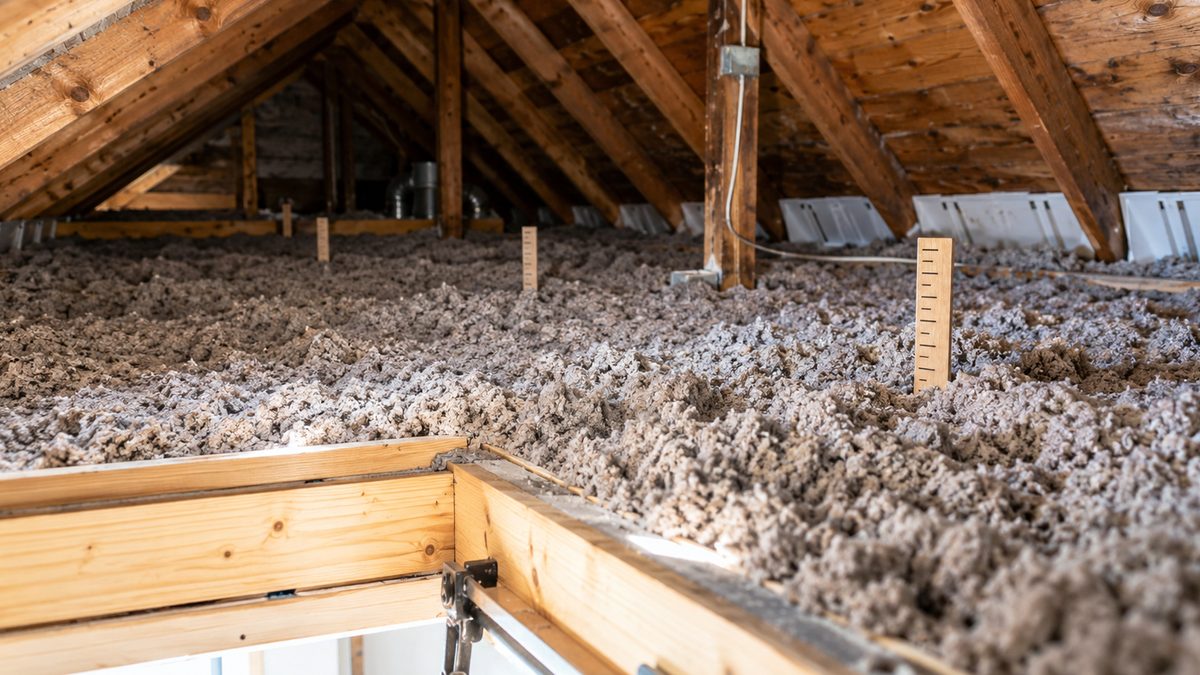
The visual clues are easy too. If you can see the attic floor joists poking up through the insulation, you need more — full stop. A healthy attic has insulation sitting well above the joists, not flush with them or below. Musty smells or visible moisture are red flags: wet insulation is essentially useless insulation and needs to come out, not just get topped off. Chronic ice dams every winter mean heat is escaping into your attic space, which drives snow melt at the roof edge and refreezes at the cold eaves. That's an insulation and air sealing problem, not a weather problem.
Finally, if you've had rodents, the insulation has to go. They don't just tunnel through it — they contaminate it. No amount of extra layers fixes that.
Cold-Climate Factors That Damage Insulation Faster
Connecticut winters give insulation more abuse than most homeowners realize. It's not just the cold — it's the combination of factors working together:
Freeze–thaw cycles are relentless. Moisture forms, freezes, melts, and repeats — and with each cycle, loose-fill insulation shifts and settled-in material compresses further. Attic condensation happens when warm, humid indoor air sneaks up through ceiling bypasses and hits the cold attic deck. Without proper ventilation and air sealing, that moisture hangs around and degrades everything it touches. Air leaks make it worse — a surprisingly small gap around a recessed light or plumbing chase can push a significant amount of warm air into the attic.
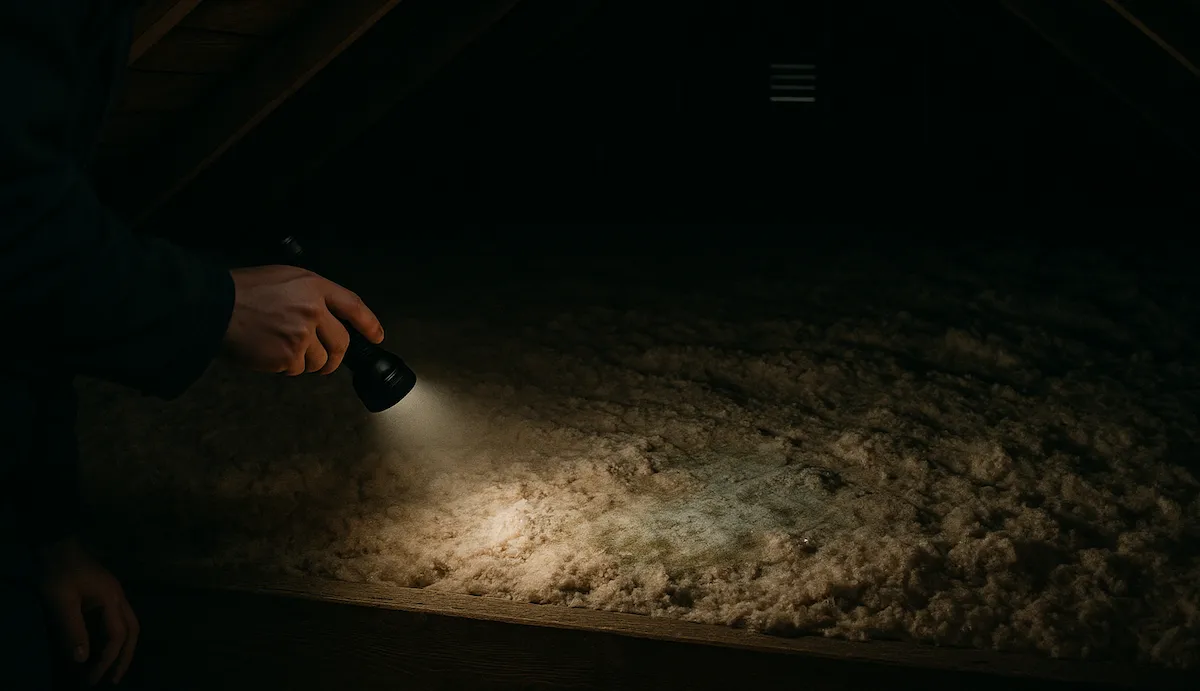
Ice dams are both a symptom and an accelerator of insulation failure. They indicate heat is escaping, and the melt water they create can work its way back under shingles and into the insulation below. Roof leaks — even small, slow ones — are especially damaging because the attic stays cold, so wet insulation rarely dries out. And pests are in a category of their own: they tunnel, scatter, compress, and contaminate, often without you knowing it until you're up there with a flashlight.
Why ice dams form and what you can do about it?
Should You Replace Insulation or Add More?
Homeowners love a "just add more" solution. Sometimes it works. Sometimes it makes the problem worse.
If the existing insulation is dry, clean, even, and free of pests or mold, topping it off is a perfectly reasonable move. You can bring the attic up to R-49 to R-60 — Connecticut's recommended range — and see a meaningful difference in comfort and bills. This is common in homes where the original install was just too thin but the material itself is still in decent shape.
Full replacement is the only right answer when insulation is wet, moldy, rodent-damaged, heavily settled, or contaminated in any way. Covering bad insulation is like painting over rot — it hides the problem instead of fixing it. You'll spend money and still have a failing assembly underneath.
There's also a step most homeowners skip entirely: air sealing. You can add all the insulation you want to a leaky attic, but if warm air keeps rushing in from the house below, you're right back where you started. Air sealing the attic floor — around light fixtures, plumbing chases, top plates — is what makes cold-climate insulation actually work long-term. It's not glamorous, but it's the difference between insulation that performs and insulation that just sits there.
Wondering what's actually going on in your attic? Why Air Sealing Is the Secret Ingredient to a Comfortable, Efficient Home
What Are the Best Insulation Materials for Cold Climates?
Cold-region performance comes down to stability, moisture resistance, and holding R-value when it matters most.
- Insulation removal: $1.00–$2.00 per sq. ft.
- Air sealing: $300–$1,200
- Ventilation upgrades: $200–$600
Replacing insulation in Connecticut isn't just a comfort upgrade — it's a financial one. Most homeowners see 20–40% lower heating usage, significantly fewer drafts, reduced ice damming, and a home that handles winter without drama. When your furnace stops fighting uphill battles every night, you notice it in both how the house feels and what you pay.
Curious what the full project might cost you? Insulation Cost & Pricing Calculator
How to Maximize the Lifespan of Your Insulation
The good news is that new insulation can last decades with the right setup from day one and a little attention over time.
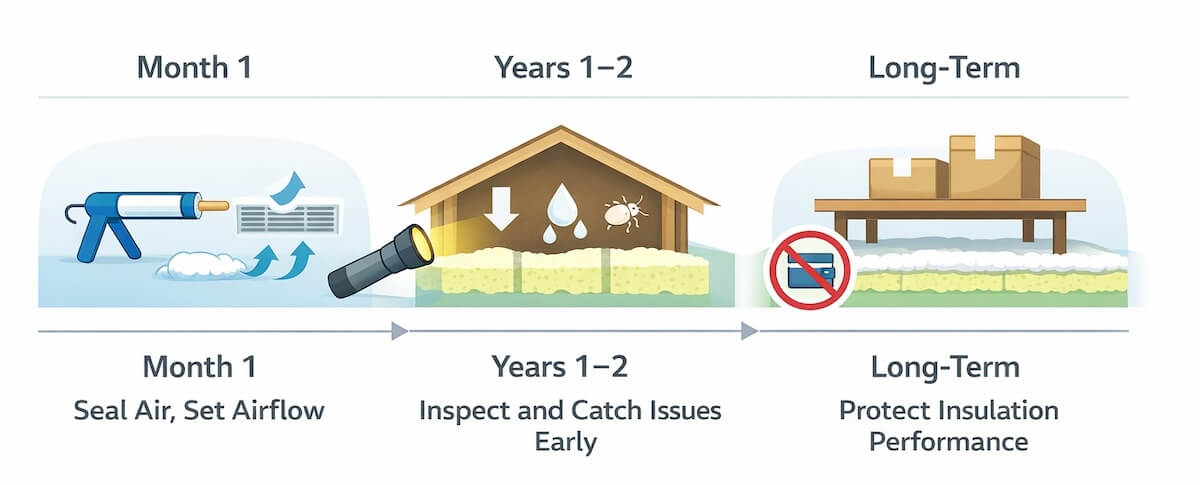
In the first month, two things matter most: air sealing and ventilation. Air sealing prevents warm interior air from flooding into the attic and driving condensation. Fixing ventilation gaps ensures airflow stays balanced and moisture has a path out. These aren't optional add-ons — they're what allow everything else to work.
In years one and two, get up there and do a visual check. Look for settling, moisture staining, signs of pests, or any musty smell. Catching something early is always cheaper than catching it late. After that, a check every 10 years is reasonable for most homes.
Long-term, two things kill insulation prematurely: compression and neglect. If you use your attic for storage, keep boxes off the insulation — even a few inches of compression can meaningfully reduce R-value. And if you're choosing materials during an upgrade, think about what performs in cold, damp, coastal conditions — not just what's cheapest per bag.
Conclusion: Keep Your Home Winter-Ready
Insulation isn't glamorous, but in cold climates it's the closest thing to printing money inside your home. When it's performing, you get warm rooms, lower bills, and a house that handles winter without drama. When it's tired or damaged, your house becomes a heat-leaking liability.
A quick inspection, proper air sealing, and the right insulation depth can transform the way your home handles winter — and keep it that way for decades.
👉 Contact Nealon Insulation — not sure if your insulation is still pulling its weight? Schedule a free estimate and we'll take a look.
Frequent Questions About Replacing Insulation in Cold Climates
How does attic ventilation affect insulation lifespan in cold climates?
Attic ventilation and insulation work as a system — not independently. In a cold climate, the attic needs to stay close to outdoor temperature so that interior heat stays inside the house where it belongs. When ventilation is insufficient, warm moist air from the living space gets trapped in the attic, condenses on cold surfaces, and saturates the insulation over time. Wet insulation loses R-value, promotes mold, and eventually needs full replacement. Proper intake (soffit vents) and exhaust (ridge or gable vents) keep the attic dry and extend insulation life significantly.
Is it worth insulating my attic if I plan to replace my roof soon?
Yes — and the timing actually works in your favor. Attic insulation sits below the roof deck, so a re-roof doesn't disturb it. If you insulate now, you immediately reduce heat loss and lower the risk of ice dams that can damage your new roof before the first winter is over. The only situation where you'd want to coordinate the two is if you're switching from a vented to an unvented (conditioned) attic assembly — that decision affects how the roof is built, and you'd want a contractor involved in both scopes at the same time.
Does replacing insulation help with indoor humidity control in winter?
It helps, but it's not the whole answer. Properly installed insulation slows heat loss and reduces the rate at which your living space loses warm air to the outside — which keeps you from pulling in as much dry, cold replacement air. That helps stabilize indoor humidity levels. But if you're dealing with serious winter dryness or excessive moisture, insulation alone won't fix it. Air sealing plays a bigger role in controlling uncontrolled air exchange, and mechanical ventilation (like an ERV) manages it even more precisely.
What is wind washing and how does it affect insulation in cold climates?
Wind washing happens when outdoor air enters the attic through soffit vents and flows horizontally through the insulation rather than staying on the underside of the roof deck where it belongs. It effectively strips R-value from the insulation it passes through and creates cold zones near the eaves. In Connecticut homes with poorly placed or absent baffles, this is a common cause of uneven insulation performance and ice dam formation at the roof edge. The fix is installing proper rafter baffles that channel soffit air up and over the insulation, not through it.
Does insulation settle over time, and how much is too much?
Yes — all loose-fill insulation settles to some degree, and it's normal. Cellulose can settle 10–20% if it wasn't dense-packed during installation. Fiberglass tends to settle somewhat less but isn't immune. The threshold that matters is whether your attic still meets R-49 to R-60 after settling. A good indicator: if you can see the tops of your attic floor joists (typically 10–12 inches tall), you're below that target and it's time to top off. If bills are climbing and the attic looks thin, don't wait for something to fail — that's the inspection window.
Related Articles
Let's Work Together
Ready to transform your home into an energy-efficient haven? Schedule your free energy assessment today and experience the Nealon difference for yourself.